10 Rock Basslines That Still Set the Standard
The greatest rock basslines do more than hold down the low end—they define the groove, steer the song’s energy, and often carry the hook. Here’s a breakdown of 10 iconic bass parts, plus the technique and production lessons every bassist and producer can borrow.
Why Great Rock Basslines Matter
In rock, the bass is often treated like support gear: essential, but not supposed to be noticed. The best basslines in history prove the opposite. They can be the riff, the hook, the rhythmic engine, or the secret glue that makes a song feel impossible to ignore. A great bassline does three jobs at once: it anchors the harmony, locks with the drums, and adds motion that keeps the track breathing.
This list isn’t just about famous parts. It’s about why these basslines work, what technique makes them memorable, and what modern players and producers can learn from them. Whether you’re tracking with a P-Bass into a DI, dialing in grit from a SansAmp, or programming bass in a DAW, the same fundamentals apply: note choice, rhythm, articulation, and tone.
1. Led Zeppelin — “Ramble On”

John Paul Jones is one of rock’s most musical bass players, and “Ramble On” shows exactly why. The bass part doesn’t simply follow the guitar; it moves with intention, using melodic runs and a flexible pocket that keeps the song feeling restless in the best way. The line works because it creates forward motion without crowding the arrangement.
Takeaway: Build basslines from chord tones first, then add passing notes to connect them. If the verse feels static, try shifting the line up an octave or adding small rhythmic pickups before chord changes.
2. The Beatles — “Come Together”

Paul McCartney’s bass on “Come Together” is a masterclass in restraint and placement. The line is laid-back, slightly behind the beat, and filled with small melodic dips that make the groove feel greasy and memorable. It’s not busy, but every note has weight.
Takeaway: Space is part of the arrangement. If a bassline already has strong rhythmic identity, you don’t need constant note movement. Let sustain and timing do some of the work.
3. The Rolling Stones — “(I Can’t Get No) Satisfaction”
One of rock’s most recognizable riffs, even though the original hook was famously intended for guitar. The bass part is simple, but the song’s whole identity depends on that insistent, repeating pulse underneath the vocal. The genius is in the repetition: it turns minimal material into momentum.
Takeaway: Repetition can be powerful when the rhythm is locked in. For producers, subtle automation on bass saturation or compression can keep a repeating part from feeling flat over the course of a song.
4. Pink Floyd — “Money”

Roger Waters’ bassline on “Money” is famous for its odd-meter feel and almost architectural precision. The riff cuts through because it is syncopated, bluesy, and instantly identifiable, but it also interacts beautifully with the song’s shifting meter. That’s the key: complexity that still feels like a hook.
Takeaway: Don’t be afraid of odd groupings. A bassline can sound sophisticated without being technically dense. Try building around a repeating figure, then vary the last note of the phrase to create lift into the next bar.
5. The Clash — “The Guns of Brixton”

Paul Simonon’s bassline carries this track with a dub-informed patience that is still rare in rock. It’s hypnotic, spacious, and heavy in a way that comes from confidence, not volume. The note lengths matter as much as the notes themselves.
Takeaway: Dead notes and controlled note lengths are production tools, not just performance details. Shorten sustain for tension; let the last note ring when the arrangement needs breathing room.
6. Cream — “Sunshine of Your Love”

Jack Bruce’s bass part is one of the foundational rock riffs, and its power comes from its phrasing. It sits in a blues framework but feels massive because of the repeated motif and the way it rides over a heavy drum pocket. It’s riff-writing as bass composition.
Takeaway: If you want a bassline to feel bigger, write it like a guitar riff but perform it like a bassist. Focus on attack consistency, palm muting, and strong note separation so the line stays defined in a dense mix.
7. Queen — “Another One Bites the Dust”
John Deacon’s bassline is a production lesson disguised as a rock groove. The part is sparse, obsessive, and perfectly centered in the pocket. It proves that the right rhythmic figure, played with a dry, confident tone, can dominate a track more effectively than a wall of notes.
Takeaway: This is the bass equivalent of negative space. If you’re mixing, try a slightly compressed DI with a touch of amp simulation for body, but resist over-processing. The line works because it sounds controlled.
8. Black Sabbath — “N.I.B.”
Geezer Butler helped define heavy metal bass playing, and “N.I.B.” is a prime example of how bass can be both thunderous and agile. The part is rooted in blues but has a darker, more theatrical energy, with runs that feel almost conversational against the guitar and drums.
Takeaway: Use chromatic passing tones sparingly to add menace. In heavier rock, the difference between generic and iconic often comes down to how well the bass line balances grit and clarity.
9. The Who — “My Generation”
John Entwistle’s bass work was years ahead of its time, and “My Generation” still hits like a blueprint for aggressive rock bass. The line drives hard, but it also leaves room for the song’s explosive energy. Entwistle’s tone—fast, articulate, and bright—lets every note punch through the mix.
Takeaway: If you want a bassline to cut on smaller speakers, add upper-mid harmonics. That can come from a picked attack, fresh roundwound strings, or carefully dialed distortion that enhances overtones without turning the low end to mud.
10. AC/DC — “Riff Raff”
Cliff Williams is often celebrated for rock-solid support, but the bass in “Riff Raff” deserves recognition for how it reinforces relentless guitar motion without disappearing. The part is simple, driving, and deeply effective. It’s a lesson in consistency: when the arrangement is already explosive, the bass has to be tight enough to hold the floor together.
Takeaway: Precision matters more than flash in fast rock. Tight right-hand technique, clean edits, and a disciplined low end can make a straightforward line feel huge in context.
What These Basslines Teach Us
Across all 10 tracks, a few patterns show up again and again. The most memorable rock basslines are usually not the most complicated. They are the most intentional. They often combine one or more of these traits:
- Rhythmic identity: The groove is recognizable even without the melody.
- Melodic movement: The line outlines the harmony in a way that feels musical, not mechanical.
- Controlled tone: The bass occupies its own space instead of fighting the guitars.
- Dynamic discipline: Small differences in attack, sustain, and note length create character.
For producers, the lesson is just as important. A bassline that sounds great soloed can still fail in the mix if it doesn’t interact properly with kick drum, guitars, and vocal range. Consider using sidechain compression lightly, or shape the bass with multiband control so the low end stays stable while the mids carry articulation. A bass part that works on the record usually works because the performance and the mix are reinforcing each other.
Practical Tips for Writing Better Rock Basslines
If you’re trying to write bass parts with the same impact as the classics above, start with these rules:
- Write from the drums first. Lock the bass to the kick pattern before adding flourishes.
- Build around chord tones, then decorate with passing notes.
- Use repetition to your advantage, but vary articulation so the line evolves.
- Record both DI and amp signals if possible, then blend for clarity and character.
- Don’t overfill the arrangement. A great bassline often sounds bigger because it leaves room around itself.
The best rock basslines are memorable because they feel inevitable. They’re not just notes under the song—they are part of the song’s identity. Study them as performance, composition, and production all at once, and you’ll start hearing bass not as support, but as architecture.
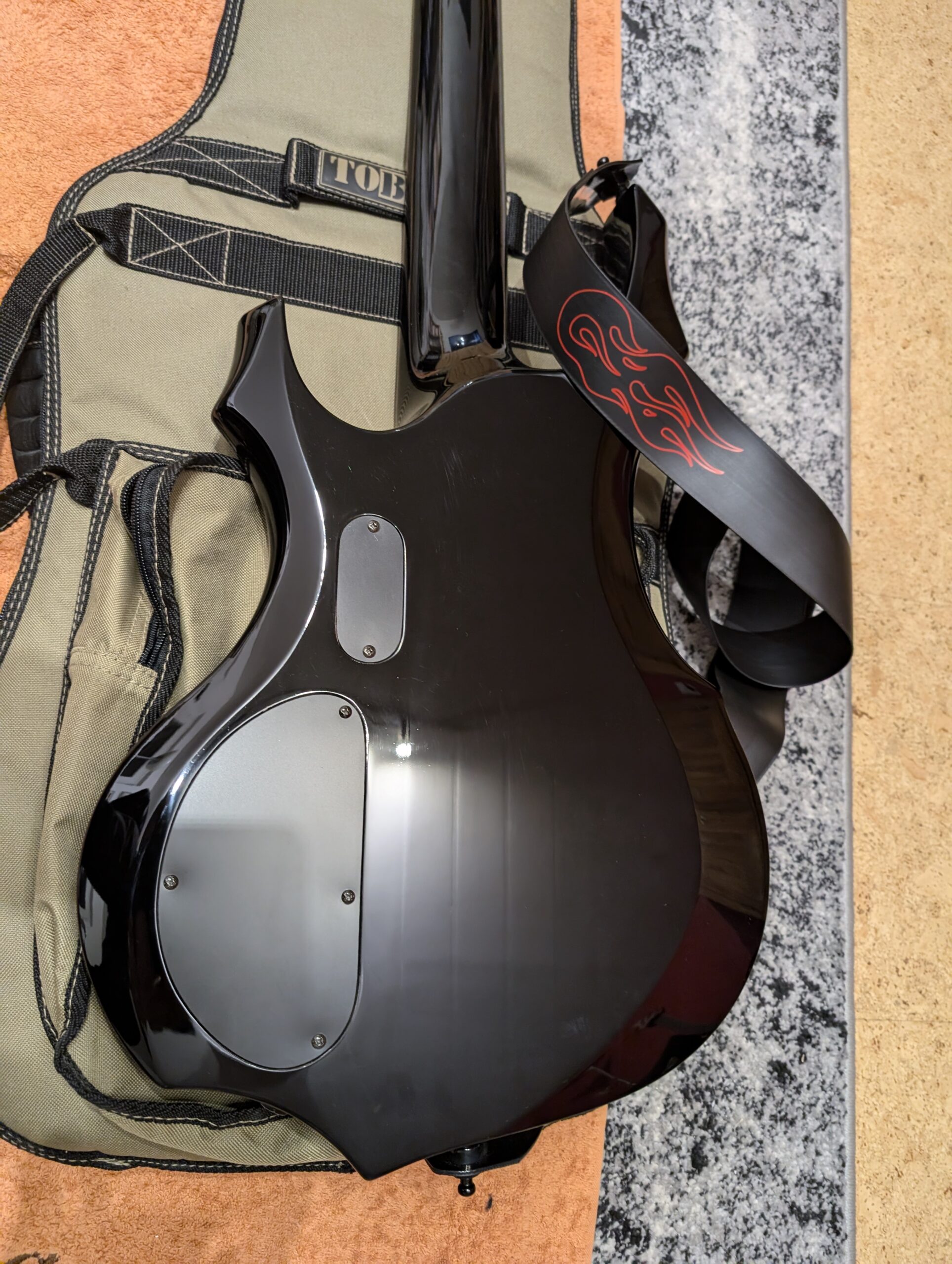
Image: 0-ESP Ltd F 255 electric bass guitar body 01.jpg | Own work | License: CC BY-SA 4.0 | Source: Wikimedia | https://commons.wikimedia.org/wiki/File:0-ESP_Ltd_F_255_electric_bass_guitar_body_01.jpg