Sampling as a Studio Shortcut: The Legal Playbook Every Producer Needs
Sampling can be one of the fastest ways to find a sound, build a groove, or flip a texture into something unmistakably yours. But if you want to use it professionally, you need to know where the legal lines are before the track leaves the studio.
Sampling is one of the most powerful production tools in modern music. It can give a beat instant character, turn a forgotten record into a fresh hook, or add a texture no plugin library quite matches. But sampling also sits in one of the most legally sensitive corners of music production. If you want to use samples professionally, you need more than taste and timing—you need a workflow that understands copyright, licensing, and what can actually clear for release.
For producers, the key question is not just can I sample this? It is what exactly am I sampling, and who controls it? The answer determines whether your track can be released safely, monetized cleanly, or trapped in rights limbo. Below is the legal and practical breakdown every producer should know before dragging another audio file into the session.
Sampling is a production technique—but legally, it can be two different things
In the studio, sampling usually means taking a piece of an existing recording and turning it into something new. That could be a chopped drum break, a single horn stab, a vocal phrase, or even a two-second ambient texture. Legally, though, a sample can involve two separate copyrights:
- The composition — the underlying song, melody, harmony, lyrics, and publishing rights.
- The master recording — the actual recorded performance you hear on the record.
If you sample the original recording, you may need permission from both sides. That is why a sample from a famous soul record can require clearance from the label or master owner and the publisher or songwriters. If you only recreate the underlying idea with your own musicians and recording, you may still need publishing clearance if the composition is recognizably used. That distinction matters because many producers assume changing the sound source eliminates the issue. It does not necessarily do that.
Why sample clearance matters before the song is done
Nothing kills momentum like finishing a record and discovering you cannot distribute it without permission. Sample clearance affects release strategy, split sheets, label negotiations, sync potential, and even whether a track can stay on streaming platforms. If you are independent, an uncleared sample can mean takedowns, lost royalties, or a song that performs well but cannot be monetized properly.
For label artists, the risk gets bigger. A cleared sample can influence release timing, contract language, and how advance money is recouped. For self-releasing producers, the issue is simple but brutal: if you do not own the rights you need, you may not have a legal path to commercial release.
The practical takeaway is this: the earlier you identify sampled material, the better. Do not wait until final mastering to ask whether the source is clearable. Build legal awareness into the production process the same way you would build gain staging or file organization into your workflow.
What producers can usually sample safely
Not every sample is a legal minefield. Some source material is easier to work with than others, though “easy” does not always mean “free.” Here are the common categories producers should understand:
- Royalty-free sample packs — Usually the safest option if the license allows commercial use. Read the terms carefully.
- Original recordings you make yourself — If you record your own drums, vocals, instruments, or field recordings, you generally control the master.
- Public domain material — Older compositions may be public domain, but recordings of those compositions can still be copyrighted.
- Cleared licensed samples — Material you have permission to use under the stated license, which may include limits on distribution or monetization.
One trap producers fall into is assuming that anything labeled “free” is automatically safe. A free download from YouTube, a random loop from a forum, or a file passed between collaborators is not the same thing as a properly licensed sample pack. If the source does not clearly state how it can be used, treat it as risky until proven otherwise.
Interpolation is not the same as sampling—but it still needs clearance
Interpolation is often treated like the loophole around sampling law. In reality, it is simply a different production method. If you replay or recreate part of a composition yourself—say, rebuilding a melody with fresh instruments rather than lifting the original audio—you may avoid master clearance, but you can still need permission from the composition owners.
That is why so many producers talk about “replaying the sample” rather than sampling it. From a workflow perspective, interpolation can give you more sonic control: cleaner EQ, different mic choices, tighter arrangement edits, and less noise or tape hiss. But legally, it is not a shortcut past the rights system. It is a different route through it.
What sample clearance actually looks like in practice
Clearance is less glamorous than the mythology around sampling, but it is straightforward once you understand the steps. Typically, you need to identify the source, determine who controls the master and publishing, and request permission. The rights holders may respond with a fee, a royalty split, a one-time license, or a denial.
In some cases, the sample clearance process can take longer than the production itself. That is why many professional producers keep a rough file with source notes from day one: track name, timestamp, sample origin, label, publisher, and any edits made. If you used multiple samples, document each one separately. The more organized your paperwork, the easier it is for a manager, lawyer, label, or licensing rep to handle the clearance conversation.
For major releases, clearance is often handled by attorneys, clearance specialists, or label teams. But even if you are independent, you should know the language: master use license for the recording, synchronization license for audiovisual use, mechanical considerations for reproduction, and publishing approval for the underlying composition. You do not need to become a lawyer, but you do need to know enough to ask the right questions.
Why some samples are worth the hassle
There is a reason sampling remains central to hip-hop, electronic music, pop, and experimental production: a great sample can instantly deliver emotion, texture, and historical depth. A dusty drum break can make a beat feel lived-in. A gospel vocal phrase can push a chorus into something larger than the arrangement around it. A tiny analog synth fragment can become the hook.
The sonic payoff is real. Samples can give a track a built-in tonal identity, especially when they bring natural imperfections—room tone, tape saturation, phase smear, or odd tuning drift—that are difficult to fake with a plugin alone. Producers often sample because it gets them to a compelling idea faster than programming from scratch.
That speed is exactly why legal literacy matters. Sampling is a shortcut, but the shortcut only works if you know where the guardrails are.
Studio habits that keep sampling legal and usable
If you want sampling to remain a tool instead of a liability, build a few habits into every session:
- Keep source notes — Log every sample, loop, and chopped source as you work.
- Use licensed libraries — Stick to packs with clear commercial terms.
- Check the fine print — Some licenses limit redistribution, stems, or sync use.
- Prefer original recordings for key parts — If a hook is central to the song, own it when possible.
- Clear before release — Not after the track starts performing.
- When in doubt, interpolate or recreate — It may be easier to manage rights on a replayed part than on a direct lift.
Also remember that a sample does not need to be obvious to become a problem. Even a short vocal stab, a recognizable drum break, or a background chord pattern can trigger a rights issue if it is identifiable enough. The old idea that a few seconds are automatically safe is outdated and unreliable.
The best sampling mindset is creative and cautious
Modern production rewards speed, but longevity rewards discipline. The best producers treat sampling like any other studio discipline: source the right material, understand the workflow, and protect the record before it leaves the session. That does not make sampling less exciting. It makes it sustainable.
If you want samples to remain part of your sound, treat legality as part of the craft. Learn the difference between master and publishing rights, use properly licensed material when you can, and document everything when you cannot. The goal is not to stop sampling. The goal is to sample in a way that lets the music live, travel, and earn without getting boxed in by avoidable legal problems.
That is what makes sampling a real studio tool: not just the sound it gives you, but the workflow that lets you use it again tomorrow.
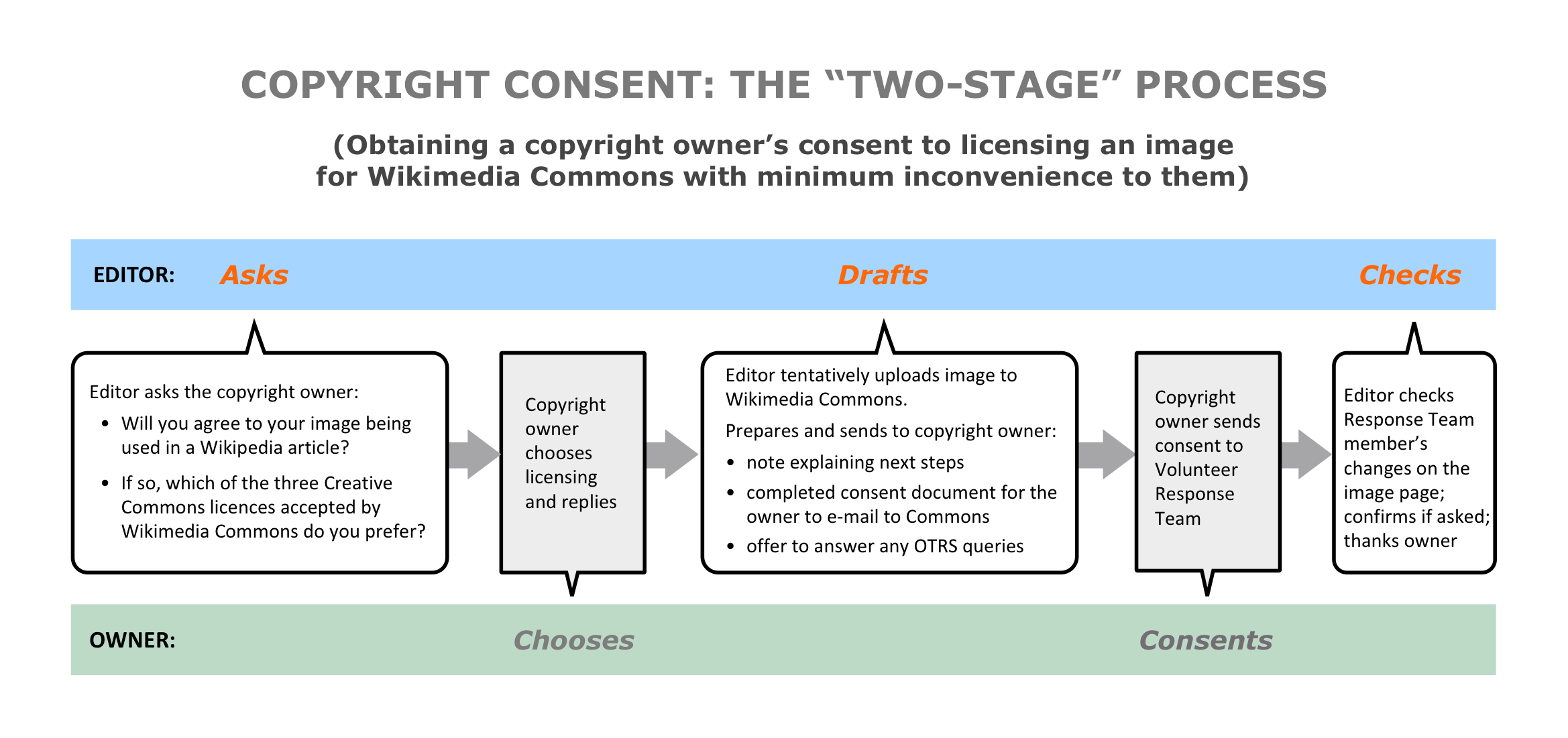
Image: Copyright consent — the 2-stage process.png | Own work | License: CC0 | Source: Wikimedia | https://commons.wikimedia.org/wiki/File:Copyright_consent_–_the_2-stage_process.png