The Producer’s Forum Map: Where Serious Music Makers Actually Talk Shop
The best online communities for producers do more than swap presets—they solve mix problems, stress-test workflow, and expose you to ears you won’t find in your immediate circle. Here’s where producers, engineers, and beatmakers are still getting useful feedback.

Why producer communities still matter
For all the noise around algorithmic feeds, short-form tutorials, and AI-assisted production tools, the most valuable learning in music production still comes from conversation. A good online community can do what a plugin chain cannot: catch the blind spots in your ears, challenge your workflow assumptions, and put you in contact with people working in adjacent genres, rooms, and levels of experience. That matters whether you are trying to tighten low-end translation, compare compressor behavior on vocals, or figure out why your drum bus suddenly feels smaller after the chorus.
The best online communities for producers are not just message boards full of gear talk. They function like living reference libraries. You can post a 20-second bounce and get specific notes about kick transient shape, vocal presence, stereo image, and arrangement pacing. You can compare plugin versions, ask how others are gain-staging into saturation, or learn why a mix that sounds huge in headphones collapses in mono. In practice, that kind of peer feedback often moves a track faster than a dozen isolated YouTube searches.
What a useful community actually looks like
Not every producer forum is worth your time. The useful ones tend to share a few traits: a clear moderation culture, active threads with technical specificity, and members who can explain decisions rather than just state opinions. If the average reply is “sounds good” or “needs more sauce,” the room is not doing enough work.
Look for communities where people talk in concrete terms: attack and release behavior, harmonic saturation, vocal de-essing around 6–8 kHz, sidechain placement relative to the kick, arrangement density across sections, or whether a reference track is really brighter or just less mid-forward. That level of detail tells you the community has ears, not just enthusiasm.
It also helps when a forum or Discord has a culture of posting stems, screenshots, and before/after examples. Producers learn fastest when they can connect a sonic result to a visible change in routing, EQ, compression, or mix bus processing.
The strongest community types for producers
1. Traditional forums
Classic production forums are still one of the best places for deep-dive problem solving. Searchable archives are their superpower. If you are trying to understand a specific synth, a converter, an outboard-style compressor plugin, or a weird DAW routing issue, a forum thread from years ago can still be more useful than a fresh social post. The best forums reward long-form explanations, which is exactly what you want when the subject is phase alignment, frequency masking, or mastering headroom.
2. Discord servers
Discord is where a lot of modern producer conversation happens in real time. It is especially strong for collaboration, quick feedback, and genre-specific scenes. Trap producers, house writers, drum and bass engineers, and sample pack creators often gather in more targeted servers than you would find on broader forums. The upside is immediacy. The downside is that good information can disappear fast unless the server is well organized with pinned resources and searchable channels.
3. Reddit-style communities
Reddit communities can be useful because they combine scale with niche specialization. You can find subcommunities for mixing, sound design, synth programming, mastering, FL Studio, Ableton Live, Logic, and specific genres. The best use case is fast crowd-sourced troubleshooting: a strange plugin crash, an export problem, or a question about whether your low end is too wide. The limitation is that quality varies wildly, so you need to filter aggressively and trust posts that include audio examples or technical context.
4. Gear and synth communities
If your work relies heavily on hardware synths, drum machines, samplers, or boutique plugins, gear-focused communities can be gold. These spaces are often where you will find the people who actually know how a unit behaves in a real session—not just in a spec sheet. You will get better advice on oscillator drift, gain structure, modulation quirks, MIDI timing, and what really happens when a device is pushed into clipping.
5. Collaboration-first communities
Some communities are less about discussion and more about making records together. These are useful if you want to sharpen arrangement instincts, improve turnaround, or build a feedback loop around songwriting and production. The best collaboration spaces give you exposure to working habits: how other producers name stems, organize projects, hand off files, or build instrumental variations for vocalists.
Where producers tend to get the most value
The highest-value communities are usually the ones that match your current bottleneck. If your problem is sound design, join a synth-heavy space where people share patch breakdowns. If your problem is finishing records, find a feedback community that emphasizes arrangement and deadlines. If your problem is mix translation, prioritize places where people post references, spectrums, and listening notes instead of vague praise.
For example, a producer struggling with muddy low mids will get more from a community that can identify whether the issue lives around 180 Hz, 250 Hz, or 400 Hz than from a general “music makers” group. A beatmaker trying to improve drum impact may benefit more from a forum where members discuss transient shapers, clipper settings, parallel compression, and sample layering than from a broad social feed full of gear photos.
Serious communities also help with perspective. When you spend all week in one DAW, one genre lane, and one room, it is easy to mistake familiarity for correctness. Hearing how another producer builds space with pre-delay, how an engineer manages vocal saturation, or how a house producer balances kick and bass can change your own templates in a useful way.
How to get better feedback from any producer forum
If you want useful responses, post in a way that helps people listen like engineers, not just casual fans. That means giving context: genre, reference tracks, BPM, what you are trying to improve, and what specific problem you hear. Instead of asking “thoughts?”, ask “Is the vocal sitting too far forward compared to the instrumental, and does the snare need more crack in the 3–5 kHz range?”
Include the right material. A stereo bounce is fine for arrangement feedback, but if you are asking about mix problems, give people a version that is not heavily limited to death. If possible, include a before/after comparison, or at least describe what processing is on the bus. The more transparent you are, the more actionable the critique will be.
Also learn to read feedback properly. Not every comment deserves equal weight. If three different engineers mention the same issue—say the sub is overpowering the vocal, or the hi-hats are masking the top of the snare—that is probably a real problem. If one person hates the kick and everyone else is nodding at the groove, trust the consensus more than the outlier.
The communities worth joining are the ones you will actually use
There is no perfect producer community, only the right one for your current goals. The strongest spaces combine specificity, honesty, and momentum. They help you troubleshoot technical issues, understand why certain mixes translate, and hear your own work through more experienced ears. That is what separates a passive comment thread from a real creative network.
If you are serious about production, join at least two kinds of communities: one that is broad enough to expose you to new techniques, and one that is narrow enough to speak your exact language. A forum with strong archives and a fast-moving Discord with active producers can be a powerful combination. Between the two, you will get the long-form explanations, the quick feedback, and the occasional hard truth that pushes a track across the finish line.
The point is not to collect memberships. It is to find rooms where people listen closely, answer precisely, and care enough to tell you when the kick is fighting the bass or when the chorus needs another layer. That is where producer communities still earn their keep.
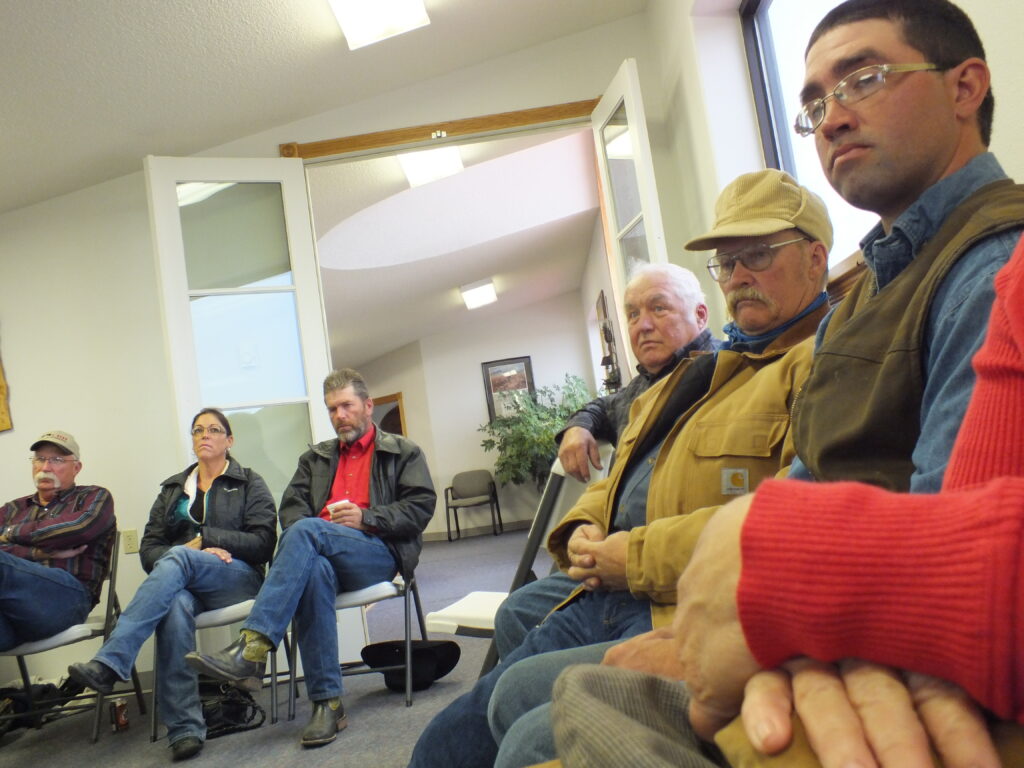
Image: 2019 AgOutlook Forum (20190221-OSEC-LSC-0120).jpg | 20190221-OSEC-LSC-0120 | License: Public domain | Source: Wikimedia | https://commons.wikimedia.org/wiki/File:2019_AgOutlook_Forum_(20190221-OSEC-LSC-0120).jpg