Streaming as a Studio Tool: The Sonic Shortcut That Rewired Modern Production
Spotify didn’t just change how music is consumed—it changed how records are built. From hook timing to loudness decisions, streaming turned the platform into a silent co-producer.
The platform became part of the arrangement
Streaming didn’t merely replace the CD as the dominant distribution format. It inserted a new layer of feedback into the production process itself. Once Spotify, Apple Music, and YouTube became the primary ways people discovered and replayed songs, producers had to start thinking about the platform as if it were another instrument in the chain—one that silently influenced structure, mix balance, loudness, and even songwriting decisions.
That’s the real shift. In the pre-streaming era, records were mainly built for albums, radio, and physical sequencing. A great song still needed a strong first impression, but there was more tolerance for long intros, mood-setting passages, dynamic range, and side two pacing. Streaming collapsed that patience window. Skip behavior, playlist culture, and algorithmic recommendation pushed production toward immediacy. Songs began competing not only with each other, but with the listener’s thumb on the skip button.
Spotify, in particular, became a production reference point because its ecosystem rewards retention. If a track gets through the first 10 to 30 seconds, it is more likely to survive algorithmic sorting and land in more passive listening contexts. That reality has changed how records are arranged, mixed, mastered, and even demoed.
Old rules: radio and album logic vs. streaming logic
Before streaming, production priorities were shaped by different gatekeepers. Radio wanted immediacy, but not necessarily micro-optimized intros. Labels wanted singles, but albums still had room for sequencing, transitions, and contrasting dynamics. A producer could build tension over 45 seconds and still expect listeners to stay engaged because the format itself demanded commitment.
Streaming flipped that equation. The new comparison set is not the album side B or the car radio—it’s everything else in the queue. That means tracks are judged in a context where skips are frictionless and attention is highly fragmented. As a result, the modern production brief often looks like this:
- Get to the hook faster.
- Make the opening sonically identifiable within seconds.
- Keep the vocal front and centered.
- Reduce unnecessary intro clutter.
- Deliver a mix that survives earbuds, phone speakers, and playlist sequencing.
This is not simply “shorter songs.” It’s a structural rethinking. The intro, verse, and chorus are now judged by whether they earn their place in a retention-driven environment. The result is a production style that often favors compressed, highly legible arrangements over elaborate builds.
The Spotify effect: why the first 30 seconds matter so much
Spotify’s impact on music trends is partly behavioral and partly algorithmic. On the behavioral side, listeners are more likely to skip if the track doesn’t present its identity quickly. On the algorithmic side, Spotify tracks completion, skips, saves, repeat plays, and playlist adds—metrics that can influence how a song is surfaced. That feedback loop has concrete production consequences.
In practical terms, many modern records are built to reveal the core of the song almost immediately. Producers might:
- Start with the hook vocal or a melodic fragment instead of a long instrumental intro.
- Introduce the drum groove in bar 1 rather than bar 9.
- Use a vocal chop, synth motif, or ear-candy texture as the identity marker.
- Compress the arrangement so the chorus lands earlier in the timeline.
This is a major contrast to older production styles where the intro could function as atmosphere, setup, or even narrative delay. Streaming incentivizes immediate recognition. If the opening doesn’t telegraph the track’s emotional and sonic lane, the listener may never arrive at the payoff.
Loudness is still a production decision, but it’s a different game now
Streaming also changed mastering by taking some pressure off the loudness war while leaving its psychology intact. Most major platforms normalize playback, which means a heavily limited master no longer guarantees a volume advantage the way it once did on CD or in a club-ready promo context. But producers and engineers still make loudness-related decisions because the aesthetic consequences remain real.
In the streaming era, the question is less “How loud can we make it?” and more “How dense can we make it before the mix collapses?” That distinction matters. Records designed for streaming often rely on controlled transient shaping, more conservative peak management, and aggressive midrange clarity so the vocal and main hook stay audible on tiny speakers.
That also explains the persistence of bright top-end, tight low end, and highly managed vocals. A track that sounds huge on monitors but obscures the lyric on earbuds is at a disadvantage. Engineers now have to think across playback systems more than ever, because the average listener may hear the song first through AirPods, a Bluetooth speaker, a laptop, or a phone in a noisy environment.
Compression, density, and the new attention economy
Streaming has made compression not just a technical tool but an aesthetic one. Not every genre has moved in the same direction, but the mainstream trend has been toward denser records with less dynamic sprawl. That doesn’t mean everything is crushed flat. It means that the emotional contour of the song often has to be legible at a glance.
For producers, this changes arrangement strategy. Instead of relying on long dynamic arcs, many records create variation through texture swaps, drum subtraction, vocal stacking, and subtle automation. The song feels active without necessarily becoming more dynamically open. In a DAW session, this often looks like:
- Pre-chorus lift via filter automation or harmony expansion.
- Chorus impact created by additional octave layers, wider stereo fields, or extra percussion.
- Verse restraint maintained by sparser low-end or narrower imaging.
- Bridge contrast built from dropouts rather than extended instrumental development.
This is streaming-era efficiency: every section has to justify itself quickly.
Song length: shorter isn’t always the point, but pacing is
A lot of commentary reduces streaming-era music to one complaint: songs got shorter. There’s some truth there, especially in pop, hip-hop, and certain forms of electronic music, where sub-three-minute tracks have become common. But the deeper change is pacing. Even when tracks aren’t dramatically shorter, they are usually more front-loaded.
That front-loading can mean more hook repetition, faster lyric delivery, less preamble, or more immediate rhythmic identity. It can also mean structural compression in the form of fewer eight-bar intros and shorter instrumental breaks. The song’s “best idea” arrives earlier because the competitive environment demands it.
Compare that with older album-oriented approaches where an extended intro could create a scene before the vocal entered. Today, producers often treat the intro as a teaser, not a chapter. The goal is not exposition. The goal is retention.
Production trends Spotify helped normalize
Spotify didn’t invent these trends, but it amplified and normalized them:
- Faster hook delivery: chorus, topline, or melodic cell arrives earlier.
- Tighter intros: fewer bars before the main identity appears.
- Playlist-safe sonics: mixes designed to fit alongside adjacent tracks without sounding jarring.
- Vocal-forward mixes: lyrics remain intelligible in low-quality playback environments.
- Genre blending: cross-pollination between pop, trap, electronic, and indie textures to widen playlist placement.
There’s also a subtle but important trend toward “instant genre readability.” A track needs to telegraph whether it belongs in chill pop, glossy alt-R&B, hard trap, dance-pop, or moody indie electronic within a few seconds. That clarity helps both listener expectation and algorithmic categorization.
What producers can learn from the streaming era without surrendering to it
The smartest response to streaming is not to chase every trend blindly. It’s to understand the mechanics well enough to use them strategically. If you’re producing for release today, here are the practical takeaways:
- Write the opening as if it’s your trailer. The first 10 seconds should communicate mood, tempo, and identity.
- Check your chorus arrival time. If the hook lands too late, test a faster version or a stronger intro cue.
- Audit the vocal in small-speaker playback. If the lyric disappears, the mix is not platform-ready.
- Use density with intention. Layering should clarify the emotional peak, not just make the session look expensive.
- Leave some dynamic contrast. A streaming-friendly record still needs shape; otherwise it becomes fatigued on repeat listens.
Most importantly, remember that streaming is a distribution environment, not a substitute for taste. The best records in the streaming era are not just optimized—they’re memorable. They use the rules to sharpen the experience, not flatten it.
The bigger picture: streaming changed production because it changed listening
At its core, streaming changed music production forever because it changed the conditions under which music is judged. Spotify didn’t just alter revenue models or discovery funnels. It changed the sonic contract between artist and listener. Songs now have to survive faster evaluation, algorithmic sorting, and cross-platform playback while still sounding emotionally distinct.
That’s why streaming feels less like a delivery system and more like a production philosophy. It has pushed records toward immediacy, clarity, and structural efficiency. It has elevated the intro from a mood-setter to a retention test. It has made the vocal more central, the mix more portable, and the arrangement more ruthless.
For some artists, that’s a creative constraint. For others, it’s a useful shortcut. Either way, the streaming era has become part of the studio workflow—and the smartest producers are treating it that way.
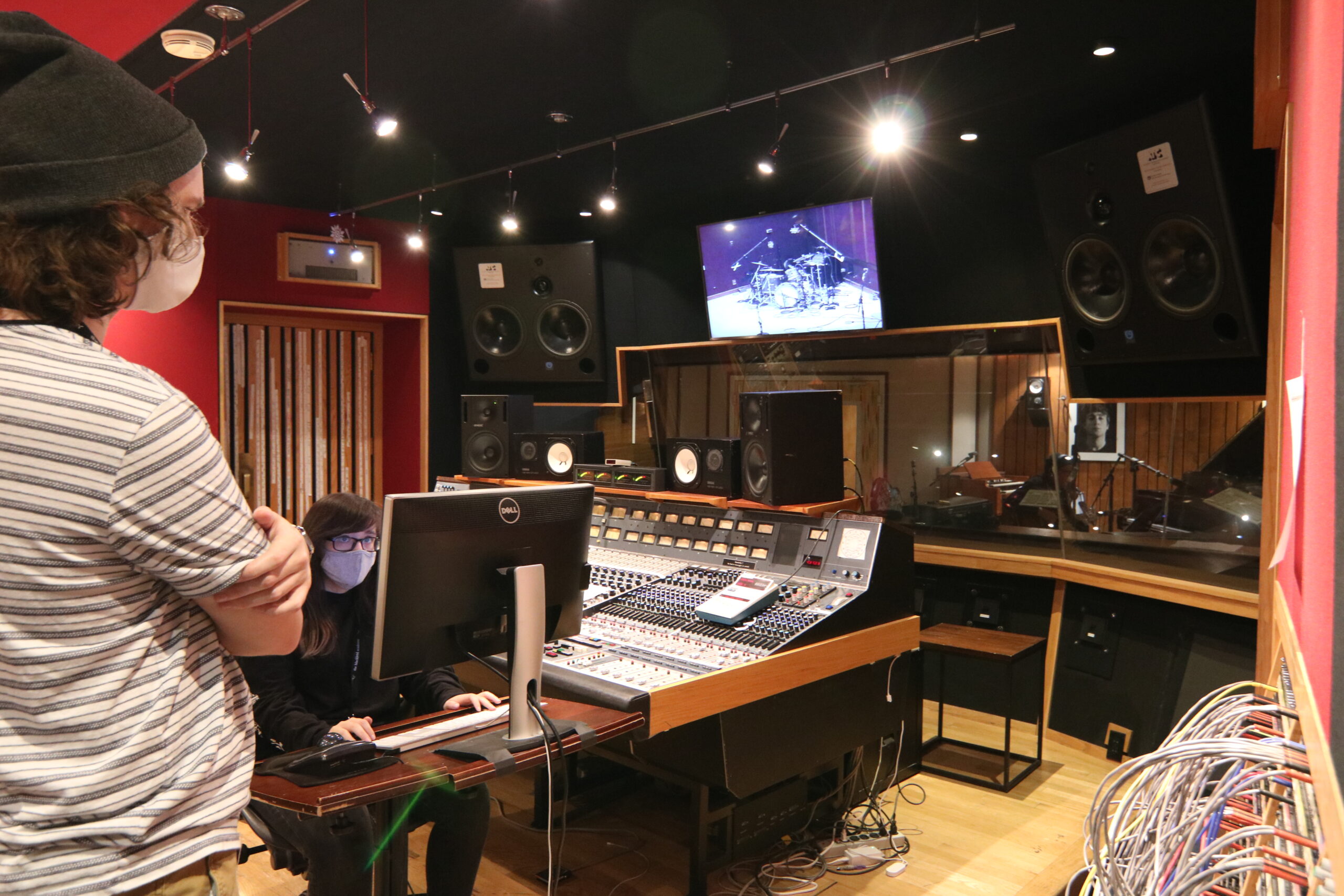
Image: Blackbird Studio A control room – Guitar recording – Neve 7078 & ProTools – IMG 9945 (1) – Blackbird Studio – Phil Madeira, Nov. 16-18, 2021 – The Blackbird Academy (2021-11-15 17.08.46).jpg | IMG_9945 (1) | License: CC BY-SA 2.0 | Source: Wikimedia | https://commons.wikimedia.org/wiki/File:Blackbird_Studio_A_control_room_-_Guitar_recording_-_Neve_7078_%26_ProTools_-_IMG_9945_(1)_-_Blackbird_Studio_-_Phil_Madeira,_Nov._16-18,_2021_-_The_Blackbird_Academy_(2021-11-15_17.08.46).jpg