The New Revenue Stack: Where Producers Actually Make Money in 2026
Production income is no longer a single stream tied to beats or points. Today’s working producers build revenue from sessions, splits, sync, sample packs, content, and direct audience ownership—and the difference is in how intentionally they design the stack.

For most producers, the old fantasy of making a living from a single blockbuster placement or a handful of beat leases is gone. The modern producer economy is messier, faster, and in many ways more interesting: income comes from stacking multiple small-to-medium revenue sources that each reflect a different part of the production process. If you know where the money actually enters the system, you can make sharper creative and business decisions in the studio.
The big shift is this: producers are no longer paid only for finished songs. They’re paid for function. Sometimes that function is writing a topline-ready instrumental. Sometimes it’s drum programming. Sometimes it’s sonic translation—making a record sound expensive enough to justify a sync brief, a label advance, or a brand campaign. If you can identify the exact point where your value is most obvious, you can monetize it more efficiently.
The New Producer Income Model: Stack, Don’t Wait
Most active producers today build income from a combination of five core lanes: client work, publishing and master participation, licensing, products, and audience-owned channels. None of these are inherently passive, and that’s the point. The smartest producers treat revenue like arrangement: different elements occupy different frequency bands, and no single element has to carry the whole record.
In practice, this means a producer might earn a session fee for vocal production, points on the master for co-production, publishing splits for writing contribution, income from a sample pack, and a sync placement based on a track built specifically to hit library briefs. Separate sources, same overall identity.
Listening cue: when a producer’s income is diversified correctly, you can often hear the business logic in the music. The drums are clean enough for licensing, the arrangement has edit points, the bass leaves space for dialogue, and the hook arrives early. That is not accidental—it’s monetization-aware production.
Session Fees: The Fastest Money Still Comes From Service

For many producers, the most reliable cash flow still comes from direct service work. That includes beat programming, vocal tuning, full track production, mix prep, stem editing, sound design, and remote session support. These are the jobs that pay quickly because the client is buying time, expertise, and execution.
The practical takeaway: if you want service income, be specific about what you do best. “Producer” is too broad. “Trap drums and arrangement for melodic rap,” “vocal production for indie-pop,” or “mix-ready production for guitar-led alternative records” is clearer, easier to sell, and easier for clients to remember.
Producers who make the most from service work usually do three things well:
- They maintain fast turnaround and clean communication.
- They deliver session files that are organized and easy to reopen.
- They understand genre conventions deeply enough to improve a record without overworking it.
That last point matters. A lot of producers lose repeat business because they overstate their signature instead of solving the artist’s actual problem.
Publishing Splits and Master Points: The Long Game
If session fees are the front end, publishing and master participation are the back end. This is where producers get paid over time as songs generate streams, radio spins, performance royalties, and sync revenue. The challenge is that many producers still leave money on the table by not negotiating credit clearly enough.
At minimum, producers should know the difference between master ownership, publishing ownership, and work-for-hire agreements. A producer might receive a flat fee and no backend, or a reduced fee with points and publishing participation. Neither is automatically wrong; the key is understanding what you’re giving up and what you’re retaining.
Listening cue: records that are built for backend value often have strong replay utility. The production leaves room for repeated listening without fatigue: a memorable drum motif, a bassline with movement, a synth layer that evolves, or a texture that reveals itself on the third listen. That matters because backend income depends on songs people return to.
In other words, the track doesn’t just need to be good—it needs to be durable.
Sync Licensing: Production for Picture, Not Just Streaming
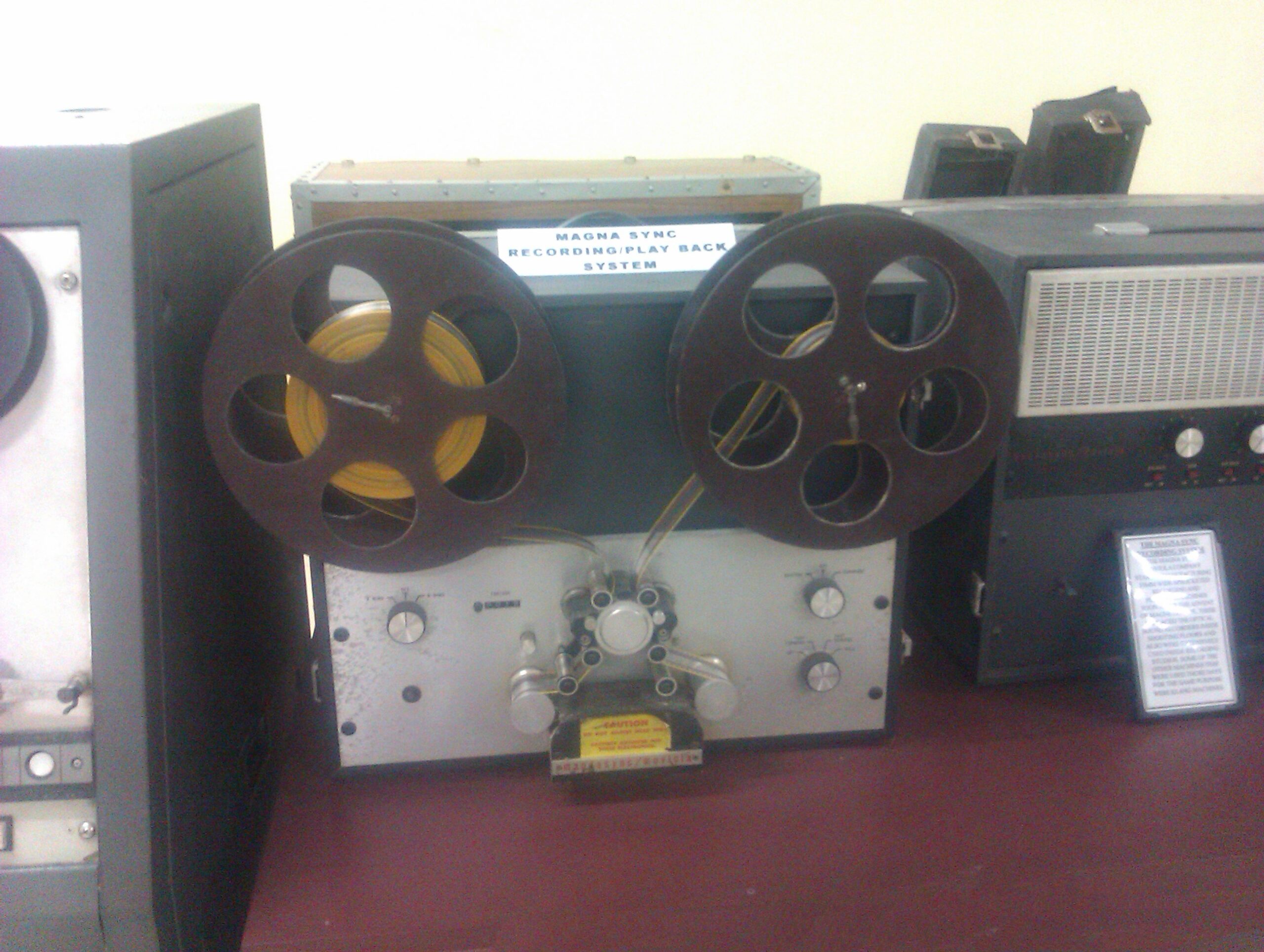
Transferred from ml.wikipedia to Commons by User:Sreejithk2000 using CommonsHelper. | License: CC BY-SA 3.0 | Source: Wikimedia | https://commons.wikimedia.org/wiki/File:Magna_sync_recording_playback_system.jpg
Sync is one of the clearest examples of how producers monetize sonic identity. Music supervisors do not just want “a great song.” They want a track that solves a scene. That means the production has to communicate mood quickly and cleanly. A sync-friendly record often has a strong intro, fewer lyrical dependencies, clear dynamic lifts, and a mix that translates across dialogue-heavy contexts.
For producers, the opportunity is not only in the placement itself but in creating catalog that is intentionally usable. That may mean composing alternate versions: instrumentals, stings, 60-second edits, no-drum cuts, underscore versions, and clean mixes. The more usable the track, the more markets it can enter.
Practical tip: if you want to produce for sync, start listening like a editor. Ask where the first usable scene arrives, whether the hook can be understood without vocals, and whether the breakdown creates tension instead of just energy loss. Those choices affect licensing value directly.
Sample Packs, Presets, and Loop Libraries: Monetizing the Palette
One of the most producer-native income streams is productizing your sound. If other producers constantly ask how you got your drums, bass presets, ambient textures, or chord stacks, that’s a clue you have something sellable. Sample packs and preset collections work because they monetize the middle layer of production—the palette itself.
This is not just a side hustle for bedroom producers. High-level sound designers, touring producers, and label-affiliated engineers all sell packs because they know their workflow has commercial value. A great pack does not simply contain sounds; it carries a point of view. Whether it’s dusty drum breaks, hyperclean pop percussion, vintage synth stabs, or plugin-heavy ambient one-shots, the product should sound like you.
Listening cue: good packs are instantly identifiable but flexible. If every loop sounds like a finished track, the pack is less useful. The best packs provide usable sonic DNA without overcommitting to one arrangement.
Content and Audience Ownership: The Producer as Media Brand

Today, producers can also make money by being educational, entertaining, or demonstrative in public. Short-form breakdowns, live beat-making streams, Patreon memberships, paid communities, tutorial sales, and affiliate revenue all sit in this lane. The reason it works is simple: producers are unusually well positioned to show process, and process sells.
When a producer posts a five-second before-and-after of a drum bus chain or shows the difference between raw MIDI and a polished bounce, they are not just marketing. They are establishing authority, which converts into lessons, consulting, services, pack sales, and direct fan support. This is especially powerful for niche specialists—mix engineers with a drum signature, synth programmers with a vintage obsession, or vocal producers with a clean-pop ear.
Practical takeaway: if you want audience income, document decisions that are specific enough to be taught. “I added compression” is forgettable. “I used parallel compression to keep the transient but lift the room sound” is content.
What Producers Should Listen For When Building a Monetizable Track
If you want your work to generate more than one kind of income, listen for the elements that expand usability. A monetizable producer record often has:
- Clean intro architecture so it can be edited, pitched, or used in video.
- Distinct stems that hold up when the track is split apart.
- Ear-catching motifs that support replay and identity.
- Controlled low-end for translation across systems and sync contexts.
- Alternate arrangement points that make looping and cutting easy.
These are not purely technical choices. They are business decisions embedded in sound design, arrangement, and mix strategy.
The Producers Who Win Today Think Like Builders
The producer economy now rewards people who can build reusable value, not just one-off records. That means sharpening your niche, understanding the rights attached to every session, and treating sonic identity as an asset that can be repackaged across formats. The best producers are not waiting for a single breakout check. They are designing a revenue stack around the same skills that make their records feel distinctive in the first place.
If you listen closely, the modern producer’s money trail is audible: in the edit-ready intro, the sync-safe arrangement, the pack-worthy drum sound, the session fee attached to a very specific skill set, and the content clip that proves the process behind the polish. That is where producers make money today—not in one lane, but in the way they connect all of them.
Image: Manifest Destiny (Motherlode) | Blender 3D | Logan Voss | License: Unsplash License | Source: Unsplash | https://unsplash.com/photos/stacks-of-100-bills-are-neatly-arranged-F4DMlrelS6o