The Architects of 90s Rock: Producers Who Turned Guitars Into Radio-Ready Weapons
The biggest 90s rock records didn’t just happen because the bands were strong—they hit because the producers knew how to shape distortion, drums, and vocal dynamics into something massive and unmistakable. From raw alt-rock to polished arena anthems, these are the sonic architects behind the decade’s defining hits.
Ask a room full of musicians what made 90s rock feel so immediate, and you’ll hear answers like “the riffs,” “the attitude,” or “the songs.” All true—but incomplete. The decade’s biggest rock records were also engineered by producers who understood how to turn a band into a sonic event. They knew when to preserve grit, when to compress the life out of a drum bus, and when to push a vocal just far enough to feel urgent without losing its humanity.
The best 90s rock producers weren’t just recordists. They were arrangers, tone sculptors, and in many cases, the final filter between a great performance and a song that could dominate MTV, radio, and stadium PAs at the same time. What separates them technically is not one magic trick, but a repeatable workflow: performance capture, overdub architecture, drum sound design, layered guitars, and mixes built for impact on consumer playback systems.
Butch Vig: Grunge Precision With Pop-Level Control
Butch Vig’s work on Nirvana’s Nevermind is one of the clearest examples of 90s rock production becoming both iconic and invisible. The record still feels raw, but listen closely and it’s meticulously shaped. The drums are enormous because they’re not just “big” in the room—they’re controlled in the mix with close mics, room ambience, and aggressive compression that keeps the kit sounding unified. Vig’s approach gave the band’s volatility a center of gravity.
What makes his style technically distinctive is the balance between aggression and clarity. Kurt Cobain’s guitars are saturated, but they’re not a wall of undefined fuzz. The low mids are managed so the bass remains legible, and the vocal sits forward enough that the emotional content lands instantly. On tracks like “Smells Like Teen Spirit,” the verses and choruses are arranged like a dynamic trapdoor: restrained low-end in the verse, then explosive full-band release in the chorus. That contrast is production, not just songwriting.
Takeaway for producers: If you want a grunge-inspired mix that still translates, focus on drum ambience, parallel compression on the kit, and careful midrange separation between rhythm guitars and bass. A distorted guitar tone alone won’t create scale; controlled dynamics will.
Bob Rock: The Blueprint for Arena-Size Guitar Weight
Bob Rock became synonymous with the huge, polished rock sound of the 90s, especially through Metallica’s Black Album and his work with bands like Mötley Crüe and The Cult. His signature is not rawness—it’s mass. He made guitars feel physically wide, drums feel architectural, and lead vocals feel like they were carved into the front of the mix.
Rock’s production style often involves heavily layered rhythm guitars with very deliberate left-right placement, tightly edited performances, and drum sounds that are dry enough to punch but processed enough to feel expensive. The snare on many of his productions has a deep crack with a long, controlled tail, often supported by gate settings or careful room treatment. The kick drum is typically tuned and EQ’d for attack in the 3–5 kHz range while preserving enough low-end body to hold up under dense guitars.
He also understood something many producers miss: big rock records still need vocal intimacy. Even when the arrangement is enormous, the vocal has to sound like a human being in the room. That’s why his mixes often use vocal compression in stages rather than one heavy-handed pass—catching peaks on the way in, then smoothing the performance in the mix so the singer stays present through the choruses.
Takeaway for producers: For arena-scale rock, think in layers. Double or quad-track rhythm guitars with complementary tones, clean up the bass guitar so it supports the kick, and treat drums like they need to survive a stadium PA, not just headphones.
Brendan O’Brien: Punch, Clarity, and the Modern Alt-Rock Template
Brendan O’Brien helped define the cleaner, tighter side of 90s rock with records for Pearl Jam, Stone Temple Pilots, and Rage Against the Machine. His sound is less about haze and more about impact. Guitars are still muscular, but the low end is often more disciplined, and the mix image feels organized even when the band is pushing hard.
Technically, O’Brien’s productions often stand out because of their transient clarity. Drums hit with a sharp front edge, bass sits in a defined lane, and guitars are tracked and mixed to leave space for the vocal. That makes the song feel more aggressive, not less, because the punch is not smeared by excessive low-mid buildup. On records like Pearl Jam’s Vs. and Vitalogy, the band still sounds live, but the record has enough control to make every section feel intentional.
He is also strong on arrangement discipline. Instead of stacking endless production flourishes, he often relies on performance energy, selective overdubs, and mix balance. That’s a crucial lesson for modern producers working in plugins: polish is not the same as clutter. A well-placed room mic or a harmonically rich parallel chain will do more than ten layers of unnecessary processing.
Rick Rubin: Minimalism That Let the Band Hit Harder
Rick Rubin’s contribution to 90s rock is often misunderstood because his production appears minimal on the surface. But his signature is artistic control through subtraction. With the Red Hot Chili Peppers on Blood Sugar Sex Magik, he helped capture a performance-driven sound that felt raw, open, and unmistakably centered on the band’s chemistry. The records breathe because the arrangements are allowed to breathe.
Rubin’s technically distinctive move is knowing what not to touch. Instead of over-editing, he often encourages performances with natural push and pull. That can make a record feel bigger than a heavily quantized, over-processed one because the transients and dynamic contours stay alive. His productions often rely on room sound, simple microphone choices, and performances that carry the emotional weight directly.
Takeaway for producers: If a track already has personality, don’t bury it under processing. Strip the chain back, keep the arrangement sparse enough for groove to matter, and preserve the drummer’s feel instead of forcing everything to grid-perfect precision.
Chris Lord-Alge: The Mix Engineer Who Turned Loud Into an Aesthetic
While not always the producer in the classic sense, Chris Lord-Alge became a defining force behind the sound of 90s rock through mixes that made records hit hard on radio. His work sharpened the genre’s commercial edge: snare drums that popped through dense arrangements, vocals that stayed present under heavy guitars, and low end that translated on consumer speakers without collapsing.
CLA’s style is built on compression, EQ, and contrast. He is known for making drums feel aggressively forward, often with strong punch in the snare and kick, and for keeping vocals locked to the center of the mix with enough harmonic density to remain intelligible under distortion. In practical terms, this means fast transient control, bold midrange shaping, and the kind of balancing that makes a song feel “finished” immediately.
Takeaway for producers: If your mix sounds good only when turned up loud, it’s not done. CLA-style balancing is about making every element readable at low and high playback levels, especially the vocal and snare.
The Common Thread: 90s Rock Was Designed, Not Just Recorded
What unites these producers is not a single sonic signature but a mindset. 90s rock production was a craft of intentional translation. These records had to work on CD, on MTV, on car stereos, on boomboxes, and on giant festival systems. That meant the producer had to control density, not just capture energy.
In technical terms, the decade rewarded producers who could manage:
- Drum impact: close mic punch plus room character, often reinforced with compression
- Guitar layering: stacked takes, tuned tone shaping, and careful stereo placement
- Bass definition: enough harmonic content to stay audible against distorted guitars
- Vocal forwardness: compression and EQ that preserved intelligibility without flattening expression
- Dynamic contrast: verses and choruses designed to feel dramatically different
That’s why these records still hold up. They’re not just nostalgic documents of a scene; they’re masterclasses in how to make a rock band sound larger than the room it was recorded in.
What Modern Producers Can Steal From the 90s
If you’re building a 90s rock-inspired session today, don’t chase the decade with a preset. Build it from the ground up. Start with live performances that have real dynamics. Use room mics, but control them with compression instead of drowning the kit in ambience. Track guitars twice with different amp settings or pickups so the stereo image has texture. Keep the bass part simple enough to lock with the kick. And above all, resist the temptation to over-edit the life out of the song.
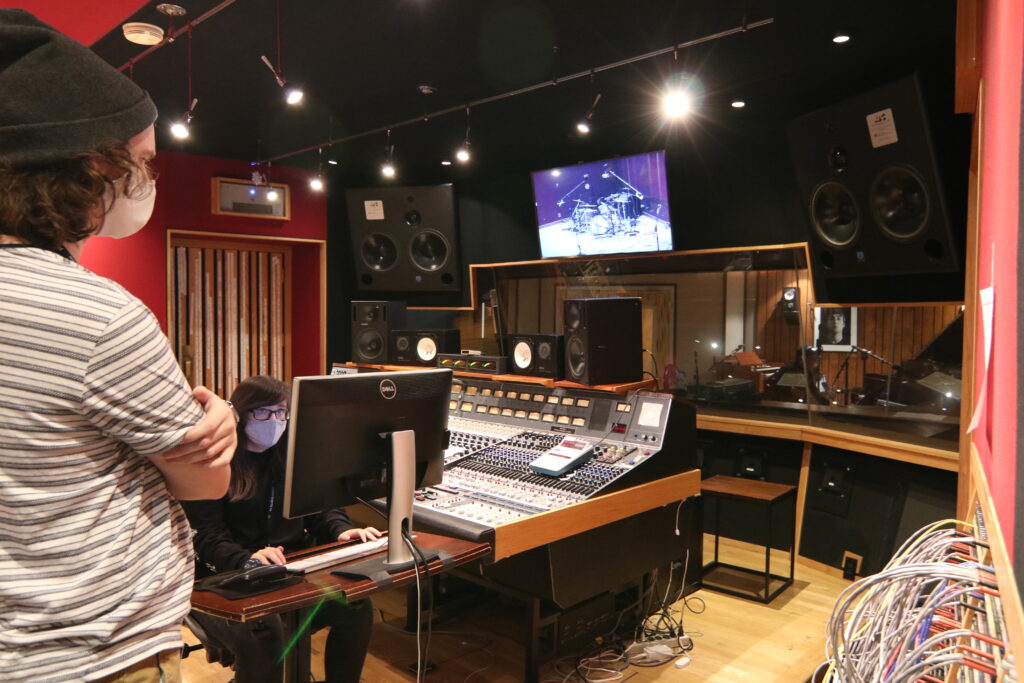
The most useful lesson from the top producers behind 90s rock hits is that signature sound comes from decision-making, not gear alone. The console mattered. The rooms mattered. The mics mattered. But the real differentiator was the producer’s ability to hear where a song needed restraint, weight, or shock. That’s the blueprint the decade left behind.
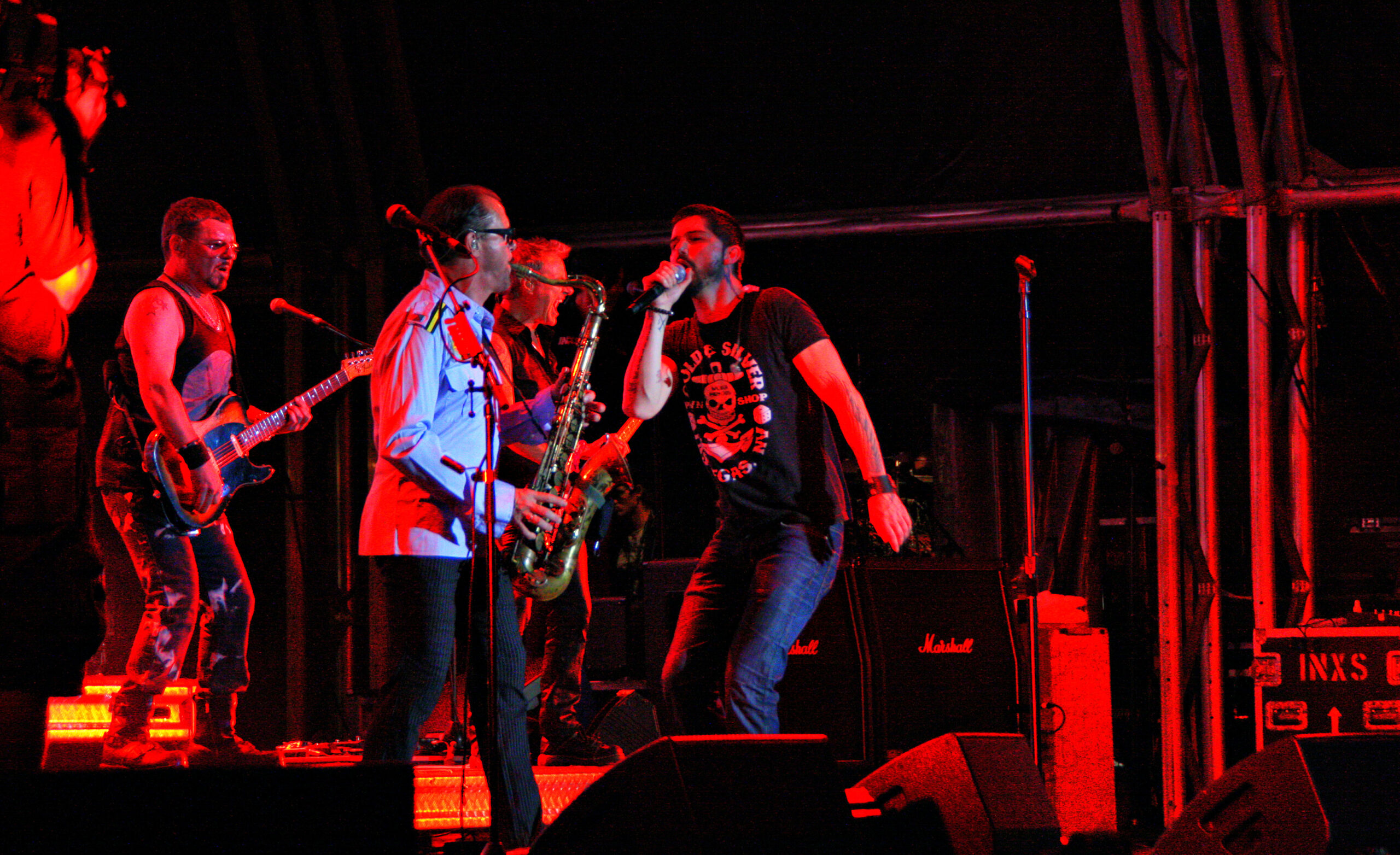
Image: INXS TO ROCK THE HUNTER!.jpg | INXS TO ROCK THE HUNTER! | License: CC BY-SA 2.0 | Source: Wikimedia | https://commons.wikimedia.org/wiki/File:INXS_TO_ROCK_THE_HUNTER!.jpg