The 10 Guitar Riffs That Changed the Language of Rock
The best guitar riffs do more than sound memorable—they lock in timing, tone, and attitude. Here’s a technique-focused breakdown of ten riffs every player should study, along with practical tips for getting the feel right.
Why Great Riffs Hit So Hard
A truly great guitar riff is less about note count and more about identity. The best ones are instantly recognizable because they combine three things with ruthless efficiency: rhythmic precision, a strong melodic shape, and a tone that makes the part feel bigger than the guitar itself. Some riffs live on power chords and open strings; others rely on syncopation, muting, or a single repeated figure dressed up by the right amp sound. The common thread is discipline. A legendary riff sounds inevitable, like it couldn’t have been written any other way.
If you’re a player, producer, or engineer, studying riffs is one of the fastest ways to improve your own writing and tracking. You learn how timing shapes aggression, how a muted note can be more powerful than a flurry of leads, and why certain arrangements leave enough space for a riff to breathe. Below, we’re not just ranking the greatest guitar riffs—we’re breaking down what makes them work and how to steal the useful parts without copying the notes.
1. Led Zeppelin — “Whole Lotta Love”
Jimmy Page’s riff is a masterclass in swagger through simplicity. It’s built on a blues-based figure, but the groove is what sells it: the riff sits slightly behind the beat, with a loose, heavy feel that gives the part its dangerous edge. The slides and repeated chords create tension, while the iconic tone—thick, mid-forward, and just on the edge of breakup—makes every note feel physical.
Technique takeaway: Don’t over-tighten this kind of riff. Play it with controlled slop, but keep the pulse intact. A Les Paul-style humbucker guitar into a driven amp or a good amp sim with moderate saturation and rolled-off top end will get you in the zone.
2. Black Sabbath — “Iron Man”

If there’s a case study in pure riff gravity, it’s “Iron Man.” Tony Iommi’s line is heavy because it’s deliberate. The phrasing is plodding in the best way, with pauses that create as much impact as the notes themselves. The riff’s appeal comes from its simplicity and the way it feels like a machine moving with unavoidable force.
Technique takeaway: Leave space. Heavy playing is often about restraint, not speed. Tight palm muting, clean downstrokes, and a sustain-rich distortion tone are more important here than flash. If you’re recording, layer with care—too many overdubs can blunt the riff’s menace.
3. Deep Purple — “Smoke on the Water”

Few riffs are as universally known, or as misunderstood, as “Smoke on the Water.” Yes, it’s simple. That’s the point. The riff uses a compact, symmetrical shape that’s easy to memorize, but the rhythm and articulation are what make it durable. It’s a perfect example of how minimal note material can become iconic when the phrasing is strong.
Technique takeaway: Make the intervals clean and even. Beginners often rush this riff or over-pick it. Keep the attack consistent and focus on groove over volume. For production, a slightly gritty amp sound works better than pristine clean tone because it helps the double-stop movement stand out.
4. The Rolling Stones — “(I Can’t Get No) Satisfaction”

Keith Richards’ riff is a reminder that great guitar writing can be built around a hook as much as a chord progression. It’s blunt, restless, and perfectly placed in the pocket. The repeated phrase is catchy because of its rhythmic shape, not because of complexity. It feels like a vocal line played on guitar.
Technique takeaway: Think like a singer. This riff works because the phrase has contour and repetition. When you write your own riff, test whether it can survive if you strip the distortion away—if it still sounds memorable on a clean guitar, you’re on the right track.
5. Nirvana — “Smells Like Teen Spirit”

Kurt Cobain’s opening riff helped define an era by turning a simple four-chord movement into a cultural event. The genius here is in the dynamics: the quiet-loud structure, the punch of the muted verse feel, and the contrast between the verse tension and the chorus release. The riff itself is not flashy, but its arrangement is devastatingly effective.
Technique takeaway: Dynamics are part of the riff. Use pick attack, amp gain, and muting to create internal contrast. In the studio, this is the kind of part that benefits from disciplined tracking and a mix that leaves the guitar frequency range uncluttered.
6. AC/DC — “Back In Black”

Malcolm Young was one of the great rhythm-guitar architects, and “Back In Black” proves why. The riff is a groove engine: clipped, punchy, and perfectly balanced between bite and space. It doesn’t need lead-guitar decoration because its rhythmic confidence is the entire statement. Every chord stab lands like a snare hit.
Technique takeaway: Muting and consistency are everything. The notes should be short, controlled, and locked to the drums. If you’re recording this style, a raw Marshall-type amp tone with minimal processing will usually beat a hyper-edited, overly compressed sound.
7. Metallica — “Enter Sandman”
The opening figure of “Enter Sandman” is a textbook modern metal riff: ominous, tightly articulated, and built on a repeating motif that creates tension before the full band impact. It’s an excellent example of how a riff can use repetition to build anticipation rather than boredom. The pre-chorus and main groove work because the rhythmic emphasis shifts just enough to keep the ear engaged.
Technique takeaway: Practice this with a metronome and focus on right-hand control. In heavier styles, the pick-hand is the riff. Palm muting, downpicking endurance, and clean note separation are essential. For tracking, double the rhythm guitars tightly and make sure the low end stays disciplined.
8. Van Halen — “Ain’t Talkin’ ‘Bout Love”
Eddie Van Halen’s riff is a lesson in attitude through economy. The part is raw, aggressive, and rhythmically elastic, with an unmistakable sense of swing beneath the distortion. It feels bigger than the sum of its notes because the articulation is so alive. The harmonic movement is simple, but the playing makes it sound explosive.
Technique takeaway: Don’t just copy the notes—copy the feel. Slightly loose timing and strong accents give this riff its character. If you’re producing a player in this vein, capture the amp tone early and avoid sanding away the edges with too much editing.
9. Jimi Hendrix — “Purple Haze”
“Purple Haze” is one of the great examples of riffing as texture. Hendrix turns a few notes and a tritone-flavored harmonic idea into something that feels alien and electrified. The riff is memorable because it blurs the line between melody, harmony, and sound design. It’s not just a figure—it’s a sonic event.
Technique takeaway: Explore intervals that create tension, then make them feel natural through phrasing. Hendrix’s style also shows how fuzz, amp breakup, and performance touch can transform basic material. A good fuzz pedal or saturated amp sim can help, but the real lesson is in the touch.
10. Rage Against the Machine — “Killing in the Name”
Tom Morello’s riff is a groove weapon. It’s heavy because it is percussive, repetitive, and built to work with the rhythm section like a single machine. Rather than leaning on traditional chord movement, the part uses rhythmic insistence and tone to create momentum. It’s one of the best examples of how a riff can function as both hook and protest sign.
Technique takeaway: Study the rhythm first. The riff works because of the pulse and the tight interplay with drums and bass. For tone, experiment with midrange-forward distortion and aggressive filtering so the riff cuts without becoming muddy.
What These Riffs Teach You About Writing Better Ones
Across all ten riffs, the lesson is the same: memorable riffs are usually built from clear rhythmic identity, strong repetition, and a tone choice that reinforces the mood. The best guitar riffs are rarely overcrowded. They leave room for the drummer, bass player, and vocalist to amplify their impact. They also tend to have one defining feature—an unusual rhythm, a striking interval, a dramatic dynamic shift, or a distinctive sonic texture.
If you’re writing riffs of your own, start by working with one or two notes less than you think you need. Use a metronome. Record yourself dry and then with your intended amp sound. Pay attention to how palm muting, pick angle, and note length change the feel. In a band mix, the riff’s job is not to impress by itself; it’s to dominate the track without getting in the way of everything else.
How to Practice Riff Writing Like a Producer
One useful exercise is to write three versions of the same riff: one with heavy muting, one with open sustain, and one with altered rhythm. This will quickly show you which element actually carries the hook. Another approach is to track a riff twice—once with a raw, dry tone and once with your final sound. If the idea only works with the “pretty” version, the riff may be relying too much on production.
For players using plugins, compare how the riff behaves through different amp sims, cabinet impulses, and overdrive pedals. A riff that sounds huge through a high-gain modern stack may lose its identity in a vintage combo model. That’s not a problem—it’s information. Great riffs survive translation.
The Bottom Line
The best guitar riffs of all time are not just memorable pieces of music history. They’re practical lessons in groove, tone, restraint, and arrangement. Whether you’re chasing Sabbath-level weight, AC/DC precision, or Hendrix-style sonic weirdness, the goal is the same: make every note earn its place. Study these riffs as a player, but also as an arranger and producer. That’s where the real upgrade happens.
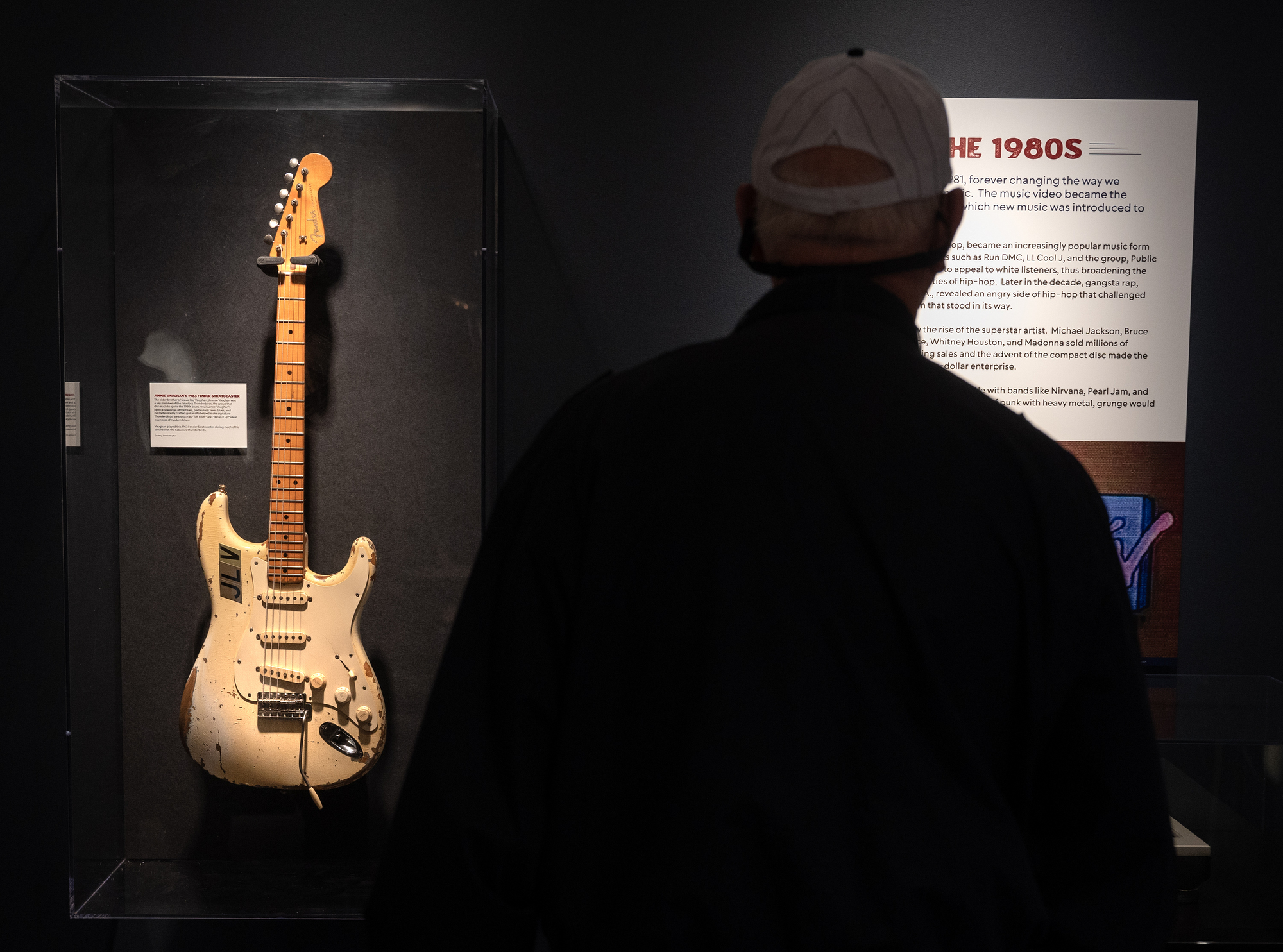
Image: DIG15178-018 Jimmie Vaughan's 1963 Fender Stratocaster – Music America- Iconic Objects from America’s Music History (2024-02-17 12.55.18 by LBJ Library @Flickr 53537193413).jpg | DIG15178-018 | License: Public domain | Source: Wikimedia | https://commons.wikimedia.org/wiki/File:DIG15178-018_Jimmie_Vaughan%27s_1963_Fender_Stratocaster_-_Music_America-_Iconic_Objects_from_America%E2%80%99s_Music_History_(2024-02-17_12.55.18_by_LBJ_Library_@Flickr_53537193413).jpg