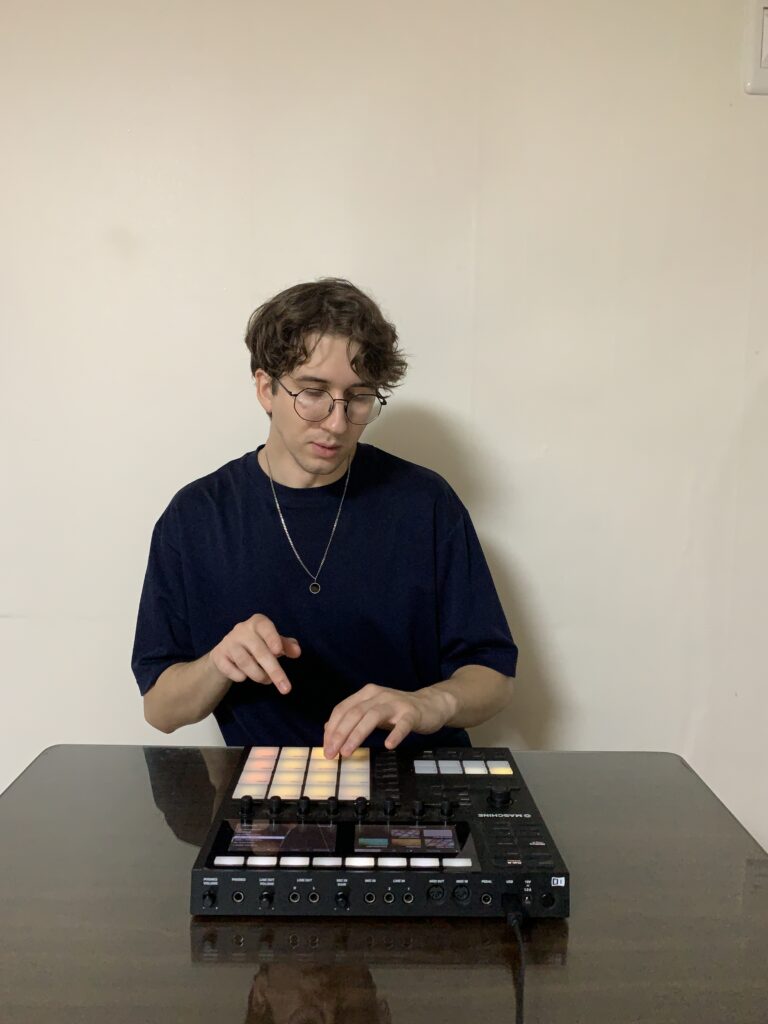
Trap Beats in the Real World: A Beginner-to-Pro Studio Workflow
A practical trap production guide that walks through the full beat-making chain: drums, 808s, melodies, arrangement, mixing, and final bounce. Built for producers who want a repeatable workflow that translates from sketch to finished record.

Start with the job of the beat, not the loop
The fastest way to make better trap beats is to stop treating them like random collections of sounds. A trap beat has a job in the session: support the artist, create momentum, leave room for vocals, and still hit hard on small speakers and car systems. That means the workflow matters just as much as the sounds.
Before you touch a kick or open a plugin, define the lane. Is this beat for a dark street record, a glossy club record, or a moody melodic cut? That choice determines tempo, drum density, melody size, and how aggressive the low end should be. Most modern trap sits somewhere around 130–160 BPM, though half-time feel often makes it feel slower. If you are working with a rapper or singer, the instrumental should feel like a platform, not a finished solo arrangement with nowhere for a vocal to sit.
Build the drum foundation first
Trap is drum-led music. Even when the melody is the hook, the drum programming is usually what gives the record its identity. Start with the core trio: kick, snare or clap, and hi-hats. Get that groove working before adding anything else.
The snare typically lands on beat 3 in a 4/4 half-time pattern, which is one reason trap feels spacious and heavy. From there, place the kick to create syncopation rather than a predictable rock-style backbeat. Good trap kick patterns often leave gaps that let the 808 breathe. If every subdivision is filled, the beat loses bounce.
Hi-hats are where the rhythm starts to move. Begin with a simple 1/8 or 1/16 pattern, then add rolls, stutters, and triplet bursts as accents instead of clutter. The key is contrast. A good hat pattern has a clear base groove, then small moments of tension that push into transitions. Think of rolls as punctuation, not wallpaper.
If your DAW supports it, use velocity and slight timing variation to avoid the machine-gun effect unless that is specifically the aesthetic. Some of the hardest trap drums feel precise but not sterile. Humanization does not mean sloppy; it means controlled variation.
Design the 808 around the kick
The 808 is the low-end centerpiece of trap production, and beginners often make the same mistake: stacking a kick and bass without deciding which one owns the sub. In most modern trap beats, the 808 is the bass. The kick either reinforces the attack or is replaced entirely by the 808 itself.
Choose an 808 sample with enough harmonic content to translate on smaller systems. Pure sine-style subs can sound huge in the room and disappear on phones. A sample with slight saturation or upper harmonics often cuts better. If you need more presence, add subtle distortion, saturation, or clipping instead of turning it up endlessly.
Play the 808 musically. Root notes are the starting point, but slides, glides, and note overlaps are what make it feel like trap rather than just low bass. In FL Studio, portamento and slide notes are staples. In Ableton, use pitch bend automation or glide-capable instruments. The goal is to make the low end speak in phrases, not just hold notes.
Check phase and arrangement with the kick. If both hit at the same moment and the low end disappears, you likely need to shorten one sound, tune the 808 more accurately, or use sidechain or transient shaping sparingly. Sometimes the answer is simpler: remove the kick and let the 808 handle the downbeat.
Melody comes next, but keep it economical
Trap melodies are often minimal because they need to leave space for the drums and vocals. That does not mean they should be boring. The best trap instrumentals usually center on one strong idea: a piano motif, a dark bell progression, a glassy synth line, or a sample chopped into a repeating phrase.
Start with a short motif that loops cleanly over 4 or 8 bars. A memorable two- or four-note phrase can be more effective than a dense chord progression. If you are using chords, keep voicings compact and avoid overfilling the midrange. The 200–800 Hz area gets crowded quickly once drums, 808s, and vocal space are added.
Sound selection matters as much as note choice. A clean piano may read as emotional, while detuned bells can push the beat darker and more contemporary. Layering is useful, but do not build a wall of sounds. Two complementary elements usually outperform five competing ones.
If you use samples, chop them with intent. Shift start points, remove unnecessary tails, and pitch them to fit the key. A sample that sounds good alone can become exceptional when trimmed to its most recognizable slice.
Arrange for energy, not just length
A loop is not a song. One of the clearest signs of a pro-level trap workflow is arrangement that creates movement without overcomplicating the beat. The listener should feel sections change even if the core idea stays the same.
Use a simple structure as a starting point: intro, hook, verse, hook, bridge or breakdown, final hook. That does not mean every section needs a new melody. Instead, create variation through drum drops, hat changes, reversed textures, risers, vocal chops, cymbal lifts, and one-bar transitions. Strip elements away in verses and restore impact in hooks.
Small changes often matter more than big ones. Removing the kick for two bars before the hook can create more impact than adding a dozen extra sounds. A filtered melody, a reversed crash, or a quick drum fill can do the job cleanly.
Keep in mind that rappers and artists need space to write or record. If every eight bars feels like a new beat, the session becomes harder to manage. Strong trap arrangements are dynamic but still predictable enough to support vocal performance.
Mix trap beats with intent, not endless plugin chains
Trap mixing is mostly about balance, low-end control, and making sure the beat translates outside the studio monitors. You do not need a huge chain to get there. You need disciplined decisions.
Start by setting static levels. Get the kick, 808, snare, and melody working before reaching for EQ. Once the balance feels right, carve space only where necessary. High-pass melodies if they are stepping on the bass. Cut mud in the low mids if the beat feels cloudy. Use gentle compression on melodic buses if elements are too spiky.
The most important mix decision is often on the master or drum bus: controlled clipping or soft saturation can make trap beats sound louder and more finished without heavy compression. Many producers lean on limiters too early. A better move is to control peaks at the source and use a clipper to shave transient spikes on drums or the full mix bus when appropriate.
Reference against commercial trap releases in a similar lane. Not to copy the sound, but to compare low-end weight, snare brightness, stereo width, and overall loudness. If your beat sounds bigger solo but falls apart next to a release track, the issue is usually arrangement or frequency balance, not just volume.
Make the workflow repeatable
The difference between a beginner and a pro is not taste alone. It is repeatability. Pros know how to move from blank session to usable beat quickly because they have a process they trust.
Here is a practical workflow you can use in any DAW:
- Set tempo and key based on the vibe.
- Lay down snare, kick, and hi-hats first.
- Build the 808 around the drum groove.
- Add a short melodic loop with one strong idea.
- Arrange into intro, hook, and verse variations.
- Clean the low end and high-pass unnecessary elements.
- Use light saturation or clipping for loudness and punch.
- Export a beat that feels ready for an artist to write to.
Save drum kits, 808s, and melody presets into a curated folder so you are not rebuilding your palette every session. The best trap producers are usually fast because their sound choices are pre-filtered. That speed leaves more room for musical decisions.
Where beginners usually go wrong
Most trap beats fail for the same reasons: too many sounds, weak drum swing, an 808 that is out of tune, and arrangement that never evolves. Another common issue is trying to make the beat impressive in isolation instead of functional for a vocal record.
If the beat sounds exciting for eight bars but tiring after thirty, it is probably overbuilt. If the 808 feels huge but unclear, it may need better harmonics or less overlap with other low-end instruments. If the melody dominates every section, the artist will have nowhere to live in the record.
The best trap beats feel simple on first listen and detailed on repeat. That balance comes from workflow, not luck.
Finish with the artist in mind
A great trap beat is not just a loop with drums. It is a production framework that can carry a record. When you build with clear roles for drums, 808, melody, and arrangement, the beat becomes easier to write to, easier to mix, and more likely to sound finished when it leaves your studio.
Think like a producer who expects someone to step into the track next. That mindset changes everything: fewer distractions, stronger choices, cleaner low end, and a more usable session. Beginner or pro, the real goal is the same—make a beat that feels ready for an artist the moment it drops into the timeline.
Image: Kanye West's 808s & Heartbreak @ The Hollywood Bowl – Night 1 (09-25-15) (21114123364).jpg | Kanye West's 808s & Heartbreak @ The Hollywood Bowl – Night 1 (09/25/15) | License: CC BY-SA 2.0 | Source: Wikimedia | https://commons.wikimedia.org/wiki/File:Kanye_West%27s_808s_%26_Heartbreak_@_The_Hollywood_Bowl_-_Night_1_(09-25-15)_(21114123364).jpg