The Alternative Rock Blueprint: 10 Albums That Changed the Way Records Get Made
These 10 alternative rock albums didn’t just define a genre—they rewired production expectations around distortion, dynamics, ambience, and vocal treatment. Here’s what made them matter in the room, at the console, and on the records that followed.
The Records That Rewired Alternative Rock Production
Alternative rock was never just a style. It was a production attitude: guitars pushed until they blurred, drums captured with room sound instead of sterilized precision, vocals left vulnerable instead of polished into anonymity. The albums below didn’t simply sell a lot of copies or define a subculture. They set templates for how producers could make records that sounded emotional, aggressive, intimate, and sonically distinct without chasing mainstream rock rules.
If you’re a producer, engineer, or serious listener, the value here isn’t nostalgia. It’s technique. These records offer repeatable lessons in arrangement density, distortion management, vocal framing, dynamic contrast, and how to make imperfect sounds feel intentional. In other words: they still teach the craft.
1. Nevermind — Nirvana (1991)
Butch Vig’s work on Nevermind turned raw energy into radio-ready impact without sanding off the band’s bite. The core lesson is contrast: verses feel comparatively restrained, while choruses explode because the mix leaves room for the band to hit harder. Kurt Cobain’s guitar tone is thick but not over-processed, and the drum sound—especially the snare and toms—lands with enough room tone to feel big without becoming muddy.
Production takeaway: Build arrangements around dynamic lift, not just volume. If your chorus doesn’t feel bigger, check whether the verse is leaving enough headroom. Often the answer is fewer parts, less high-end saturation, and a vocal that stays more conversational until release points.
2. Surfer Rosa — Pixies (1988)

Before alternative rock became a commercial force, Surfer Rosa showed how strange could be powerful. Steve Albini’s recording approach emphasized room realism, drum attack, and a dry, almost confrontational presence. The album’s dynamics are brutally effective: sudden shifts from whisper to blast, sparse arrangements that make each instrument matter, and vocals that sit in the mix like another aggressive texture rather than a glossy centerpiece.
Production takeaway: Leave space for transients. If every channel is over-compressed, you lose the shock factor that makes loud sections feel huge. Try parallel compression on drums instead of flattening the whole kit, and let some instruments keep their natural edge.
3. Doolittle — Pixies (1989)
This image was released by the United States Air Force with the ID 420418-F-0000D-003.JPG (next).
This tag does not indicate the copyright status of the attached work. A normal copyright tag is still required. See Commons:Licensing.
العربية ∙ বাংলা ∙
Bahaso Jambi ∙
Deutsch ∙ Deutsch (Sie-Form) ∙ English ∙ español ∙ euskara ∙ فارسی ∙ français ∙ italiano ∙ 日本語 ∙ 한국어 ∙ македонски ∙ മലയാളം ∙ Plattdüütsch ∙ Nederlands ∙ polski ∙ پښتو ∙ português ∙ русский ∙ slovenščina ∙ svenska ∙ Türkçe ∙ українська ∙ 简体中文 ∙ 繁體中文 ∙ +/− | License: Public domain | Source: Wikimedia | https://commons.wikimedia.org/wiki/File:B-25_bomber_by_James_Doolittle_took_off_from_the_USS_Hornet_for_Doolittle_Raid_in_1942.jpg
If Surfer Rosa was the experiment, Doolittle was the refined version that proved the formula could travel. The album is full of angular guitars, bass lines with melodic authority, and vocal phrasing that toggles between irony and urgency. The band’s loud/quiet architecture became one of alternative rock’s most copied production devices, influencing everything from college rock to post-grunge.
Production takeaway: Don’t confuse simplicity with thinness. The arrangement works because each instrument has a job. If the bass is carrying melodic movement, the guitars can stay rhythmic and abrasive without needing to fill every frequency band.
4. OK Computer — Radiohead (1997)
Few albums pushed alternative rock production forward like OK Computer. Nigel Godrich and Radiohead built a record that sounds both human and mechanical, fusing organic performances with studio manipulation, ambient space, and subtle processing. Guitars are often treated less like riff machines and more like textures; drums are expansive but controlled; vocals are intimate, but frequently framed by unsettling ambience.
Production takeaway: Think in layers of perception. A track can feel huge without being loud if the reverbs, delays, stereo placement, and low-end architecture are designed carefully. Use automation to make textures appear and disappear around the core performance.
5. In Utero — Nirvana (1993)
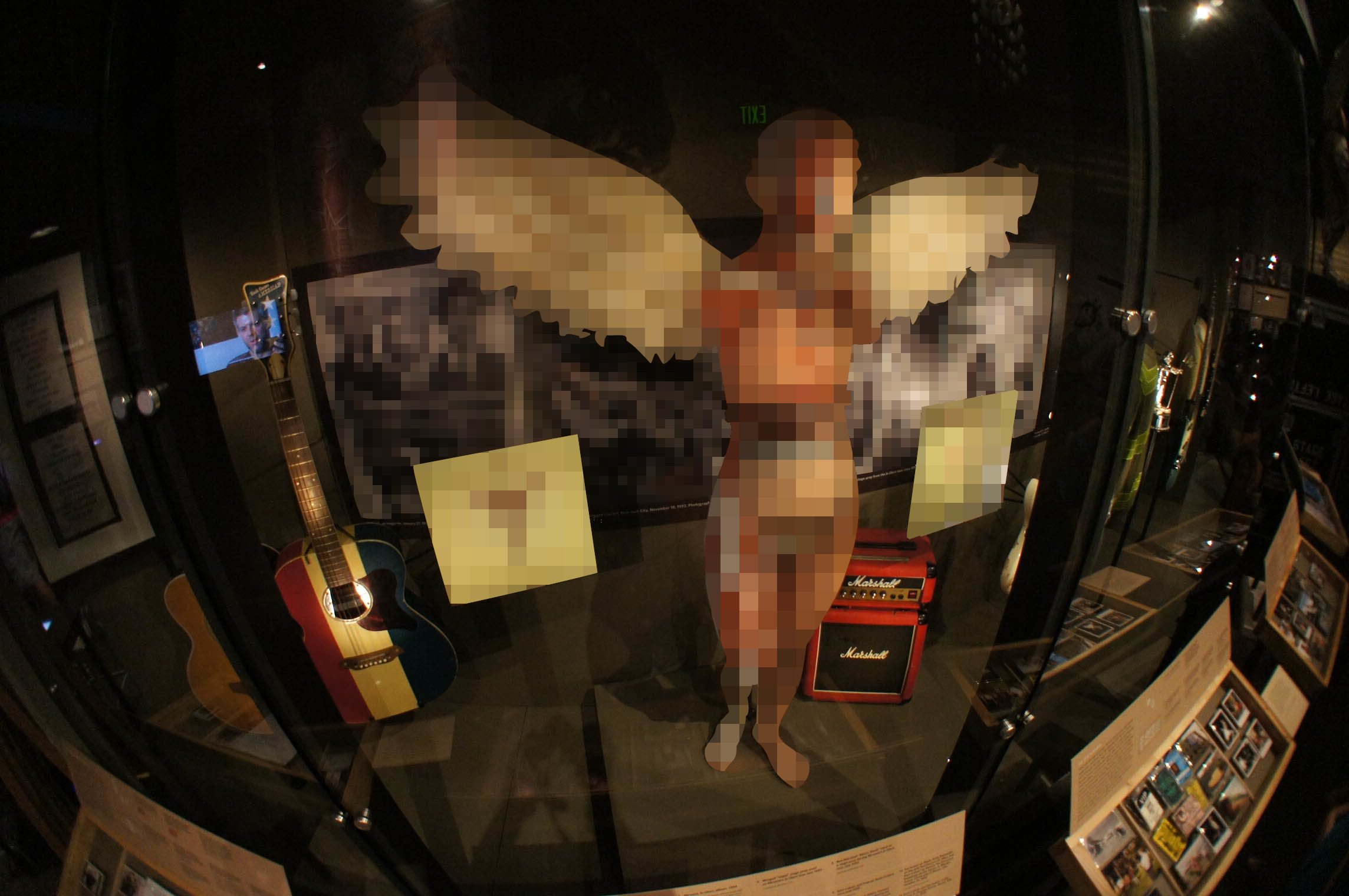
Where Nevermind polished the edges just enough for mass impact, In Utero pushed back against that clarity. Steve Albini’s recording gave the album a rawer, more exposed feel, with harsher guitar textures, less obvious studio gloss, and a drum sound that favors punch over sheen. The record is a masterclass in making abrasive material feel emotionally direct.
Production takeaway: Sometimes the right move is to stop smoothing. If a song depends on discomfort, don’t overuse reverb, pitch correction, or bus compression that makes everything feel too safe. Let friction become part of the identity.
6. Automatic for the People — R.E.M. (1992)
R.E.M. proved that alternative rock didn’t need to be loud to be influential. Automatic for the People is built on restraint, texture, and emotional precision. The arrangements are sparse enough to highlight acoustic instruments, mandolin, keyboards, and Michael Stipe’s voice, which is often delivered with a fragile proximity that feels more confessional than performative.
Production takeaway: A strong alternative rock record doesn’t require maximum density. Use contrast in instrumentation—acoustic vs. electric, dry vs. ambient, close vs. distant—to keep the mix emotionally active without overcrowding it.
7. Loveless — My Bloody Valentine (1991)
Loveless is the great production mystery box of alternative rock. Kevin Shields and the band created a record where guitars behave like synthetic clouds, while the rhythms remain buried but present enough to keep the songs moving. The album’s signature sound comes from extreme layering, nontraditional guitar treatments, and meticulous control of tone blur. It is one of the most influential records ever made for producers who care about texture as composition.
Production takeaway: Distortion is not just aggression; it’s a design tool. Stack complementary overdrive and modulation choices until the guitar stops reading as a single instrument and starts functioning like a pad. Then carve frequencies so the wash doesn’t swallow the song.
8. Ten — Pearl Jam (1991)
Ten helped define the more muscular, classic-rock-adjacent side of alternative rock. The production favors a large drum room, thick guitars, and a vocal style that can move from ragged to anthemic in a single phrase. It’s a reminder that alternative rock’s emotional power often comes from old-school performance capture, not just trend-chasing sonics.
Production takeaway: Capture commitment at the source. A powerful vocal or drum performance can reduce the need for heavy-handed processing. Use compression to control peaks, but don’t compress away the urgency.
9. Grace — Jeff Buckley (1994)
Grace sits at the intersection of alternative rock, art rock, and vocal virtuosity. The production is spacious enough to let Buckley’s range and phrasing breathe, but controlled enough to keep every dynamic shift emotionally legible. What makes the album enduring is the balance between intimacy and scale: the record never sounds overbuilt, even when it reaches cinematic intensity.
Production takeaway: Treat the vocal as a dynamic event. Automate level rides, preserve breath and consonant detail, and avoid over-limiting if the performance depends on dramatic swells. Alternative rock can be powerful without being flattened.
10. The Bends — Radiohead (1995)
The Bends is where Radiohead sharpened their songwriting into a more expansive, emotionally loaded form. The guitars are huge but layered with intention, the rhythms are crisp without sounding sterile, and the record shows how alternative rock could grow into a more cinematic language before the band went fully experimental. It’s one of the clearest examples of production serving escalation: each song feels like it is discovering its own ceiling.
Production takeaway: Build songs in stages. Introduce textures gradually, automate delay throws or doubled guitars into key lines, and let the mix evolve as the arrangement develops. Momentum matters as much as sonics.
What These Albums Still Teach Producers
The common thread across these records is not a single sound. It’s a set of decisions: when to leave a track dry, when to let the room speak, when to distort, when to keep vocals exposed, and when to make the chorus feel physically larger than the verse. Alternative rock’s most defining albums succeeded because they treated production as narrative.
For modern producers, that’s the real lesson. You don’t need to copy the exact guitar tone of Nevermind or the haze of Loveless to use their methods. You need to understand why those choices worked: contrast, texture, restraint, and emotional specificity. If your mix has that, it can feel alternative in the most important sense—not because it follows a genre checklist, but because it sounds like a point of view.
Image: 1954. Westinghouse Fan Family Album. A-208-2.jpg | This studio production photo was taken by a photographer working for Ray and Betty Culley, owners of Cinécraft Productions, a Cleveland, Ohio, motion picture studio. Ray and Betty Culley were my father and mother. They left this photo and a number of other production photos and early studio films and records to my brothers and me. In 2019 our families donated the materials to Hagley Museum and Library to preserve as as collection of early films and TV programs under a non exclusive usage agreement. Contact Hagley Museum and Library (Hagley.org) for additional information ab | License: CC BY-SA 2.5 | Source: Wikimedia | https://commons.wikimedia.org/wiki/File:1954._Westinghouse_Fan_Family_Album._A-208-2.jpg