Inside The Weeknd’s Sonic Shortcut: The Synths, Effects, and Studio Moves Behind the Signature Sound
The Weeknd’s most recognizable records are built from a deceptively simple palette: vintage-leaning synths, dark modulation, and aggressive spatial effects. Here’s a gear-first breakdown of the tools and techniques that turn that palette into a modern pop blueprint.
The Weeknd Sound Is Less About One Synth Than a Repeatable System
When producers talk about The Weeknd sound, they’re usually pointing at a mood: neon-drenched, nocturnal, emotionally detached, and strangely cinematic. But underneath that atmosphere is a very practical studio system. His records rarely rely on obscure gear flexes. Instead, they lean on a disciplined combination of analogue-flavored synth tones, wide modulation, heavy ambience, and arrangement choices that leave plenty of negative space.
That’s what makes the sound so useful to dissect. You don’t need to chase a mythical “Abel preset.” You need to understand the way a small number of tools are layered and processed so they feel bigger than they are. The Weeknd’s sonic identity is built from a few reliable ingredients: analog-style pads, glassy keys, plucky arpeggios, distorted bass, and effects that blur the edges until everything feels suspended in the dark.
The Core Synth Palette: Retro, but Polished for Pop
A large part of The Weeknd’s production language pulls from synthwave, 80s R&B, and modern pop precision. That means the synths often sound vintage in character, but they’re rarely left raw. They’re cleaned up, layered, and mixed so they sit in a chart-ready arrangement.
In practical terms, this often means using virtual instruments or hardware emulations that can get you into classic territory fast. Think soft analog pads, Prophet-style brass stabs, Juno-like chords, and FM-style bells. The point is not authenticity for its own sake. The point is emotional color.
Useful plugin categories for this sound:
- Analog emulation synths for pads and chords: Arturia V Collection, u-he Diva, Native Instruments Repro, Softube Model 84
- Hybrid or wavetable synths for modern motion: Serum, Vital, Pigments
- FM synths for glassy top-end detail: FM8, Ableton Operator, Dexed
- Sample-based keys and EPs for harmonic support: Keyscape, Lounge Lizard, Neo Soul Keys, Kontakt libraries
What matters more than the brand is the role each sound plays. A Weeknd-style production usually separates the musical layers cleanly: one synth supplies the atmosphere, another handles chord motion, a third adds a hook or counterline, and the low end stays disciplined.
Chord Voicings: Simple Progressions, Rich Feel
One of the biggest misconceptions about The Weeknd’s harmonies is that they’re complex. In reality, the progressions are often straightforward. What creates the emotional pull is voicing. Producers favor minor keys, suspended tones, extended chords, and upper-register notes that create tension without sounding jazz-heavy or overly dense.
For example, a basic minor progression can feel instantly more cinematic if you spread the voicing across octaves, drop the third in one layer, or add a seventh on a separate synth. This gives the track space while still sounding rich. It also helps the vocal stay centered. The Weeknd’s lead often sits like a spotlight in the middle of a very wide, very dark frame.
If you want to emulate that approach, start with a restrained chord progression and build depth through layering rather than harmonic complexity. One synth can carry the body, another the air, and a third the shimmer. That stacking strategy is a major part of the illusion.
Why Chorus, Ensemble, and Detune Matter So Much
If one effect defines the retro-pop side of this sound, it’s chorus. Not the overdone, watery chorus of amateur nostalgia, but a controlled modulation that widens the synth and softens its edges. That texture is essential. It creates the feeling that the sound is floating just behind the vocal rather than attacking the listener from the front.
Classic chorus units and modern emulations are central here. Juno-style chorus, ensemble effects, and subtle detuning can make a simple pad feel expensive immediately. The trick is to avoid stereo mush. If the chorus is too deep or too fast, the synth loses pitch center and the mix collapses.
Practical settings to try:
- Use slow rate, moderate depth on pads
- Keep detune subtle on chords so the harmonic center stays clear
- High-pass wide synth layers to prevent low-end buildup
- Use chorus on a send when you want more control over wet/dry balance
That shimmer is a big reason The Weeknd’s synths feel nostalgic without sounding dated. They’re intentionally softened, like memory rather than raw performance.
Reverb and Delay: The Real Architecture of the Mood
The Weeknd’s signature atmosphere is often built less by the synth itself than by the space around it. Reverb and delay do a huge amount of the storytelling. Long tails, dark EQ filtering, and stereo delays stretch simple synth parts into wide emotional landscapes.
Plate reverbs, hall reverbs, and lush algorithmic spaces are common choices for this style. The important detail is tone shaping. Bright, brittle reverb will wash out the mix; darker reverb will make the track feel expensive and intentional. Producers frequently roll off low frequencies and shave some high end from the return so the reverb occupies a halo rather than a fog bank.
Delay is just as important. Ping-pong delay can widen a lead, while dotted-eighth or quarter-note echoes can create the sense of movement that keeps sparse arrangements alive. On vocal-adjacent synth lines, the delay often acts like part of the hook itself.
Best practice: EQ your effects returns. A dark, filtered reverb or delay can make even a basic stock plugin feel like a signature sound tool. That’s especially true in The Weeknd-style production, where the ambience should feel cinematic but never cloud the rhythm.
Bass Sound Design: Subtractive, Clean, and Slightly Menacing
The low end in The Weeknd-inspired production is usually not flashy. It’s controlled, moody, and often more subtractive than aggressive. You’ll hear synth basses that are rounded and stable, sometimes with a little saturation to help them read on smaller speakers, but rarely so distorted that they pull attention away from the vocal.
A solid approach is to pair a clean sub layer with a midrange bass layer that provides harmonic content. The sub handles weight, while the upper layer adds presence on small systems. If the bass line is meant to feel more dangerous or urgent, a touch of drive or soft clipping can push it forward without turning it into a modern EDM bass.
In this style, the bass often works like shadow lighting: it defines the scene without becoming the subject.
The Vocals and Synths Are Mixed as One Emotional Field
Another reason this sound hits so hard is that the vocals and synths are mixed to feel connected. The Weeknd’s vocal productions often live in a cloud of delay, reverb, harmony layers, and background textures that make the lead feel embedded inside the track rather than pasted on top of it.
That means the synth arrangement has to leave room, but it also has to support the same emotional register. Pads, bells, and arpeggios often sit in the same frequency neighborhood as vocal doubles and ad-libs. The mix decision is to carve carefully, not strip everything away. Think contrast, not emptiness.
When the vocal is intimate and the synths are expansive, the tension creates the entire aesthetic.
A Practical Plugin Chain for the Sound
If you want a fast starting point, here’s a simple chain that gets close to the aesthetic without overcomplicating the session:
- Synth: start with a Juno- or Prophet-style patch for chords or pads
- Chorus/ensemble: add subtle width and movement
- Saturation: keep it light, just enough to thicken the midrange
- EQ: cut unnecessary lows, tame harsh highs
- Reverb: use a dark hall or plate with controlled decay
- Delay: set a tempo-synced echo for rhythmic dimension
- Compressor or sidechain: keep the synth out of the vocal’s way if needed
That chain is not a magic formula, but it captures the production logic behind the sound. The Weeknd’s records often feel expensive because the parts are treated like environment design. Every plugin has a job: widen, soften, darken, or lift.
What Actually Makes It Sound Like The Weeknd
The most important takeaway is that the signature sound is a blend of restraint and atmosphere. The synths themselves are not especially complicated. The magic is in how they’re voiced, layered, and processed to create emotional clarity. A small number of retro-leaning instruments, handled with taste, can create a world that feels instantly recognizable.
If you’re building this sound in your own DAW, start with one strong chord bed, one melodic accent, and one low-end anchor. Then shape the space around them with chorus, delay, and reverb until the whole mix feels like a scene rather than a loop. That is the real Weeknd shortcut: not a preset, but a production mindset.
Think dark. Think spacious. Think controlled nostalgia. That’s the studio language behind one of modern pop’s most identifiable sonic signatures.
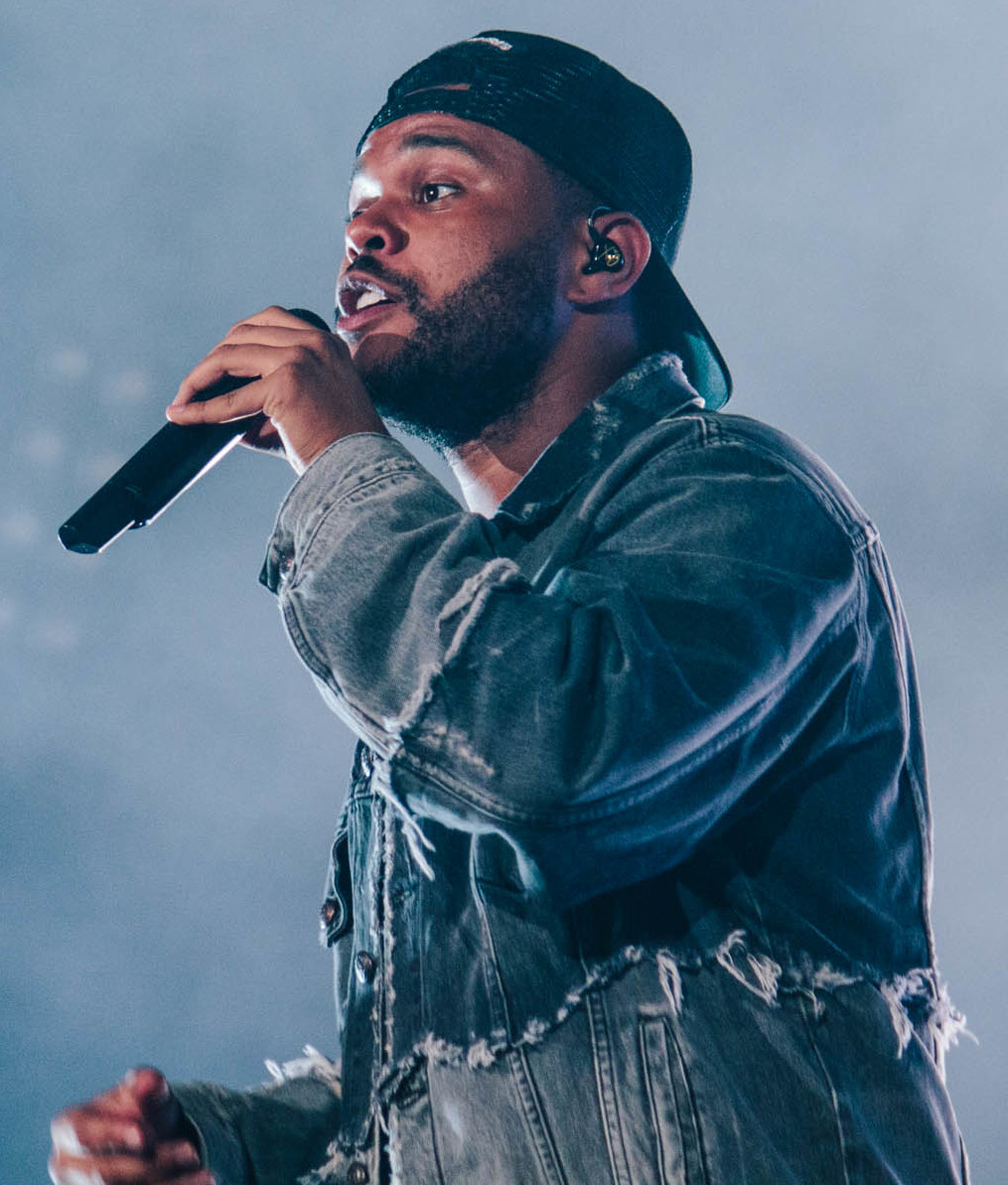
Image: FEQ July 2018 The Weeknd (44778856382) (cropped).jpg | The Weeknd | License: CC BY 2.0 | Source: Wikimedia | https://commons.wikimedia.org/wiki/File:FEQ_July_2018_The_Weeknd_(44778856382)_(cropped).jpg