Inside Hans Zimmer’s Cinematic Engine: The Layering, Synthesis, and Mix Moves Behind the Scale
Hans Zimmer’s sound is less about a single signature patch and more about a disciplined system of layering, orchestration, and mix decisions. Here’s a workflow teardown of the synth stacks, arrangement tricks, and production choices that make his cues feel colossal.
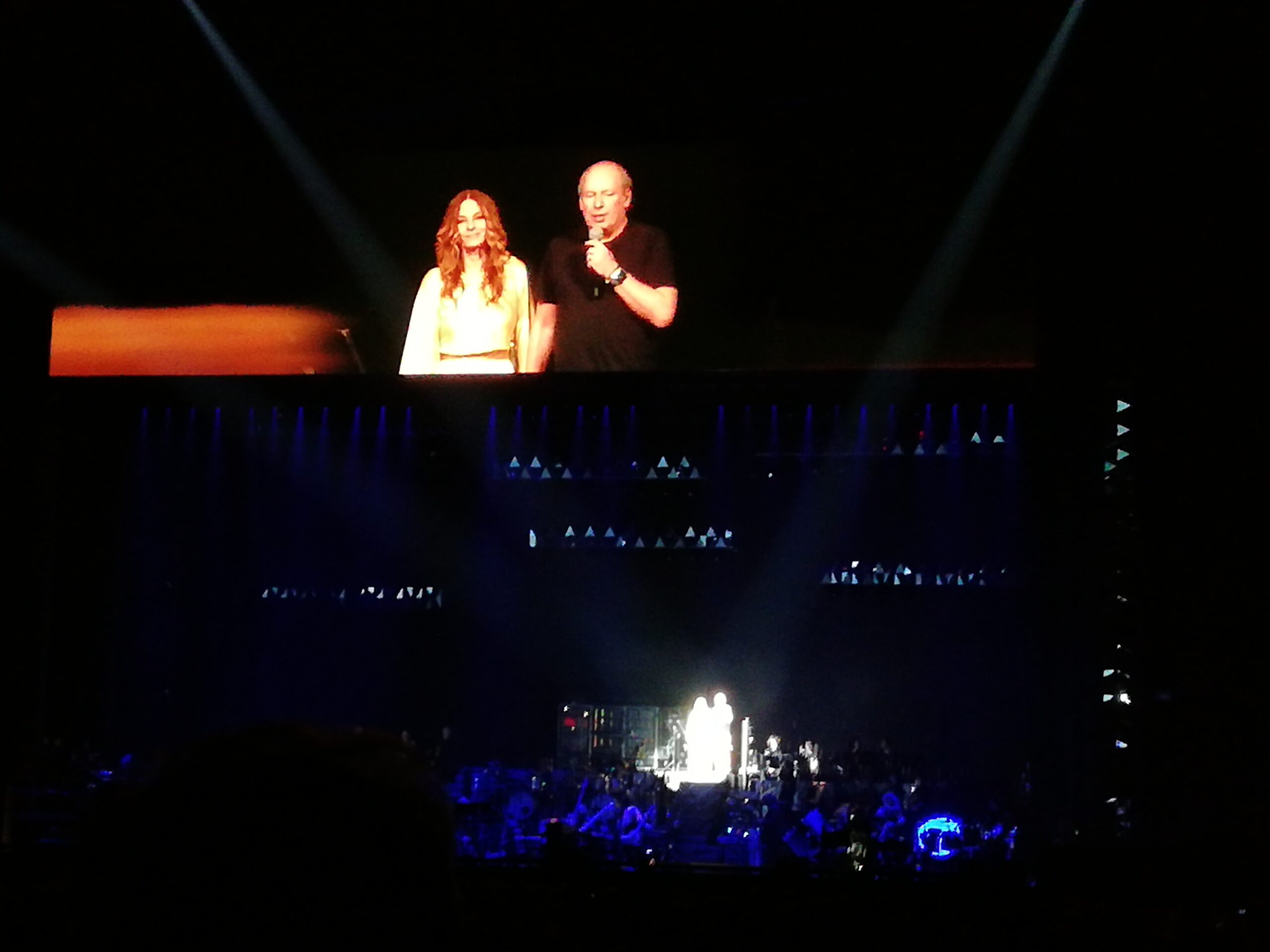
Hans Zimmer’s most recognizable quality is not a single synth preset, a specific plugin, or even a particular orchestral color. It is scale. His music feels engineered to occupy a massive emotional and sonic space, and that scale comes from a very deliberate workflow: layering sounds until they behave like architecture, arranging parts so they create motion without clutter, and mixing the entire picture so the listener experiences impact before they can identify the ingredients.
For producers, that makes Zimmer one of the most instructive figures in modern scoring. His cues are not just “big.” They are built from a repeatable logic that combines synthesis, sampled orchestration, rhythmic design, and mix discipline. If you strip away the mythology, the real lesson is practical: cinematic weight is often the result of many small choices stacked with intention.
Zimmer’s core idea: sound as a layered system, not a single instrument
One reason Zimmer’s scores feel so vast is that he rarely treats a part as one sound. A low ostinato may be half synth, half contrabass, half processed percussion—yes, that’s already three layers—and the point is not realism in the classical sense. The point is perceptual density. Each layer contributes a different job: one provides pitch definition, another supplies transient attack, another adds midrange body, and another extends the low end or stereo image.
This is where his approach differs from a more traditional orchestral workflow. In a standard mockup, you might write a cello line and orchestrate it across sections. In a Zimmer-style stack, you are often designing an object: a bass pulse that feels like a machine, a chord bed that feels like weather, or a rising texture that feels like pressure building in a room. The instrument is less important than the composite result.
That’s why his arrangements often work even when reduced to one element at a time. If you solo the layers, they can sound unremarkable or even slightly awkward. Together, they fuse into a single emotional event. That fusion is the art.
The arrangement trick: repetition that evolves by micro-change
Zimmer is a master of ostinato writing, but the real craft is not repetition alone. It is controlled variation. A cue might hold on to the same rhythmic cell for an extended period, yet each pass is altered in ways that keep the ear engaged: a harmonic extension is added, a layer opens up, a percussion accent shifts, a filter widens, or the voicing spreads into a higher register.
This creates forward motion without abandoning the hypnotic pulse. In practice, it means the arrangement is doing a lot of the heavy lifting before the mix even enters the picture. Producers can borrow this immediately: instead of writing eight bars and looping them unchanged, introduce planned changes every 4, 8, or 16 bars. Add a note to the top of the chord, swap one drum articulation, or automate the brightness of a synth layer so the listener senses progression even when the harmony stays static.
Zimmer also understands register extremely well. He often leaves the low end open enough for impact while letting midrange layers carry tension. That separation matters. When every part fights for the same band of frequencies, “big” becomes muddy. When each layer has a defined role, the cue can feel enormous while still reading clearly on modest speakers.
Synthesis in Zimmer’s world: texture, motion, and harmonic weight
Zimmer’s synth usage is often more about texture than obvious lead lines. He uses synthesis to extend the emotional envelope of the score: to make a pad feel colder, a pulse feel more mechanical, a brass-like layer feel more unstable, or a bass note feel physically larger than the orchestra alone can achieve.
That usually means a few recurring synthesis behaviors:
- Layered oscillators for thickness, often with detuned unisons or octave stacking to make a sound feel wider and more forceful.
- Filter automation to create motion inside sustained notes, especially on pads and drones.
- Noise and transient components to sharpen attacks or introduce grit into otherwise smooth orchestral layers.
- Pitch and modulation movement to keep long tones alive without relying on melodic variation.
In practical production terms, this is a reminder that a cinematic synth patch does not need to be flashy. A great Zimmer-style patch is often simple at its core: saws, sines, pulses, or noise shaped by automation and stacked with other sources. The sophistication comes from arrangement and processing, not from complex wavetable gymnastics for their own sake.
If you’re trying to approximate the effect, build with complementary synth roles rather than one “perfect” patch. Use one synth for sub weight, one for midrange harmonic content, and one for stereo texture. Then process them differently. The sub stays mono and controlled; the mid layer can be saturated; the texture layer can be widened, delayed, or filtered. That separation is often what makes the final blend feel expensive.
Orchestral and electronic elements are fused, not contrasted
What makes Zimmer’s signature so effective is that he does not present orchestra and electronics as opposing worlds. He blends them into a single grammar. Strings can behave like sequencers, synths can function like brass, and percussion can sit somewhere between acoustic impact and designed noise.
This hybrid logic is central to the modern blockbuster score. Instead of asking, “Should this cue be orchestral or electronic?” Zimmer often asks, “What combination of sources best communicates the scene?” A string ostinato might gain urgency when doubled by a synth pulse. A brass hit might feel larger when supported by a low-frequency boom and a transient-heavy electronic layer. A pad might become emotionally legible only after being shaped to leave room for dialogue or FX.
For producers, the takeaway is not to choose sides. Blend source types until they behave as one instrument family. Use orchestral samples for character and phrasing, then reinforce them with synths for sustain, stability, or subharmonic support. This is especially effective when writing cues that need to translate in trailers, film, and standalone listening environments.
The mix decisions that make the illusion hold together
A Zimmer-style arrangement only feels huge if the mix preserves its internal hierarchy. That means the low end is disciplined, the mids are organized, and the high frequencies are used strategically rather than constantly. The goal is not maximum brightness or maximum loudness. The goal is controlled impact.
One hallmark of this approach is that the mix often emphasizes contrast. Dense sections hit harder when they emerge from quieter, more open passages. Filters open gradually. Risers are built with anticipation. Reverb is used to suggest space, but not so much that the rhythmic engine becomes blurred. In many cases, the reverbs are as much part of the composition as the notes themselves.
Another key move is frequency management across layers. If the cue includes big low strings, a synth sub, and percussion, those elements cannot all occupy the same area at full strength. The smartest Zimmer-adjacent mixes carve responsibility: one element anchors the sub, another owns the low-mid punch, and another provides the transient edge. That prevents the arrangement from collapsing into mush when the score gets intense.
Dynamics matter too. Even in maximal passages, the mix usually feels shaped rather than flattened. Transients are allowed to speak. Swells are audible. Drops are meaningful. This is part of why the music feels cinematic rather than merely loud: the listener can perceive force building and releasing over time.
What producers can steal from the Zimmer workflow
You do not need an orchestra and a scoring stage to apply these ideas. You need a system. Start by designing in layers: sub, body, texture, and attack. Make each layer solve one problem. Then write a part that evolves by automation and orchestration rather than constant new material.
Here is a practical Zimmer-style exercise:
- Program a four-note ostinato with a simple synth.
- Duplicate it into three layers: one mono sub, one midrange layer with mild saturation, and one high texture layer with filtering or delay.
- Add a sampled orchestral layer an octave above or below, but do not let it replace the synth—let it color the synth.
- Automate filter cutoff, reverb size, or layer volume every 8 bars so the loop evolves.
- Use percussion and low-frequency impacts sparingly to define transitions and scene changes.
The result will not be “Hans Zimmer” in a literal sense, because no shortcut can copy a composer’s entire aesthetic. But it will teach the same principle: cinematic power comes from arranging sound like a living system. Every layer should earn its place. Every automation move should increase tension, width, or clarity. Every mix decision should support scale.
The real Zimmer lesson: architecture over ornament
Hans Zimmer’s music endures because it is built, not decorated. The synths are not there to show off synthesis. The orchestration is not there to prove acoustic realism. The mix is not there to chase loudness at all costs. Everything serves the same objective: create a sonic environment that feels larger than the screen.
For musicians and producers, that is the most useful part of the Zimmer playbook. If you want cinematic soundscapes, think in systems. Stack sounds by function. Make repetition evolve. Use synthesis to reinforce emotion, not to distract from it. And mix with hierarchy, not excess. That is how a cue stops sounding like a loop and starts feeling like a world.
Image: Hans Zimmer live 2022 with female singer.jpg | Own work | License: CC BY-SA 4.0 | Source: Wikimedia | https://commons.wikimedia.org/wiki/File:Hans_Zimmer_live_2022_with_female_singer.jpg