Inside DJ Snake’s Global Hit Machine: Rhythm, Space, and Hook Engineering
DJ Snake’s records work because they fuse club impact with pop clarity. This breakdown looks at the rhythmic choices, bass design, arrangement discipline, and workflow habits that turn his ideas into worldwide anthems.

The Sound of Scale: Why DJ Snake Hits So Hard Worldwide
DJ Snake’s catalog is built on a deceptively simple proposition: make the record feel huge without making it feel overloaded. That balance is the core of his production identity. His tracks travel because they speak multiple musical languages at once—festival-ready impact, club-oriented low-end, radio-clean vocal framing, and rhythmic details that borrow from hip-hop, dancehall, Latin music, Middle Eastern melodic phrasing, and contemporary pop.
What makes him technically distinctive is not just taste, but discipline. A DJ Snake production rarely relies on elaborate harmonic movement or dense sound design for its own sake. Instead, it centers on a few high-leverage decisions: a drum groove that immediately locks the body, a bass tone with enough character to feel iconic, and arrangement moves that create tension with precision rather than clutter. His hits often feel as if they were engineered to survive any listening environment—from a phone speaker to a festival PA.
Rhythm First: The Groove Is the Hook
In many DJ Snake records, the rhythm functions as the real melody. That is one reason his tracks often hit fast. Even before a vocal enters, the drum pattern communicates intent. The kick and percussion are usually arranged to create a clear sense of forward motion, but the groove never feels robotic. There is often a subtle syncopation in the percussion layers—shakers, claps, toms, or auxiliary hits—that gives the beat bounce and personality.
This is especially important in cross-genre production. When a track has to support a bilingual vocal, a trap drop, and a dancefloor crowd, the groove has to do a lot of heavy lifting. DJ Snake frequently uses rhythmic contrast to keep sections distinct. For example, a sparse intro might establish space and anticipation, then the drop lands with a more aggressive subdivision or a shifted percussion emphasis. The listener feels a change in momentum even if the harmonic content remains minimal.
For producers, the takeaway is practical: if your beat does not feel compelling with the synths muted, the record is not ready. Start by programming a drum pattern that creates identity on its own. Then ask where micro-variation will improve feel—ghost notes, percussion velocity changes, swung hats, or a low tom pattern that reinforces the downbeat without crowding it.
Bass Design: Big, Controlled, and Easy to Read
DJ Snake’s low-end is rarely accidental. His tracks often use bass as both weight and punctuation. Rather than filling every bar with constant sub energy, he tends to shape bass movement around the arrangement. That creates impact. When the bass arrives, it feels physical. When it drops out, the absence becomes part of the groove.
Technically, this kind of bass management depends on separation. Sub frequencies need to remain stable and mono-compatible, while mid-bass content supplies the audible character that helps the part translate on smaller systems. A good DJ Snake-style bass stack may include a pure sine or triangle sub, a processed mid layer with harmonics, and transient shaping or sidechain movement to keep the kick clear. Distortion is often used not to make the bass louder, but to make it more legible.
This is one of the big lessons in his catalog: a “big” bass is not the same as a “busy” bass. The most effective low-end often leaves room for the vocal and drums to breathe. In a club context, that restraint can make the drop feel stronger because the system has more dynamic contrast to work with.
Arrangement as Tension Management
DJ Snake’s best records understand that listeners do not need constant novelty—they need controlled escalation. His arrangements tend to be built around clear transitions and highly intentional payload moments. Intros are often functional rather than decorative. They establish the mood quickly, hint at the central motif, and then move out of the way.
That economy matters. A global hit needs to communicate fast, especially in streaming and short-form contexts where the first few seconds decide whether the listener stays. DJ Snake’s productions often front-load a memorable sonic signature: a lead phrase, a vocal chop, a percussive motif, or a bass cue that signals the identity of the song before the full arrangement opens up.
He also understands the value of subtraction. Pulling elements out before a drop or hook is not just a standard EDM trick—it is a way of sharpening the listener’s attention. By reducing density, he makes the re-entry feel larger. That creates emotional lift without relying on unnecessary layering.
Vocal Framing: Pop Clarity, Club Energy
One reason DJ Snake records translate so well is that the vocal usually sits in a highly readable frame. Even when the production is hard-hitting, the vocal remains the focal point when it needs to be. That means careful EQ management, frequency carving in the midrange, and arranging instrumental elements so they support rather than compete with the voice.
He often works with vocalists from different scenes and regions, and the production reflects that adaptability. A dancehall feature, for instance, may be given more rhythmic pocket and less harmonic clutter, while a pop vocal can be supported by a wider stereo image and more polished transition effects. The underlying skill is not genre imitation alone; it is knowing which production decisions make the singer feel embedded in the track’s world.
For engineers, this is a useful model: treat the vocal as the central narrative device, then build the instrumental around it with intent. Automation, reverb throws, delay punctuations, and dynamic EQ can make a vocal feel expensive without burying it in effects.
The Workflow Mindset: Fast Ideas, Hard Cuts, Clear Identity
DJ Snake’s workflow is best understood as highly selective. The records that become hits are usually the ones that survive a brutal editing process. The ideas are straightforward enough to remember, but strong enough to withstand repeated listening. That combination is not easy to build, which is why his catalog feels both immediate and durable.
A useful production lesson here is to think in terms of identity checkpoints. Ask whether each element earns its place in the first 30 seconds. Ask whether the drop can be recognized from a muted drum stem or a stripped bass line. Ask whether the arrangement still feels exciting when three layers are removed. This kind of questioning produces records with stronger bones.
In practical studio terms, a DJ Snake-inspired workflow often means moving quickly from loop to structure, then refining the highest-impact elements: drum punch, bass translation, vocal presence, and transitions. Sound design matters, but only when it supports the emotional and rhythmic concept.
What Producers Can Borrow From DJ Snake
The most valuable lesson in DJ Snake’s production style is not a single plugin choice or a signature preset. It is the way he aligns sonic decisions with audience scale. Every major choice seems calibrated for a massive listening environment: the groove has to survive dancing, the bass has to survive playback variation, and the hook has to survive language barriers and platform fatigue.
If you want to apply that thinking in your own sessions, start here:
- Build the beat before the synth stack. If the rhythm is not compelling, add more detail later only after the core works.
- Design bass for translation. Use harmonics and arrangement contrast, not just volume.
- Keep hooks short and repeatable. Global records often rely on immediately memorable motifs.
- Leave space around the vocal. Pop clarity is a competitive advantage.
- Edit aggressively. Remove anything that does not sharpen the song’s identity.
DJ Snake’s hit-making formula is not mysterious, but it is highly refined. He builds tracks that feel local and global at the same time, and he does it by making technical decisions that favor clarity, movement, and impact. That is why the records travel. They are not just loud—they are readable, durable, and engineered to connect across scenes.
For producers studying the modern crossover hit, that is the real lesson: the future belongs to records that know exactly where to hit, and exactly where to get out of the way.
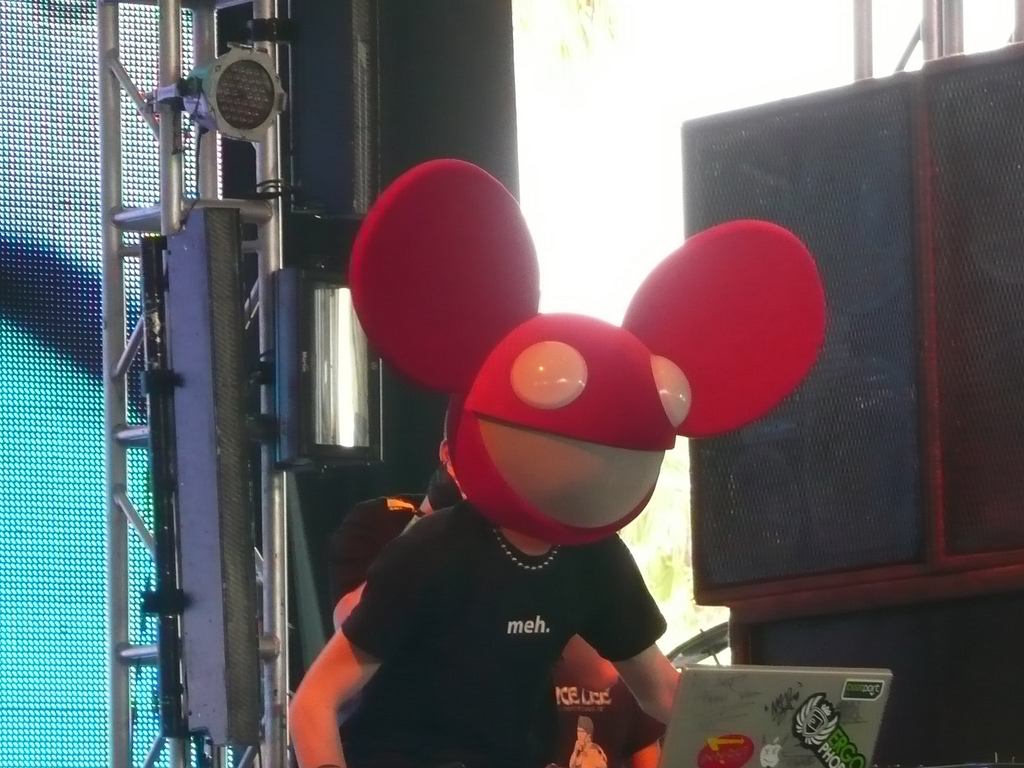
Image: DJ Snake Paris 02.2020.jpg | Own work | License: CC BY-SA 4.0 | Source: Wikimedia | https://commons.wikimedia.org/wiki/File:DJ_Snake_Paris_02.2020.jpg