10 Indie Rock Albums That Still Matter: The Records That Defined the Genre
These 10 albums didn’t just help define indie rock — they rewired how guitars, drums, and lo-fi texture could carry emotional weight. Here’s the essential listening list, with context, sound notes, and why each record still matters.

Why these albums still matter
Indie rock has never been just one sound. It’s a moving target: jangle-pop one year, tape-hiss confessionalism the next, angular post-punk after that. What holds it together is a shared instinct for independence — not only from major-label systems, but from the idea that rock music has to be polished, predictable, or commercially optimized.
This list isn’t about ranking records by sales or nostalgia. It’s about choosing albums that changed the grammar of the genre: the way guitars are layered, how vocals sit in the mix, what “raw” can mean, and how production choices can become emotional statements. If you’re a musician, producer, or serious listener, these are the records worth knowing because they teach you how indie rock works from the inside out.
1. The Velvet Underground & Nico — The Velvet Underground & Nico (1967)
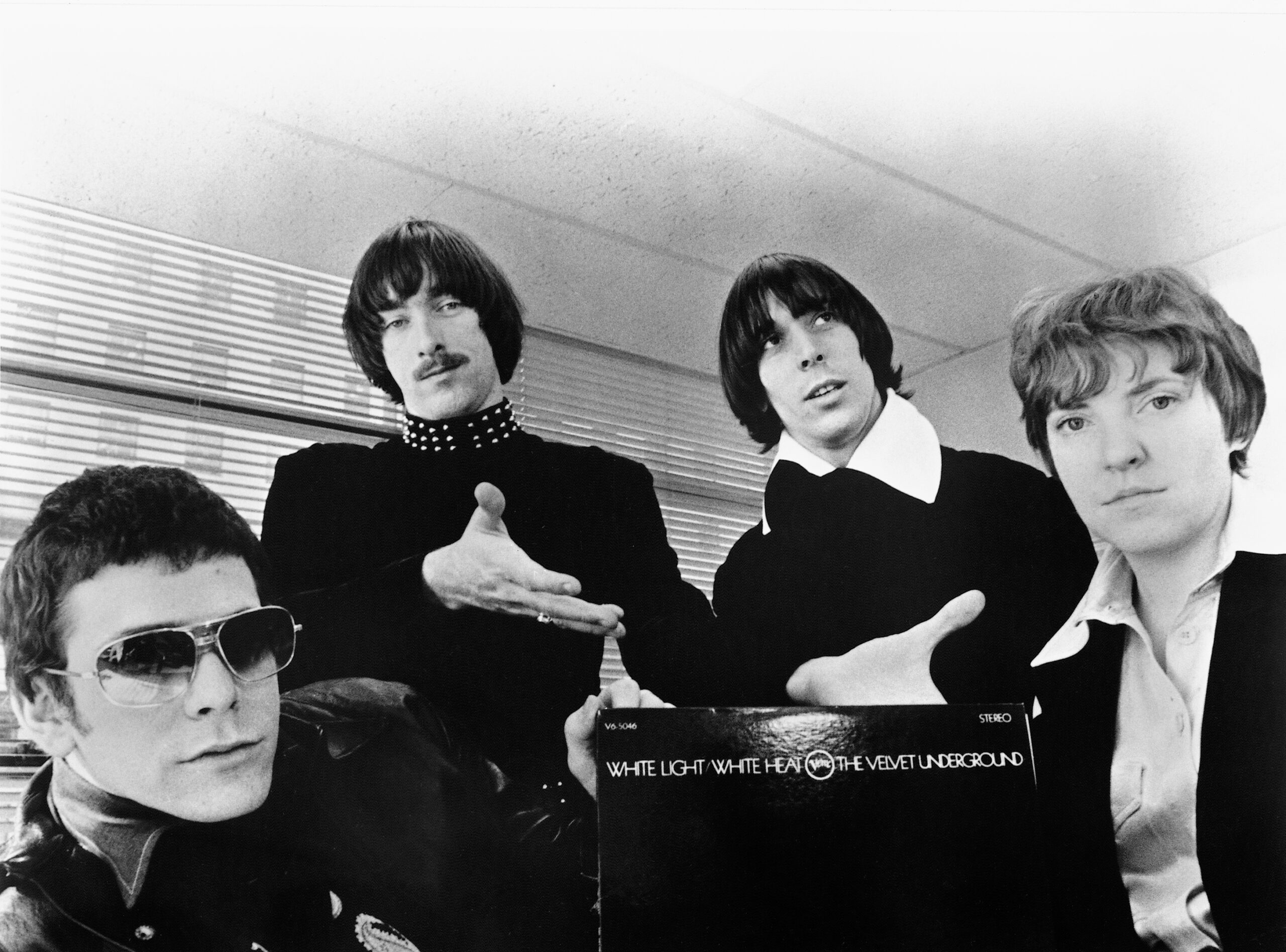
Immediate source: A scan accompanied "Overloaded: The Story of White Light/White Heat by David Fricke at Mojo. This scan crops out the publicity photo information/credits; an alternate, lower resolution version can be found on page 25 of The Velvet Underground Handbook (via the Internet Archive). Also compare this publicity photo from the same session, also found in the Mojo article, which does include the publicity photo info. | License: Public domain | Source: Wikimedia | https://commons.wikimedia.org/wiki/File:Velvet_Underground_WLWH_publicity_photo.jpg
Every indie rock list has to start here. This album is a blueprint for making something feel dangerous without turning it into bombast. The arrangements are sparse, the tones are droning, and the songs often feel more like scenes than polished singles. John Cale’s viola and droning low-end textures widened the harmonic language of rock, while Lou Reed’s detached delivery created a vocal style that became a template for generations of indie singers.
Production takeaway: restraint can be more radical than density. The record proves that a narrow arrangement, if it has identity and tension, can hit harder than a maximal one.
2. R.E.M. — Murmur (1983)
Murmur is where indie rock’s secret-weapon quality really comes into focus: melody that feels immediate, but not obvious. The guitars are chiming and interlocking, the rhythm section stays elastic rather than aggressive, and Michael Stipe’s lyrics are deliberately opaque. That ambiguity mattered. It gave listeners room to project meaning, which is part of why the album became such a touchstone for alternative and indie songwriting.
The production, handled by Mitch Easter and Don Dixon, keeps the record warm and organic. Nothing sounds overcooked. Instead, the band sounds like it is breathing in real time.
Production takeaway: capture interplay, not just individual parts. The magic here is in how the instruments talk to each other.
3. The Smiths — The Queen Is Dead (1986)
If indie rock had a canonical guitar language, Johnny Marr would be one of its chief architects. The Queen Is Dead is full of bright, ringing chord voicings, arpeggios, and layered parts that avoid rock’s usual power-chord bluntness. The result is music that feels both emotionally open and structurally intricate.
Morrissey’s lyrics are sharp, funny, and wounded, which helped define the emotional architecture of indie as a genre: irony and vulnerability can coexist. For producers and players, the lesson is that arrangement detail can be as expressive as lyrical content.
Production takeaway: use guitar layering for motion, not just thickness. Different voicings can create momentum even in a sparse mix.
4. Pavement — Slanted and Enchanted (1992)
Pavement made imperfection feel like a composition tool. Slanted and Enchanted is slacker rock in the best sense: loose, sly, and weirdly precise. Stephen Malkmus’s songwriting is full of melodic detours, but the album’s power comes from its balance between collapse and control. The guitars fuzz out, the performances wobble, and yet the songs land exactly where they need to.
For indie production, this record is crucial because it turns rough edges into character rather than liability. It’s an argument for leaving some seams visible.
Production takeaway: don’t sand off every performance artifact. A little instability can make a record feel alive.
5. Guided by Voices — Bee Thousand (1994)
Few albums better capture the lo-fi ethos than Bee Thousand. It sounds homemade because it largely is, but what makes it essential is not merely the fidelity — it’s the density of ideas. Robert Pollard’s songs arrive in fragments, with abrupt transitions, tape artifacts, and a kind of melodic abundance that makes the whole record feel like a box of half-open doors.
This album helped legitimize the notion that you didn’t need expensive gear or pristine tracking to make a record with lasting power. If anything, constraints became part of the aesthetic language.
Production takeaway: low fidelity works when the songwriting is strong enough to survive compression, noise, and abrupt edits.
6. Neutral Milk Hotel — In the Aeroplane Over the Sea (1998)
Huge emotion, strange instrumentation, and a production style that feels hand-built: this is one of indie rock’s most culturally persistent records. In the Aeroplane Over the Sea blends marching-band energy, acoustic intimacy, distorted tape haze, and surreal lyrical imagery into something that feels both intimate and mythic.
The album’s arrangement choices are the point. Horns, saw-like tones, and clattering percussion don’t just add color; they create the sense of a world tipping into abstraction. It’s the sound of a record trying to contain grief, memory, and obsession all at once.
Production takeaway: unusual instrumentation works best when it supports a clear emotional center. Weird for weird’s sake ages quickly; weird with purpose lasts.
7. Interpol — Turn On the Bright Lights (2002)
Interpol helped define the early-2000s post-punk revival with a record that is all atmosphere, negative space, and disciplined restraint. The guitars are arpeggiated and tightly voiced, the bass is melodic and prominent, and the drums lock into a rigid, almost architectural pulse. Paul Banks’s baritone sits right on top of that framework, adding emotional distance that only makes the songs more haunting.
This album is a masterclass in controlled tension. Everything feels measured, yet the emotional impact is huge. It’s one of the clearest examples of how indie rock can be minimal without sounding thin.
Production takeaway: strong low-end writing and precise stereo placement can make a stripped arrangement feel massive.
8. The Strokes — Is This It (2001)
Whether you think of it as garage rock, indie rock, or a bridge between scenes, Is This It changed the conversation. The album’s appeal is partly sonic: dry drums, ragged guitar edges, and vocals that feel both casual and iconic. But the real innovation is how the band made tight songwriting sound effortless.
Nick Valensi and Albert Hammond Jr. build interlocking guitar parts that never crowd the mix, while the rhythm section stays lean and propulsive. The record feels immediately referential yet unmistakably modern for its moment.
Production takeaway: clarity can be more powerful than polish. A dry mix with disciplined part-writing can feel more alive than a glossy one.
9. Arcade Fire — Funeral (2004)
Funeral expanded indie rock’s emotional scale without losing its core identity. The album is full of swelling dynamics, communal choruses, and arrangements that move from intimate to anthemic with almost cinematic force. Strings, pianos, handclaps, and gang vocals all play a role, but the record never feels bloated because the songwriting supports the ambition.
For a generation of listeners, this was the album that proved indie rock could be grand without becoming sterile. It brought size back into the genre while keeping the human mess intact.
Production takeaway: dynamic contrast is a form of arrangement. If every section is loud, nothing feels big.
10. Big Thief — Capacity (2017)
Big Thief represents a more modern strain of indie rock: intimate, technically nimble, and emotionally devastating without needing grand studio trickery. Capacity stands out for its songwriting depth and the way the band uses texture sparingly. Acoustic and electric guitars blend with unusual subtlety, and Adrianne Lenker’s voice sits in the mix like a live wire — vulnerable, precise, and never over-performed.
What makes this album essential is that it demonstrates how contemporary indie can sound close-miked and expansive at the same time. It’s proof that restraint, when paired with extraordinary writing, still cuts deep.
Production takeaway: intimacy is an arrangement choice. Small sounds can feel enormous when the performance is emotionally calibrated.
What these records teach producers and players
Across these ten albums, a few patterns emerge. Indie rock is often defined less by a specific tone than by values: personality over perfection, texture over sheen, and arrangement as emotional architecture. The best records in the genre know when to leave space, when to lean into noise, and when a strange instrumental choice can make a song unforgettable.
If you’re producing indie rock, study the details: guitar voicings, drum room sound, vocal placement, and how much grit the mix can hold before the song loses focus. If you’re a player, notice how often the most iconic parts are not the flashiest — they’re the ones that serve the atmosphere of the song.
These albums are worth knowing not because they’re “important” in an abstract sense, but because they are useful. They show you how indie rock built its own rules, then used those rules to make something emotionally durable.
Start here, then branch out
If you’re new to indie rock, this is a strong entry point into the genre’s history and sound design. If you already know the classics, revisit them with a producer’s ear. You’ll hear how much of the genre’s identity lives in choices that are easy to overlook: a guitar part left slightly rough, a vocal kept too close to the mic, a drum take that feels more human than perfect.
That’s the enduring appeal of indie rock at its best. It doesn’t just ask you to listen — it shows you how sound can carry attitude, doubt, and identity in the same frame.
Image: Orleans – album-guide. 1843 (127855099).jpg | This file comes from Polona Digital Library and is available under the URL: https://polona.pl/item/orleans-album-guide,MTI2NTQ0MTc3/16/ | License: Public domain | Source: Wikimedia | https://commons.wikimedia.org/wiki/File:Orleans_-_album-guide._1843_(127855099).jpg