10 Guitar Pedals That Still Earn a Place on Every Serious Musician’s Board
The best guitar pedals do more than color a riff—they shape arrangement, dynamics, and mix decisions from the first pass. Here are 10 essentials that remain useful in the studio, on stage, and inside modern production workflows.
Pedals are often treated like hobbyist objects: collectible, swappable, endlessly stackable. But if you work like a producer, engineer, or session-minded musician, the right pedals are less about novelty and more about function. They solve problems. They create contrast. They add dimension before the signal ever hits a DAW. In that sense, a pedalboard is not just a guitar rig—it is a sound design toolkit.
Below are 10 pedals that continue to matter because they do something irreplaceable. Some are obvious staples. Others are more context-dependent but still earn their place by improving workflow, broadening tonal range, or making parts sit better in a mix. If you are building a board from scratch or pruning an overgrown one, these are the essentials worth knowing.
1. Tuner

The least glamorous pedal on the board is also one of the most important. A good tuner is not just about staying in pitch; it is about fast, silent signal management. In a live setting, a true-bypass or buffered tuner with a mute function can cleanly kill your signal between songs. In the studio, it speeds up tracking and prevents pitch drift from becoming a comping headache later.
For producers, the tuner matters even more than many players admit. Slightly out-of-tune doubled guitars can smear a chorus, destabilize a harmony stack, or create phasey weirdness when layered with synths. A precise tuner helps ensure your guitars occupy a stable harmonic center, which makes EQ and multitrack arrangement far easier.
2. Compressor

A compressor is one of the most misunderstood pedals because players often hear it as a “sustain” box when it is really a dynamic shaping tool. On guitar, compression can even out fingerstyle passages, add snap to funk rhythm parts, and make arpeggios feel more polished. On bass-heavy arrangements, it can also help a guitar part maintain intelligibility without having to push the level too high.
In production terms, compressor pedals are useful because they commit a character to the performance. Optical compressors tend to feel smooth and musical, while more aggressive designs can add a pronounced clamp and attack. If your parts need to cut through dense drums and layered vocals, light compression on the way in can save time later and make the performance feel more “finished” before mixing.
3. Overdrive

If you can own only one gain pedal, make it an overdrive. It is the most versatile gain stage in modern guitar rigs because it can function as a clean boost, edge-of-breakup enhancer, or full-on texture generator depending on how you set it and what amp you feed it into. Overdrive is often the secret to a part that feels present without sounding obviously distorted.
For recording, overdrive excels because it adds upper harmonics that help guitars translate on small speakers, earbuds, and laptop playback. That makes it especially useful in modern productions where guitar has to coexist with synth bass, programmed drums, and bright lead vocals. A well-chosen overdrive can help a rhythm part stay audible without resorting to excessive EQ.
4. Distortion
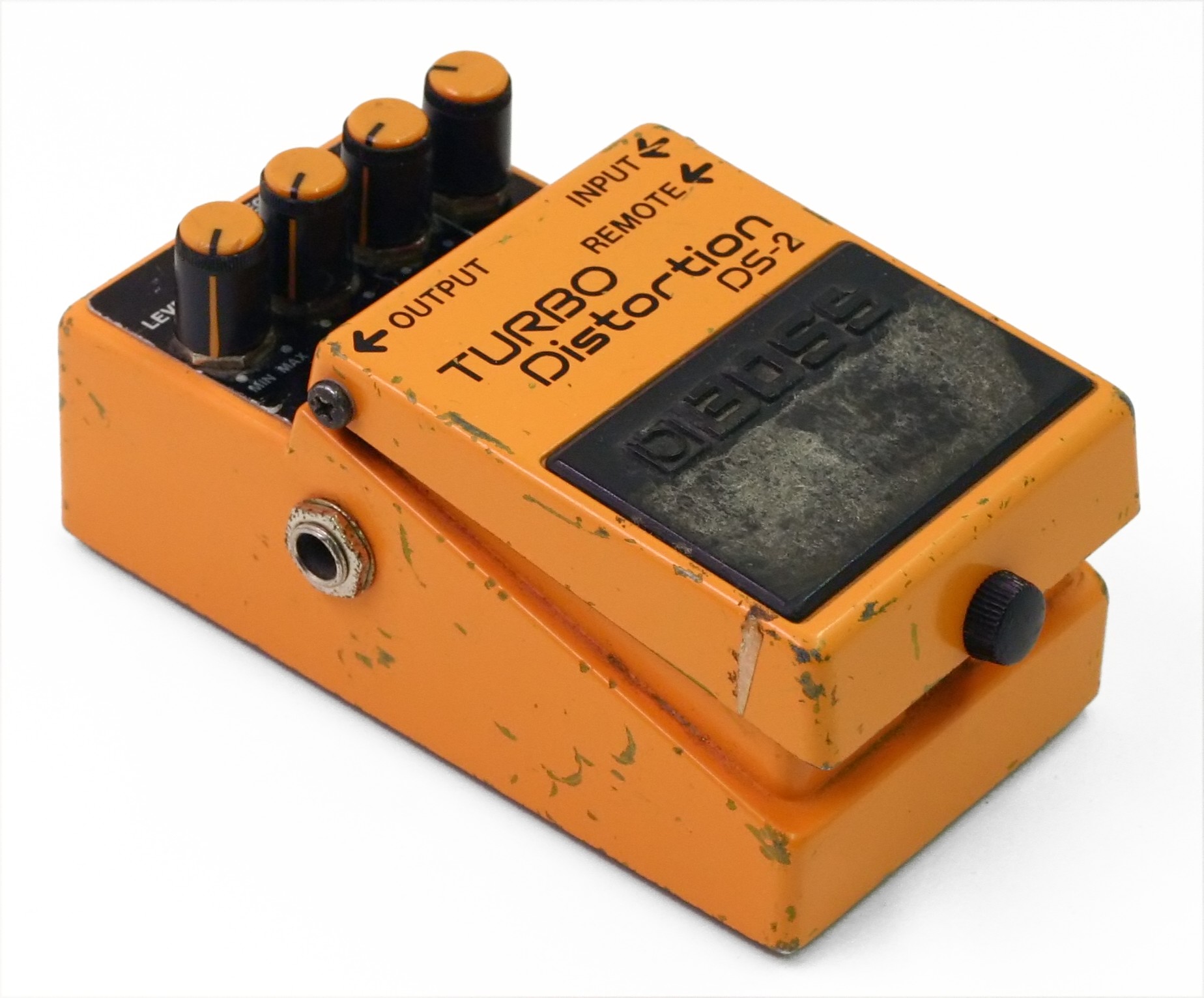
Where overdrive adds controlled grit, distortion delivers density, sustain, and attitude. It is the pedal that turns a riff into a statement. From punk and alt-rock to industrial and heavy pop, distortion remains one of the fastest ways to create a part that feels bigger than the amp itself.
From an engineering perspective, distortion can be both a gift and a trap. It adds harmonic content that helps guitars feel massive, but too much gain can flatten transient detail and make a mix harder to edit. The best distortion pedals offer enough EQ shaping to prevent low-end mud and high-end fizz, which is crucial if you want the part to survive layering with kick, snare, and synths. In a production workflow, distortion is often most effective when it is tracked deliberately rather than added later as an afterthought.
5. Fuzz

Fuzz is less polite than overdrive or distortion, and that is exactly why it matters. It clips in a more unruly way, creating thick harmonics, compressed sustain, and a distinctly unstable edge. Used well, fuzz can turn a simple line into a cinematic texture. Used badly, it can swallow a mix whole.
For producers, fuzz is a sound-design weapon. It can make lead lines sound ancient, synth-like, or almost broken in the best possible way. Silicon fuzzes tend to feel sharper and more aggressive, while germanium-style circuits often feel softer, warmer, and more dynamic. In a layered arrangement, fuzz can be the fastest route to a part that feels unique without needing extra processing.
6. Chorus
Source book page: https://archive.org/stream/randmcnallycosha02chic/randmcnallycosha02chic#page/n215/mode/1up | License: Public domain | Source: Wikimedia | https://commons.wikimedia.org/wiki/File:Rand,_McNally_and_co.%27s_handy_guide_to_Chicago,_and_World%27s_Columbian_exposition_What_to_see_and_how_to_see_it_(1892)_(14776870294).jpg
Chorus can be subtle or neon-bright, and both uses are valid. At its core, it thickens a signal by modulating a delayed copy against the dry tone. That movement creates width, shimmer, and motion, which is why chorus remains a staple on clean guitars, post-punk rhythm parts, and glossy pop productions.
In a modern mix, chorus is especially useful when a guitar part needs to stand apart from synth pads without becoming louder. It can widen a mono source, create emotional depth in verse sections, or make a simple triad progression feel more expensive. Producers often reach for plug-in chorus, but a hardware pedal still offers a tactile, performance-based quality that can inspire better parts at the source.
7. Delay
Delay is one of the most production-friendly pedals ever made because it does what engineers constantly do in the DAW: create space, rhythm, and depth. A short slapback can add dimension to country, rockabilly, or indie tones. A dotted-eighth digital delay can create a rhythmic hook. A long ambient repeat can turn a simple chord into an evolving backdrop.
For musicians working with backing tracks or building songs in layers, delay can effectively replace some of the ambience you might otherwise add later with reverb or stereo widening. Tape-style delays often soften transients and sit beautifully behind vocals, while cleaner digital delays can lock tightly to tempo-based arrangements. If your set or session depends on time-based effects, delay is non-negotiable.
8. Reverb
Reverb is the pedal that places your guitar in a physical or imaginary space. Whether it is a spring tank vibe, a plate-style sheen, or a cavernous ambient wash, reverb changes how listeners perceive distance, scale, and emotional weight. Even the most minimal guitar parts can sound complete once they are given the right room.
In production, reverb is often a question of arrangement more than taste. A short, controlled reverb can make a dry part feel professional without clouding the vocal. A large ambient setting can help a sparse composition feel cinematic. The key is knowing whether the guitar should occupy the foreground or become part of the atmosphere. Good reverb pedals make that decision fast and hands-on.
9. Wah
The wah pedal is one of the few effects that behaves almost like a human voice. By sweeping a resonant filter, it adds expression, punctuation, and movement that no static EQ curve can fully replicate. It is iconic for funk and classic rock, but it also works in more contemporary contexts when used creatively on lead lines, rhythmic stabs, or even synths and bass.
From a producer’s standpoint, wah is an arrangement tool. It creates motion without requiring a new part, which makes it valuable when a song needs variation but not density. It can also carve a guitar forward in the mix by emphasizing a narrow, moving band of frequencies. Used sparingly, it becomes a memorable performance gesture rather than just an effect.
10. Boost
A boost pedal may seem boring next to fuzz or reverb, but it is one of the most useful pieces of hardware a musician can own. A clean boost can lift solos, drive an amp harder, or add just enough level to make a part feel more assertive. Some boosts are entirely transparent; others introduce subtle EQ shaping or slight coloration that can be strategically useful.
In recording workflows, a boost pedal is a problem solver. It can help you hit an amp’s front end at the exact level needed for breakup, or give a lead line the extra push it needs to move above a busy arrangement. In the mix, that often means less corrective compression and less automation later. The boost is not about excitement in the obvious sense—it is about control.
What this list really means for modern players
The best pedals are not the most expensive, rare, or spec-heavy. They are the ones that consistently improve a performance, a recording chain, or a songwriting session. A practical essentials board should cover tuning, dynamics, gain staging, modulation, time, and space. If you have those bases covered, you can track cleanly, build more interesting textures, and make fast decisions under pressure.
For producers, this also highlights an important truth: many “pedal sounds” are not just guitar sounds. They are arrangement sounds. A chorus can widen a chorus hook. Delay can create rhythmic glue. Reverb can define atmosphere. Fuzz can turn a simple riff into a signature texture. The point is not to collect effects for their own sake. The point is to own tools that help you finish records.
Final takeaway
If you are building an essential pedal collection, start with the pedals that solve the most problems first: tuner, compressor, overdrive, delay, and reverb. Then add the more character-driven tools—distortion, fuzz, chorus, wah, and boost—based on the kinds of sessions and songs you actually make. That is how a pedalboard stops being a pile of gear and starts becoming a usable production system.