The Sound Architects of 90s Rock: Producers Who Turned Bands into Radio Weapons
The biggest 90s rock records weren’t just written well — they were engineered with precision. From compressed drum rooms to layered guitars and radio-ready vocal chains, these producers defined the decade’s sonic identity.

Why 90s Rock Sounded So Specific
The defining rock records of the 1990s didn’t just capture bands performing songs — they captured a production philosophy. In the span of one decade, rock moved from the airless punch of late-80s arena polish to a wider, heavier, often more textural sound that could be raw, glossy, or both at once. The producers behind those hits were not interchangeable technicians. They were sonic translators, deciding when a band should feel urgent, when it should feel enormous, and when the ugliness of a performance was the whole point.
What made 90s rock records stick was often the exact intersection of arrangement and engineering. The guitars were tuned lower, doubled more aggressively, and placed with ruthless clarity. The drums were often captured with huge room dimensions or processed into a punchier, more compressed architecture. Vocals were pushed forward enough to remain emotionally legible over dense midrange, but rarely left dry enough to feel small. If you want to understand why these records still hit, you have to look at the producers who made technical decisions in service of identity.
Butch Vig: Controlled Chaos as a Signature
Butch Vig is one of the clearest examples of a producer whose technical taste became inseparable from a band’s public image. On Nirvana’s Nevermind, the tension was not between “clean” and “dirty” so much as between precision and emotional volatility. Vig’s approach gave the songs a frame sturdy enough to hold Kurt Cobain’s abrasion without sanding off the danger.
The drum sound is a key clue. Dave Grohl’s kit on tracks like “Smells Like Teen Spirit” was captured with a sense of scale, but the mix avoids the smeared depth that would bury impact. Snare hits are sharp, kick drum is direct, and the cymbals are bright without becoming wash. That balance created the illusion of a band exploding in a big room while still sounding focused on FM radio. Vig also understood the power of vocal layering and guitar contrast: verses could feel relatively restrained, but the choruses opened up through overdubs and dynamic escalation rather than just volume.
For producers today, the takeaway is practical. “Big” does not mean unfocused. Vig-style punch often comes from editing decisions, arrangement discipline, and selective compression. If the chorus is meant to feel larger, it needs a reason to expand — doubled guitars, additional harmonic density, or a vocal stack that arrives like a structural event.
Brendan O’Brien: The Art of Weight Without Mud
Brendan O’Brien became one of the essential architects of 90s rock because he understood heaviness as a mix problem, not just a riff problem. His work with Pearl Jam, Stone Temple Pilots, and later Rage Against the Machine-associated projects showed a consistent instinct: keep the low end firm, make the guitars muscular, and preserve enough transient detail that the song still moves.
Listen to Pearl Jam records like Vs. and Vitalogy. The rhythm section feels grounded and physical, but the mixes do not collapse into one block of distortion. Bass occupies a defined lane, guitars are arranged so their midrange doesn’t obliterate the vocal, and drums retain attack. That’s one reason his productions age well: they are dense without being flat.
O’Brien’s technical distinctiveness also came from how he handled band energy. He could keep performances sounding live while still using studio layering to intensify the emotional arc. This is a producer who knows when to leave a rough edge in place and when to strengthen a section with overdubs, automation, or tighter editing. In practical terms, that means a modern session can borrow his method by checking the low-mid buildup around 200–500 Hz, controlling guitar overlap, and riding vocal levels so the hook never disappears behind the band’s momentum.
Rick Parashar: Earthy, Three-Dimensional, and Human
Rick Parashar’s production on records like Temple of the Dog and Blind Melon helped define a different branch of 90s rock: organic, emotional, and just raw enough to feel unvarnished. His records often had a natural room sound and a vocal presence that leaned into vulnerability rather than aggression.
Parashar’s genius was in making bands feel like they were inhabiting a real space instead of a polished grid. Drum ambience is audible, guitars breathe, and vocals sit with a kind of conversational intimacy even when the arrangement gets massive. That approach mattered because it gave songs emotional credibility. When a singer sounded fragile, the production didn’t flatten it into commercial sameness; it amplified the feeling.
For engineers, this is a reminder that room tone and decay are not production leftovers. They are part of the arrangement. The right room mic blend can make a snare feel like a human event instead of a sample replacement. A vocal with a touch of natural depth can feel more present than one over-edited into sterility. Parashar-style production works because it trusts acoustics to carry identity.
Mutt Lange: Hyper-Engineered Rock for the Masses
If Vig and Parashar represent different versions of emotional realism, Mutt Lange stands for maximal control. His work with Def Leppard — especially Hysteria — pushed rock production toward a level of detail that bordered on orchestral construction. By the 90s, his influence was everywhere in the way producers approached layered vocals, huge choruses, and meticulously sequenced drums.
Lange’s records are often admired for sheer scale, but the more interesting detail is how disciplined they are. Every background vocal is placed to reinforce a hook. Every guitar part contributes to width or harmonic lift. The snare sound is not just “big”; it is integrated into a system of synthesized and acoustic layers designed to feel larger than the band itself. That mentality helped define mainstream rock’s radio ambitions in the decade that followed.
The lesson here is less about copying a specific chain and more about adopting a mindset. If the hook is the center of gravity, every other sound should either support it or get out of the way. Lange-style production rewards meticulous gain staging, arrangement subtraction, and vocal comping that prioritizes consistency over documentary realism.
Glenn Ballard, Bob Rock, and the Crossover Mindset
As 90s rock expanded into more commercial territory, producers like Bob Rock played a crucial role in making heavier bands sound bigger, cleaner, and more accessible without fully neutralizing their edge. His work with Metallica is the classic example: the goal was not just aggression, but impact that could survive on mainstream systems.
That crossover mindset was a major factor in 90s rock’s reach. Producers were increasingly mixing for car stereos, boomboxes, FM radio, and, later in the decade, increasingly compressed consumer playback systems. The records had to translate. That meant centered vocals, controlled dynamics, and drum tones that hit hard even after broadcast processing.
What separates these producers from a generic “big rock” aesthetic is their understanding of translation. Great 90s rock production wasn’t merely huge in the studio; it remained legible when reduced by radio compression and consumer playback. That requires disciplined midrange management, vocal placement, and a bass relationship that works on small speakers as well as large ones.
What Modern Producers Can Steal from 90s Rock
The easiest mistake is to think these records were defined by expensive gear alone. They weren’t. They were defined by choices. A producer could use vintage compressors, large-format consoles, and live rooms, but without a clear idea of the band’s identity, the result would be just a period replica.
For modern production, the most useful 90s rock lessons are surprisingly concrete:
- Let the chorus earn its size. Add density through doubles, not just louder faders.
- Control the low-mids. Rock loses punch when guitars and toms crowd the 200–500 Hz zone.
- Keep the vocal intelligible. The hook needs to survive dense arrangements.
- Use room sound intentionally. Ambience can make drums and vocals feel human instead of sterile.
- Think in translation, not isolation. If the mix only sounds huge on studio monitors, it is not finished.
The real producers of 90s rock were identity engineers. They didn’t just capture bands; they made sonic decisions that turned personality into scale. That is why their records still matter. The best of them are not dated artifacts. They are case studies in how arrangement, tone, and mix psychology can harden a band’s character into something unmistakable.
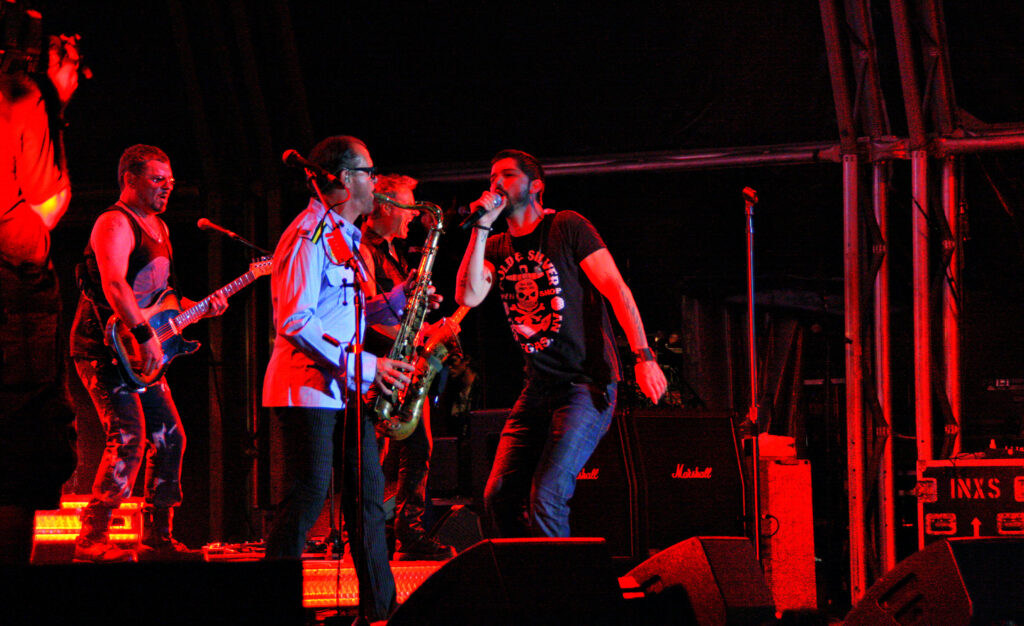
Image: Yuck, Room 205, 2011.jpg | https://www.flickr.com/photos/goincase/6130404195/ | License: CC BY 2.0 | Source: Wikimedia | https://commons.wikimedia.org/wiki/File:Yuck,_Room_205,_2011.jpg