Inside The Weeknd’s Synth Palette: The Plugins, Effects, and Production Moves Behind the Glow
The Weeknd’s signature sound is less about one magic synth than a tightly controlled chain of analog-style textures, vocal processing, and space-building effects. Here’s what producers can borrow from the gear choices and workflows that make his records feel both retro and future-facing.
The Weeknd’s Sound Is a System, Not a Preset
When producers talk about The Weeknd’s signature sound, they often reach for the wrong explanation. It is not just “80s synths,” not just dark R&B, and definitely not one plugin doing all the work. The real identity comes from a repeatable production system: analog-style synth layers, aggressive but polished vocal treatment, wide modulation effects, and a deep sense of space that makes every instrument feel like it is coming through a neon haze.
That is why his records can feel simultaneously nostalgic and modern. The reference points are obvious—synthwave, electro-pop, new wave, post-disco, and haunted club music—but the execution is cleaner and more controlled than a straight retro homage. If you strip away the vocal and focus on the arrangement, you’ll hear a lot of smart gear choices that prioritize contrast: warm against cold, dry against drenched, intimate against cinematic.
What the Synths Actually Do in the Arrangement
The Weeknd-style synth work is usually built around a few core jobs rather than a single hero lead. First, there is the harmonic bed: pads, sustained chords, and soft analog timbres that fill the middle of the spectrum without sounding too glossy. Second, there is the hook layer: arpeggios, short motifs, or line-level melodies that lock onto the vocal rhythm. Third, there is movement—little filter sweeps, pitch bends, pulse-width modulation, or LFO-driven stereo motion that prevents the track from sitting still.
That structure is important because it explains why his songs often feel expensive even when the parts are relatively simple. The synths are not cluttering the mix. They are assigned roles. A common mistake is to load up on huge pads and detuned supersaws, then wonder why the vocal disappears. The Weeknd’s records tend to keep the instrumental framing elegant and disciplined.
Analog-Style Plugins vs. Real Hardware: The Practical Difference
In this lane, producers reach for both software and hardware emulations, but the reason usually comes down to behavior rather than nostalgia. Analog-inspired plugins from Arturia, u-he, Native Instruments, Spectrasonics, and Roland Cloud are popular because they deliver three things fast: stable tuning with character, modulation that feels alive, and filters that can be pushed without sounding sterile.
Compare that to a cleaner, more clinical digital synth. A digital instrument can absolutely create The Weeknd-adjacent tones, but it often needs more work to feel slightly imperfect in the right way. The Weeknd aesthetic leans into textures that wobble a bit, breathe a bit, and smear at the edges. That is why emulations of Prophet-style, Juno-style, and Oberheim-style synths get so much use in this world. They are quick paths to warmth, width, and harmonic thickness.
If you want a practical shortlist, look at what each category does well:
- Juno-style plugins excel at lush chorus pads and brittle-but-sweet stabs.
- Prophet-style synths are great for punchier chords and evolving analog movement.
- Oberheim-style emulations are useful for wide, glossy polysynth tones with a dramatic sheen.
- FM or hybrid synths can add bell-like edges and modern contrast when the arrangement needs tension.
The key distinction is that The Weeknd’s sound rarely depends on purely pristine synthesis. Producers favor instruments that already sound mixed, or at least close to it, because they sit in the record faster.
The Chorus Effect Is Doing More Heavy Lifting Than You Think
If there is one effect that defines the emotional fingerprint of this style, it is chorus. Not every track uses it the same way, but chorus is a major reason these synths feel wide, nostalgic, and slightly emotional without becoming cheesy. On keys and pads, it softens the attack and broadens the stereo image. On a Juno-style patch, the onboard chorus is almost part of the instrument’s identity.
That matters because chorus is not just width. It is texture. It can make a simple triad feel larger, more vulnerable, and more cinematic. In The Weeknd’s orbit, chorus often serves as a bridge between pop clarity and vaporous atmosphere. Producers use it to blur the line between the source sound and the space around it.
Common companion tools here include subtle phaser, flanger, and vibrato, but chorus remains the core reference point. Used tastefully, it gives the track a shimmer that feels expensive. Used too heavily, it turns the arrangement into a wash. The difference is often in the mix depth and the wet/dry balance.
Reverb and Delay: Building the Afterimage
The Weeknd sound depends on space, but not just any space. The reverb is usually controlled enough to keep the mix intelligible, yet long and glossy enough to create a dreamlike afterimage. You’ll hear plate-style reverbs, darker halls, and reverbs with filtered high end that avoid turning into hiss. The goal is to make the synths feel distant without losing their emotional pull.
Delay does a different job. It creates motion and repetition, which is crucial for hooks that need to echo around the vocal rather than compete with it. Stereo delays, ping-pong delay, and tempo-synced slapback all show up in this universe. A short delay on a synth stab can make it feel like a memory. A longer delay on a lead line can make the melody feel suspended in air.
The practical takeaway: think in layers of space. Put some elements relatively dry and close. Push others into the room. The contrast is what gives the song depth. If everything is drenched, nothing feels special.
Vocal Processing Is Part of the Synth Aesthetic
The Weeknd’s vocal chain is inseparable from the instrumental palette. His voice is often treated like a lead synth: tuned tightly, compressed for control, colored with saturation, and dressed in delay and reverb that extend the emotional tail. In other words, the vocal does not merely sit on top of the track. It is integrated into the same atmosphere.
That integration is one reason the records feel cohesive. When the vocal receives the same spatial treatment as the synths, the entire mix starts behaving like one unified instrument. Auto-Tune or other pitch correction tools are not just for repair here; they are part of the style. The slightly synthetic edge helps the voice cut through the dense atmosphere while preserving the modern pop finish.
Producers chasing this sound should pay attention to vocal stacking, harmonies, and doubled phrases. The layered vocal approach can mimic the width and density of a synth stack without crowding the arrangement.
What to Use if You Want the Vibe Without Copying the Record
The smartest way to chase The Weeknd’s production language is to focus on functions, not replicas. You do not need the exact preset from a famous plugin pack. You need the same technical outcomes. Start with one analog-style polysynth for chords, one chorus-heavy synth or pad source for width, and one contrasting texture—something more digital, brittle, or percussive—to keep the arrangement from becoming monochrome.
Then build the effects chain with intent:
- EQ to carve space for the vocal
- Saturation to add density and harmonic glue
- Chorus for width and motion
- Reverb for cinematic depth
- Delay for rhythmic echo and emotional tail
- Compression to keep the synths and vocals disciplined
What makes this style distinct is not the presence of effects, but the restraint. Every processor has a job. Nothing is there just because it sounds “big.” That discipline is what separates an authentic-inspired production from a generic retro-pop imitation.
Why Producers Keep Returning to This Formula
The Weeknd’s sound remains one of the most useful blueprints in contemporary pop because it solves a difficult problem: how to make electronic production feel emotionally immediate. The synth choices are warm but not soft, the effects are lush but controlled, and the overall mix has enough polish to compete with modern pop while still carrying the tension of older nightlife records.
For producers, that makes the aesthetic extremely reusable. You can pull the same toolbox into synthwave, alt-pop, dark R&B, indie pop, or club-inflected production and get a similar emotional payoff. The formula works because it is modular: strong synth selection, deliberate chorus use, atmospheric delays, and vocal processing that treats the singer like part of the instrument stack.
If you want the shortest possible summary, it is this: The Weeknd’s signature sound comes from synths that feel human, effects that feel cinematic, and production choices that understand when to leave space. That combination is why the records glow instead of merely sounding retro.
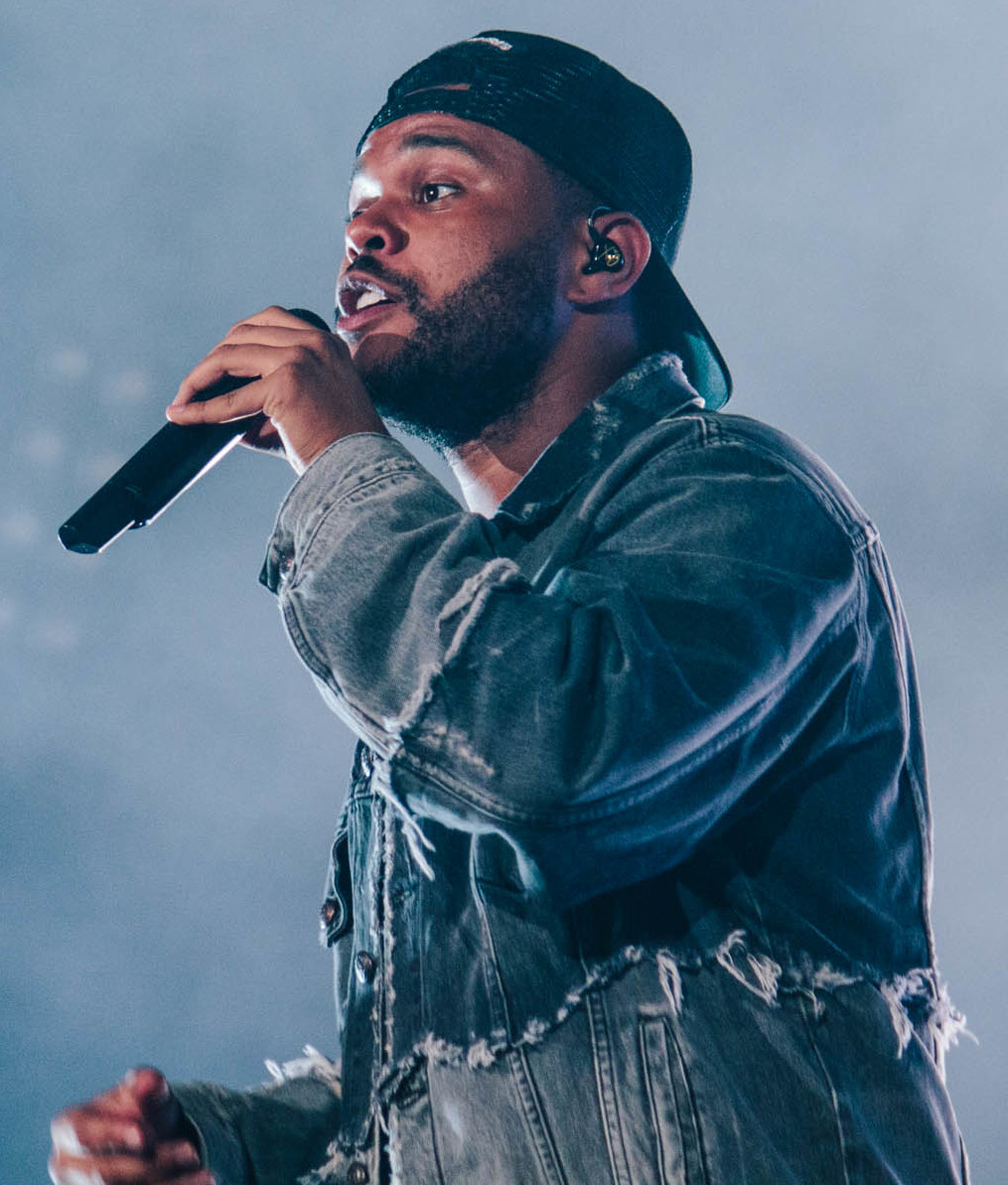
Image: FEQ July 2018 The Weeknd (44778856382) (cropped).jpg | The Weeknd | License: CC BY 2.0 | Source: Wikimedia | https://commons.wikimedia.org/wiki/File:FEQ_July_2018_The_Weeknd_(44778856382)_(cropped).jpg