Inside The Cure’s Guitar Atmosphere: Chorus, Reverb, and the Art of Making Space Feel Haunted
The Cure’s guitar sound is less about riffs than architecture: chorus-drenched movement, cavernous reverb, and carefully controlled delay that turns simple parts into emotional weather. Here’s a breakdown of the effects, production logic, and practical ways to recreate that signature atmosphere.
The Cure’s guitar sound is built on atmosphere, not flash
The Cure’s most recognizable guitar tones are a masterclass in restraint. Robert Smith rarely chases the kind of high-gain, front-and-center lead sound that dominates rock guitar history. Instead, the band’s signature identity comes from space: chorus that widens and softens the attack, reverb that blurs the edges, and delay that gives every phrase a sense of aftermath. The result is a sound that feels emotionally huge without becoming technically crowded.
What makes this tone so effective is that it works on two levels at once. On the surface, it’s instantly identifiable: shimmering, wet, slightly detuned, and ghostly. Underneath, it’s also a production strategy. The guitar is often treated like a texture layer, not just a melodic instrument, which is why The Cure can make a simple chord progression feel cinematic. You are hearing arrangement decisions as much as pedal choices.
The core ingredients: chorus, reverb, delay, and dynamic restraint
If you strip the sound down to its essentials, four elements do most of the work. First is chorus. The Cure often leaned on modulation that thickens the guitar and creates a subtle pitch wobble, giving clean chords a wider stereo-like feel even before any mixing tricks are applied. This is not the hyper-glossy chorus of ’80s pop guitar so much as a softer, more melancholy modulation that makes the notes seem to shimmer at the edges.
Second is reverb, often applied generously enough that the instrument no longer feels pinned to the room. This is a crucial part of the aesthetic. A dry guitar sounds direct and assertive; a reverberant guitar feels reflective, distant, and emotionally unresolved. In The Cure’s context, reverb isn’t just ambience, it’s narrative. It suggests air, architecture, and emotional distance.
Third is delay, used to create rhythmic depth or a faint echo trail that extends the note’s lifespan. Even when the delay is not obviously audible as a discrete repeat, it can help create density and make patterns feel larger than the parts themselves. The final ingredient is restraint in performance and arrangement. Smith’s parts often leave room between notes, letting effects bloom instead of fighting for space with constant strumming.
Why chorus is so central to the Cure tone
Chorus is the effect most people associate with The Cure because it defines the band’s harmonic identity. A clean guitar through chorus can do a lot of heavy lifting: it adds movement to static chords, softens transients, and creates the impression of multiple guitars even when only one part is being played. That matters in post-punk and gothic-influenced production, where emotional density often comes from texture rather than volume.
In practice, the Cure-style chorus sound tends to work best when it is not overdriven. Clean or edge-of-breakup tones let the modulation remain audible and musical. If you push too much gain into the chain, the chorus can collapse into mush. The point is to preserve the shape of the chord while letting the modulation smear the edges just enough to create that nocturnal, floating quality.
For players, this usually means setting the rate fairly slow and the depth moderate. Too fast, and you get seasick motion that distracts from the part. Too deep, and the note definition disappears. The sweet spot is a movement that feels almost subliminal until you bypass it.
Reverb as emotional staging
The Cure’s use of reverb is more than “more is more.” It’s about staging the guitar in a psychological space. A large hall or plate-style reverb can make a part feel isolated, while a springier, smaller-space reverb can add personality without overwhelming the arrangement. The band’s most atmospheric tracks often sound like they were designed around decay time: the note starts in one emotional zone and then lingers long enough to transform before the next chord arrives.
This is especially effective when chords are voiced with open strings or suspended intervals. Reverb exaggerates the unresolved character of those voicings. A simple major or minor chord can become dramatically ambiguous when the tail hangs in the air and the next chord enters before the previous one fully disappears. The effect is less “guitar hero” and more “weather system.”
In modern plugin terms, this often means choosing a reverb with a smooth high end and avoiding overly bright reflections. Harsh top-end shimmer can pull the sound into generic ambient territory. The Cure vibe is usually darker, thicker, and more psychologically resonant than glossy.
The role of delay: depth, pulse, and negative space
Delay is part of what gives The Cure’s guitar arrangements a sense of motion even when the playing is sparse. A short delay can thicken single-note lines and make arpeggios feel wider. A longer, more obvious delay can turn simple phrases into call-and-response patterns that occupy more emotional room. In either case, delay works best when it supports the arrangement rather than announcing itself as an effect demo.
One practical lesson from this sound is that delay does not have to be rhythmic in an obvious way to matter. Even subtle repeats can create the illusion of depth and space between the guitar and the listener. In a band mix, that can keep a clean part from feeling too naked. In a solo production context, it keeps the guitar from sounding like it was recorded in a vacuum.
The key is to balance delay with the rest of the chain. Too much feedback and the guitar stops feeling elegant; too little and it loses the floating quality that makes the band’s textures so memorable. Think of delay as a compositional tool, not just a time-based effect.
Gear logic: what kind of pedals and settings get you close
You do not need Robert Smith’s exact rig to approximate the aesthetic. The sound lives in a fairly reproducible chain: a clean platform amp or clean amp model, a chorus pedal or plugin, a quality reverb, and a delay placed so the repeats complement the modulation. The order matters. Chorus often feels more natural before reverb, because the reverberant space captures the motion. Delay can sit before or after reverb depending on whether you want the repeats to sound ambient or defined.
For pedal settings, start with a clean amp, low-to-moderate output, and a chorus rate that is slow enough to feel wide rather than wobbly. Reverb should be long enough to create atmosphere, but not so long that it obscures chord changes. Delay times in the 300–450 ms range can work for spacious rhythm parts, while shorter slap-style settings are useful for thickening arpeggios. If your amp or plugin has tone controls on the effects, roll off some brightness to keep the top end from turning brittle.
Classic analog chorus units, bucket-brigade delays, and plate or hall reverbs all map well to this sound, but digital emulations can absolutely get there if they are tuned with taste. The secret is not chasing the most expensive model; it is balancing modulation depth, decay time, and EQ so the guitar occupies a believable emotional space.
How to recreate the atmosphere in a modern DAW
In a DAW, build the tone in layers. Start with a clean guitar track and remove unnecessary low end so the ambience does not turn muddy. Add chorus first, ideally with modest depth and a slow rate. Then insert delay or use a send, depending on whether you want the repeats to stay tied to the instrument or float independently. Finish with reverb on a send bus so you can shape the space more precisely and avoid over-wetting the dry signal.
EQ is critical. A Cure-inspired guitar often benefits from a low cut somewhere below the low mids and a subtle high cut on the ambient returns. This keeps the reverb from fizzing out and gives the chorus more room to breathe. If the guitar still feels too close, widen the reverb decay and reduce the transient presence a touch. If it feels washed out, shorten the tail and emphasize the midrange so the part retains shape.
Compression can help, but use it sparingly. The Cure sound is expressive partly because it is not overly flattened. Let the chords breathe. Let the modulation move. Let the tail decay naturally.
The bigger lesson: atmosphere as composition
The real takeaway from The Cure’s guitar sound is that effects are not decoration. They are part of the writing. Chorus gives motion, reverb gives emotional distance, and delay gives the listener a sense of time passing inside the song. That is why the sound remains so influential: it transforms simple harmonic materials into something psychological and immersive.
For producers and guitarists, this is a reminder that you do not need complexity to achieve depth. You need intention. If the part is sparse, the effects can speak louder. If the arrangement is dense, the ambience has to be shaped with discipline. The Cure understood that balance better than most bands of their era, and that is why their guitar tone still feels alive: it is less a preset than a point of view.
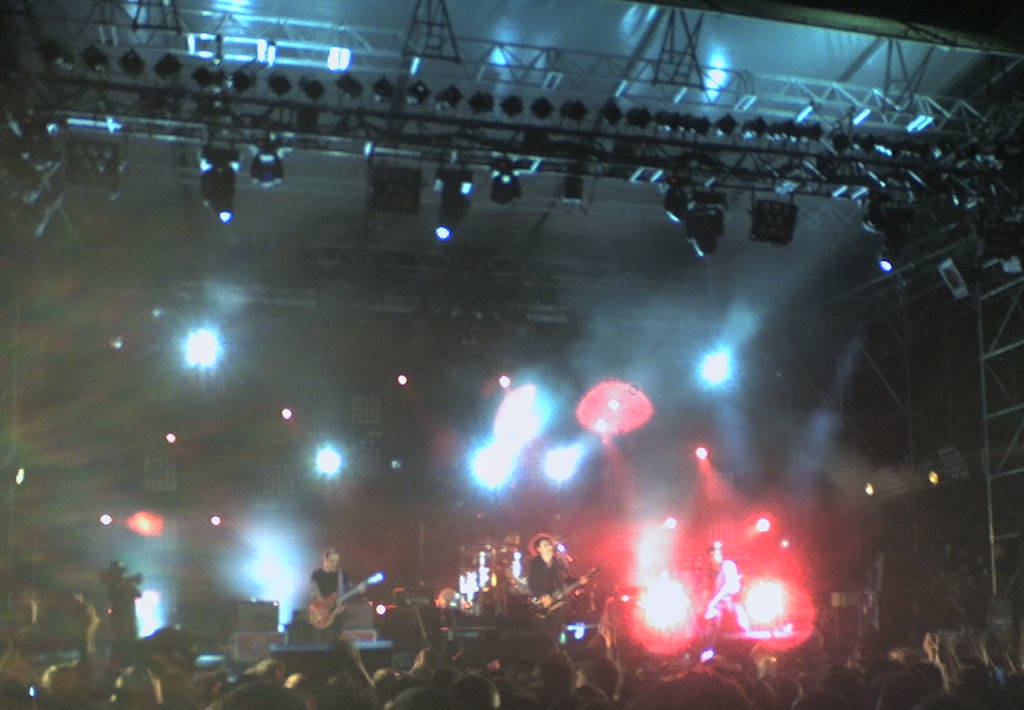
Image: The Cure-Live-2005.jpg | Own work | License: CC BY 2.5 | Source: Wikimedia | https://commons.wikimedia.org/wiki/File:The_Cure-Live-2005.jpg