Inside Skrillex’s Sonic Blueprint: The Bass Design That Rewired EDM
Skrillex didn’t just popularize dubstep in the mainstream—he turned sound design into the hook. From razor-edged growls to hyper-detailed bass modulation, his workflow reshaped how producers think about aggression, movement, and impact.

Skrillex is often credited with helping bring dubstep into the pop mainstream, but that undersells what actually made his work so influential. He didn’t simply make heavier drops. He made sound design itself the centerpiece of arrangement, turning bass movement, texture, and transient shape into the core emotional language of an EDM track. For a generation of producers, the question shifted from what notes are playing? to what is the bass doing to the speaker?
That shift matters. In the pre-Skrillex era of mainstream EDM, many tracks were built around clean synth leads, predictable sidechain pumping, and polished low-end support. Skrillex’s records introduced a different priority: the bassline as a constantly mutating character. His growls, resampled screeches, warped formants, and digital distortion weren’t decoration. They were the identity of the song.
The Signature Move: Bass as a Lead Instrument
One of Skrillex’s most important innovations was treating bass like a front-facing melodic instrument rather than a background frequency bed. In tracks like Scary Monsters and Nice Sprites or First of the Year (Equinox), the low end isn’t just supporting the rhythm—it is the hook. The bass phrases are phrased like lead lines, with call-and-response movement, rhythmic syncopation, and dramatic timbral shifts that function almost like edits in a film trailer.
Technically, this is a big deal. Many producers had already used wobble bass, but Skrillex pushed the idea much further by making the tone itself evolve every few beats. Instead of a single LFO setting looped for eight bars, his bass parts often feel like a chain of micro-events: filtered starts, pitch drops, bandpass sweeps, vowel-like formant movement, and post-FX hits that emphasize each transient. The result is a sense of animation that keeps the ear locked in.
Why the Growl Worked So Well
Skrillex’s growls became iconic because they sit at the intersection of aggression and intelligibility. A pure sub wave is powerful but simple. A growl, by contrast, carries midrange information that the ear can latch onto on small speakers, headphones, and festival systems alike. That midrange complexity is what made the sound feel huge rather than muddy.
The classic growl recipe usually starts with a harmonically rich oscillator source—often a saw, square, or wavetable patch—then applies heavy filtering, distortion, FM or phase modulation, and aggressive resampling. Skrillex and producers influenced by him often leaned on automation to move the filter cutoff, resonance, and wavetable position in real time. Once the source was printed to audio, it could be mangled further with resampling, time-stretching, pitch-shifting, and another round of distortion. This iterative process created bass sounds that felt alive because they were literally being rebuilt at each stage.
In practical terms, that meant less dependence on a single pristine synth patch and more emphasis on audio editing as composition. The growl wasn’t finished when the synth stopped playing. It became finished after several passes through resampling, layering, and processing.
The Plugin Logic Behind the Era
Skrillex’s sound became closely associated with a broader plugin culture that emerged around late-2000s and early-2010s dubstep production. Serum wasn’t the only tool in the ecosystem, but the mindset it represented—clean wavetable control, easy modulation, and fast resynthesis—fits the kind of workflow his style popularized. Before that, producers relied heavily on combinations of Massive, FM8, Ableton stock devices, distortion chains, and audio chopping in session view.
What made the sound distinct was not one plugin. It was the routing philosophy. A typical Skrillex-inspired chain might involve:
- a harmonically dense oscillator source
- an LFO assigned to filter cutoff, wavetable position, or pitch
- heavy saturation or wavefolding
- EQ to carve out unusable low-mid buildup
- resampling into audio for further manipulation
- additional distortion, compression, and transient shaping
That workflow created a signature tension: precision at the modulation stage, chaos at the processing stage. Producers learned that the loudest results often came from stacking stages of controlled abuse rather than dialing up one giant preset.
Arrangement as Sound Design
Another reason Skrillex changed EDM forever is that he collapsed the line between arrangement and timbre. In traditional songwriting, arrangement determines when instruments enter and exit. In his style, the arrangement often is the sound design. A bass phrase might begin as a dry hit, morph into a glitchy midrange burst, then collapse into a sub drop or vocal chop. Each section is designed to create contrast not only in harmony or rhythm, but in texture.
This approach had an enormous ripple effect. Producers began building drops around sound changes instead of chord progressions. They started designing eight-bar sections like a sequence of reveal moments. The listener’s reward came from hearing the timbre mutate at exactly the right time. That is one reason Skrillex’s records feel so cinematic: they are engineered for anticipation.
Layering, Space, and the Illusion of Size
Part of Skrillex’s impact came from how his bass occupied the stereo field. The low end itself remains centered and controlled, but the upper harmonics often spread wider through stereo FX, micro-delays, and layered harmonics. This creates the illusion of an enormous bass sound without sacrificing mono compatibility at the sub frequency.
It’s a clever trick. The human ear perceives size largely through upper harmonic complexity, transient detail, and movement in the midrange. By keeping the sub clean while letting the growl live in the mids and highs, the bass feels physically massive and narratively active. This is why the sound translates from club rigs to laptop speakers better than a purely sub-heavy patch.
Another key piece is contrast. Skrillex often pairs violent bass texture with relatively sparse surrounding elements. When the drop lands, there is space for the bass to dominate. That restraint is part of the design. Without it, the growl loses its frame and becomes just another dense layer.
What Producers Can Learn From the Skrillex Method
The biggest takeaway from Skrillex’s production legacy is not “make your bass louder” or “use more distortion.” It’s to think of sound design as narrative control. Each parameter should create movement the listener can feel, even if they can’t name it technically.
If you want to apply the lesson in your own sessions, start with three principles:
1. Make movement audible. Automate filter cutoff, wavetable position, FM amount, or distortion drive so the sound evolves over time.
2. Resample early and often. Printing your synth to audio opens the door to chopping, reversing, pitching, and warping in ways a live patch can’t match.
3. Separate sub from character. Keep the deepest low end clean, and let the aggression live higher up where it can be shaped without destroying translation.
That approach is still central to modern bass music, from hybrid trap to color bass to the more experimental side of bass house and future bass. The lineage is obvious: once Skrillex showed that a track could be built around the personality of a bass sound, the rest of EDM had to catch up.
The Legacy: Sound Design Became the Hook
Skrillex’s real contribution wasn’t simply a style of dubstep—it was a new production priority. He helped prove that timbre could carry as much emotional weight as melody, and sometimes more. His bass growls, snarls, and digital tear-outs changed the vocabulary of electronic music because they made technical decisions feel like artistic identity.
That’s why his influence still echoes through modern production. You can hear it in bass music that treats modulation as composition, in drops designed like FX sequences, and in the expectation that a great track should sound unmistakable within the first few seconds. Skrillex didn’t just make EDM heavier. He made it smarter about sound.
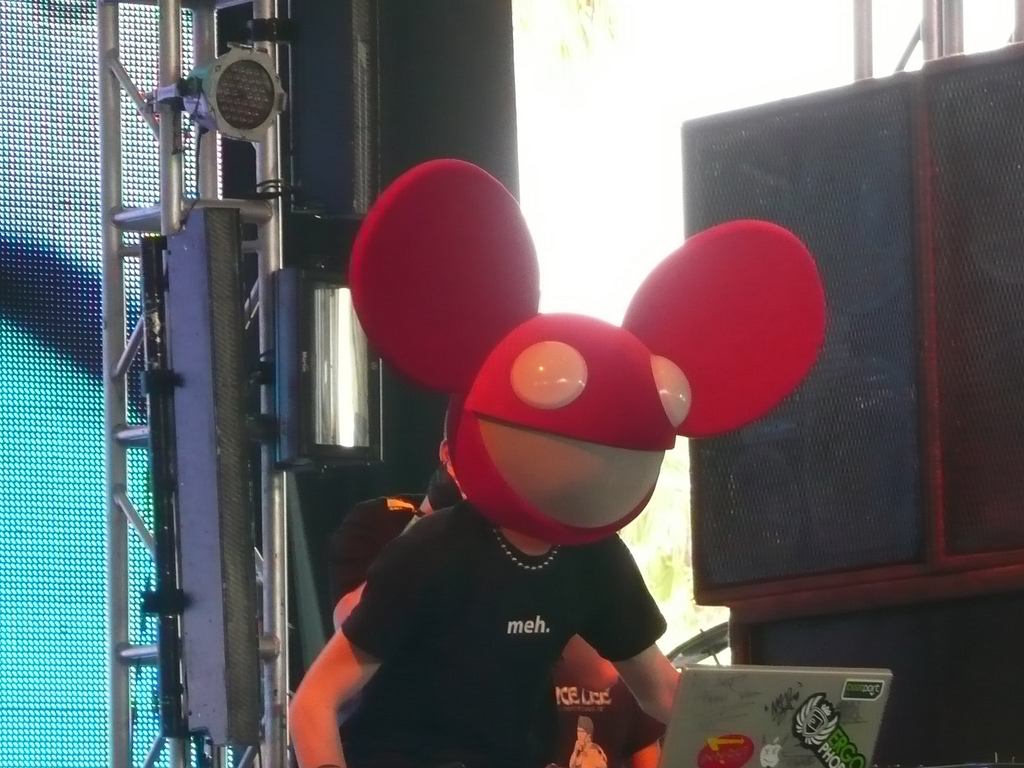
Image: Artistic portrait of Skrillex (Frédéric Michel-Langlet).jpg | Frédéric Michel-Langlet | License: CC BY-SA 3.0 | Source: Wikimedia | https://commons.wikimedia.org/wiki/File:Artistic_portrait_of_Skrillex_(Fr%C3%A9d%C3%A9ric_Michel-Langlet).jpg