Inside Green Day’s Guitar Rig: The Punk Rock Tone Builders Actually Need
Green Day’s guitar sound is less about mystique than disciplined gear choices: loud, mid-forward amps, tight rhythm tracking, and distortion that stays readable in a dense mix. Here’s what producers and players can realistically borrow from it.
Green Day’s guitar sound is one of punk rock’s most recognizable modern signatures: bright enough to cut, heavy enough to feel bigger than the band count suggests, and simple enough that it still works when layered into a polished rock mix. For producers, that matters. This is not a tone built on boutique complexity. It’s a study in choosing the right guitar, the right amount of gain, and a recording workflow that keeps the attack intact.
If you’re deciding what gear is actually worth buying to get close to that kind of sound, the answer is refreshingly practical. You do not need a museum of pedals. You do need a guitar that responds quickly, an amp or plugin that emphasizes upper mids without turning fizzy, and a recording chain that avoids over-processing the life out of the performance. Green Day’s punk rock production has always depended on that balance.
The core of the tone: midrange, pick attack, and no wasted movement
What makes Green Day’s guitar tone work is the way it occupies the mix. The sound is not scooped. It does not chase modern high-gain low-end weight. Instead, it leans into the frequencies where a power chord reads instantly on small speakers and still feels aggressive on large monitors. That means a strong upper-mid presence, controlled low end, and a distortion texture that lets the pick scrape through the chord.
This is especially important for punk production. Punk guitar has to do two jobs at once: deliver energy and remain rhythmically clear. If the tone gets too thick, the groove blurs. If it gets too thin, the song loses authority. Green Day’s records sit in a very workable middle ground, where the guitars are wide, dense, and direct, but still leave enough space for drums and vocals to punch through.
Guitars that make sense: simple, bright, and fast to track
Billie Joe Armstrong has long been associated with straightforward guitar choices that reward attack over complexity. In practical terms, that usually means guitars with a snappy response and pickups that push the amp without sounding overly compressed. A single-pickup or two-pickup hardtail style guitar, a stripped-down solidbody, or a no-nonsense player’s instrument can all get you into the zone.
The real takeaway is not the brand name. It is the behavior. Green Day-style parts depend on a guitar that reacts immediately when you dig in. The chords should feel percussive. Palm mutes should pop rather than thud. Open chords should retain note separation even when the amp is starting to break up. If your guitar feels soft or sluggish, the tone may read as “big” in solo but fall apart in a full arrangement.
For buyers, that means prioritizing stable tuning, a comfortable neck, and pickups that push mids more than sub-bass. A clean, affordable humbucker-equipped solidbody can be more useful than a spec-heavy guitar that sounds impressive alone but fights the mix.
Amps, gain staging, and why distortion should sound slightly rude
Green Day guitar tone thrives on amp distortion that feels alive under the pick. Whether you are using a real tube amp or a plugin modeled after one, the gain structure should not smear the transients. Punk records live and die by that first fraction of a second when the pick hits the string. That click and snap is the difference between an average distorted guitar and one that feels urgent.
Historically, Green Day has used amp setups associated with straightforward rock punch rather than elaborate modern metal saturation. For producers, the lesson is simple: use less gain than you think you need. A slightly under-saturated tone often sounds bigger in context because the chord edges remain visible. Push the input enough for sustain, then stop before the sound becomes grainy and one-dimensional.
If you are chasing this with plugins, look for models that let you manage cab, mic position, and front-end gain independently. A common mistake is stacking too much drive before the amp model. That can make the guitar seem loud in headphones while collapsing into fizz once drums and bass arrive. For a Green Day-inspired sound, you want a controlled overdrive into an amp model that already has attitude, not a distortion chain that sounds like it was assembled from panic.
Pedals: the short list that actually matters
The punk rock buyer’s guide here is mercifully small. You can make a convincing Green Day-style rhythm sound with very little beyond a good tuner, a boost or overdrive, and maybe a noise gate if your rig is noisy. But there are a few pedal roles that matter more than others.
Overdrive/boost: Use this to tighten the front end of the amp, not to create the entire tone. The right boost can help chords feel more immediate and keep the low strings from flubbing out. Keep drive low, level high, and tone set to retain bite.
Compressor: Usually less essential for Green Day rhythm guitars than players expect. Too much compression can flatten the attack and make the guitar feel polished in the wrong way. If you use one, keep it subtle and use it as a leveling tool rather than a tone generator.
Modulation and delay: Not central to the classic rhythm sound. The point of this tone is not texture for its own sake. In a production context, leave these for specific parts, doubles, or lead embellishments if the arrangement needs them.
In other words, the most useful pedal in this style may be the one that lets you get out of the way of the amp.
Recording workflow: double tracking is not optional
One of the biggest reasons Green Day guitars sound so large is arrangement discipline. The core rhythm sound is usually built from tight double tracking, often with complementary performance differences between passes. This is not about sloppy layering. It is about a stereo image that feels massive while remaining centered and stable.
The practical workflow is straightforward: record one rhythm pass cleanly, record a second pass as tightly as possible, then pan them hard left and right. Resist the temptation to widen the sound with chorusing or stereo tricks before the performance is right. In punk rock, width should come from execution, not gimmicks.
For producers, editing should be conservative. Over-quantized guitars can lose the loose-forward push that gives punk its momentum. At the same time, untidy timing will make the chorus feel smaller than it should. The sweet spot is clean enough to lock with the drums, loose enough to feel human.
Mixing the guitars: make room for the vocal, not the other way around
Green Day records are strong because the guitars are powerful without burying the song. That means the mix is shaped around vocal intelligibility and drum impact. The guitars are usually carved so that the midrange energy supports the chorus instead of competing with it.
A practical mixing approach is to high-pass just enough to clear low-end rumble, then use a modest cut where the boxiness lives and a controlled presence boost where the pick attack needs to speak. Avoid over-EQing the identity out of the sound. If the amp or plugin already has the right midrange character, the mix move should be surgical, not cosmetic.
In dense arrangements, the bass guitar does important work underneath these rhythms. If the bass is too distorted or occupies the same upper-mid lane as the guitars, the whole track can become crowded. Green Day’s production often feels punchy because the low end is managed so the guitars can stay aggressive without turning muddy.
Best purchase decisions: what is actually worth your money?
If you are a player or producer trying to spend wisely, here is the honest hierarchy. First, invest in a guitar that tracks well and stays in tune. Second, choose an amp or plugin platform that gives you a convincing mid-forward crunch without harsh fizz. Third, get a boost/overdrive that can tighten the front end. Everything else is secondary.
If you record at home, a good amp sim with a strong cab section may be more useful than a cheap hardware pedalboard. If you track live drums and loud amps, the right microphone placement will matter more than another gain pedal. If you are programming or layering guitars, the performance and double-tracking discipline matter more than expensive boutique gear.
That is why Green Day’s guitar sound remains such a useful production reference. It proves that punk rock tone is not about gear accumulation. It is about commitment to a clear sound design: bright, direct, mid-forward, and arranged with enough restraint that every chord still hits like a statement.
The bottom line
Green Day’s punk rock guitar sound is a buyer-friendly target because it rewards smart fundamentals instead of exotic hardware. Choose a responsive guitar, use less gain than your instincts suggest, double-track with discipline, and mix the guitars so the song stays vocal-driven. If you do that, you will get much closer to the real lesson behind the tone: punk can be loud, polished, and massive without losing its edge.
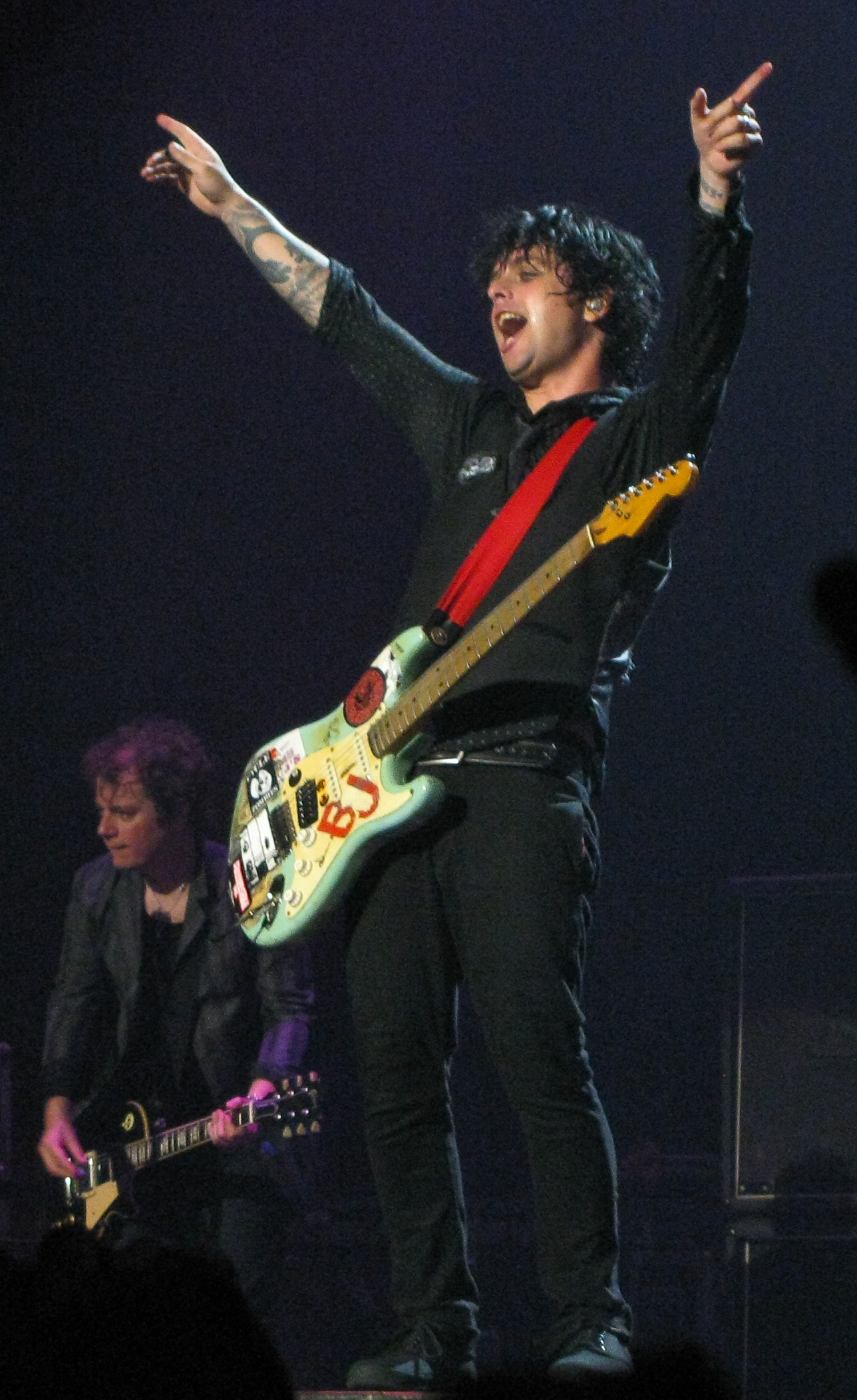
Image: Billie Joe Armstrong 2.jpg | https://www.flickr.com/photos/anirudhkoul/3734371003/ | License: CC BY 2.0 | Source: Wikimedia | https://commons.wikimedia.org/wiki/File:Billie_Joe_Armstrong_2.jpg