The 10 Guitar Riffs That Still Run Rock Music
The greatest guitar riffs are more than memorable hooks—they’re production decisions that became cultural shorthand. Here’s why these 10 still hit so hard, from tone and arrangement to the exact sonic moves that make them impossible to ignore.
The best guitar riffs do more than announce a song. They establish a frequency range, a groove identity, and a sonic attitude in the first two seconds. The reason certain riffs become immortal isn’t just the notes—it’s the way they’re recorded, layered, and framed inside the arrangement. A great riff is part composition, part sound design, part engineering decision.
This list isn’t about technical difficulty. It’s about riffs that changed the way songs are built, played, and produced. These are the lines that made players pick up guitars, made producers think harder about space and saturation, and made entire genres recalibrate what a “hook” could be.
1. Led Zeppelin — “Whole Lotta Love”
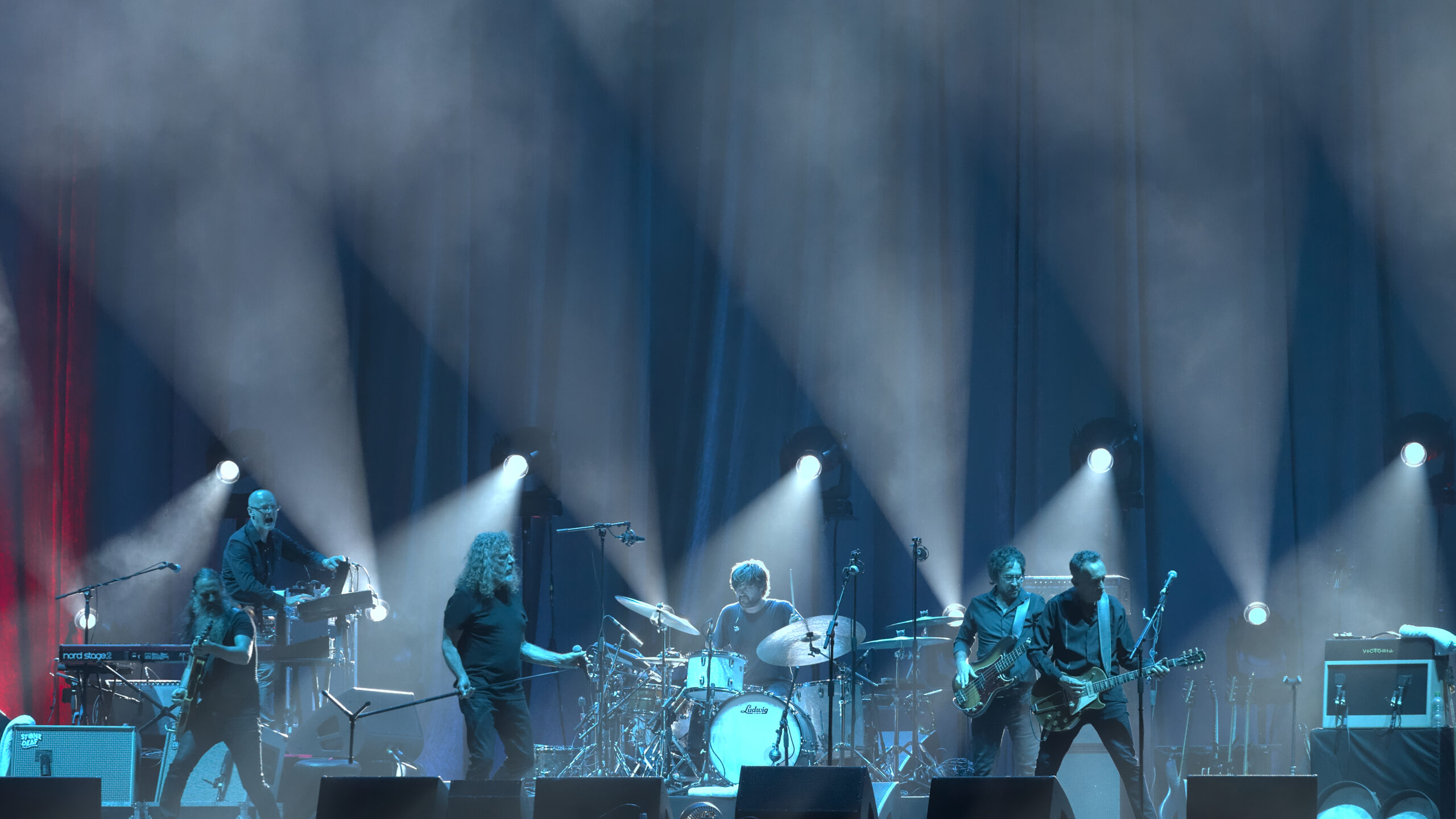
John Paul Jones’ riff is pure instinctive power: simple, blues-derived, and brutally effective. What makes it legendary is the negative space around it. The riff doesn’t overplay; it sits in the pocket with just enough swing to feel dangerous.
From a production standpoint, the sound is a lesson in controlled aggression. Jimmy Page’s guitar tone is thick without being overly saturated, leaving room for the vocal and the studio effects to expand the track’s size. If you’re producing a riff-driven song, this is a masterclass in restraint: a big idea can feel even bigger when the arrangement doesn’t crowd it.
2. Deep Purple — “Smoke on the Water”

Uploaded by AlbertHerring | License: CC BY 2.0 | Source: Wikimedia | https://commons.wikimedia.org/wiki/File:Smoke_on_the_water_(6153150589).jpg
Few riffs have been more widely learned, mislearned, and eventually internalized by generations of guitarists. Its power lies in the interval choice: open fifths and a marching, almost orchestral motion that feels immediately declarative.
Production-wise, the riff is dry and direct enough to read instantly, which is why it works on cheap practice amps, arena stacks, and compressed radio playback alike. The lesson for modern producers is obvious: if a riff depends on a core intervallic shape, keep the tone focused. Too much modulation, gain, or layering can blur the identity of the part.
3. AC/DC — “Back in Black”
Angus and Malcolm Young built a career on the principle that tightness beats complexity. This riff is a perfect example: percussive, lean, and rhythmically undeniable. It doesn’t just sit on the beat; it locks the song into motion.
What makes it so effective in production terms is the separation between guitars and rhythm section. The guitars are crisp and mid-forward, leaving the bass and kick drum to define weight. Modern rock productions often over-process rhythm guitars until they blur into a wall. “Back in Black” reminds us that punch comes from articulation, not just volume.
4. Black Sabbath — “Paranoid”
Short, anxious, and unforgettable, “Paranoid” is one of the most efficient riffs ever written. Tony Iommi’s playing turns a simple progression into forward pressure, and that pressure is the whole point. The riff feels like it’s sprinting without ever losing control.
Production-wise, the rawness is essential. The guitar tone is aggressive but not polished, which gives the riff its nervy edge. If you’re building modern heavy music, there’s a useful takeaway here: a riff can become heavier when the production preserves its attack instead of smoothing it into syrup.
5. The Rolling Stones — “Satisfaction”
Keith Richards’ fuzzed-out figure turned a guitar part into a cultural event. The riff is deceptively simple, but the timbral choice is the real hook. That fuzz tone—dirty, splintered, almost horn-like—made the riff sound like a machine trying to sing.
This is a foundational production lesson. The notes matter, but the distortion character is what made the riff unforgettable. If you’re looking for modern analogs, think about how fuzz, saturation, and amp breakup change the emotional reading of a line. A basic riff can feel rebellious, tense, or glamorous depending on its harmonic distortion.
6. Nirvana — “Smells Like Teen Spirit”
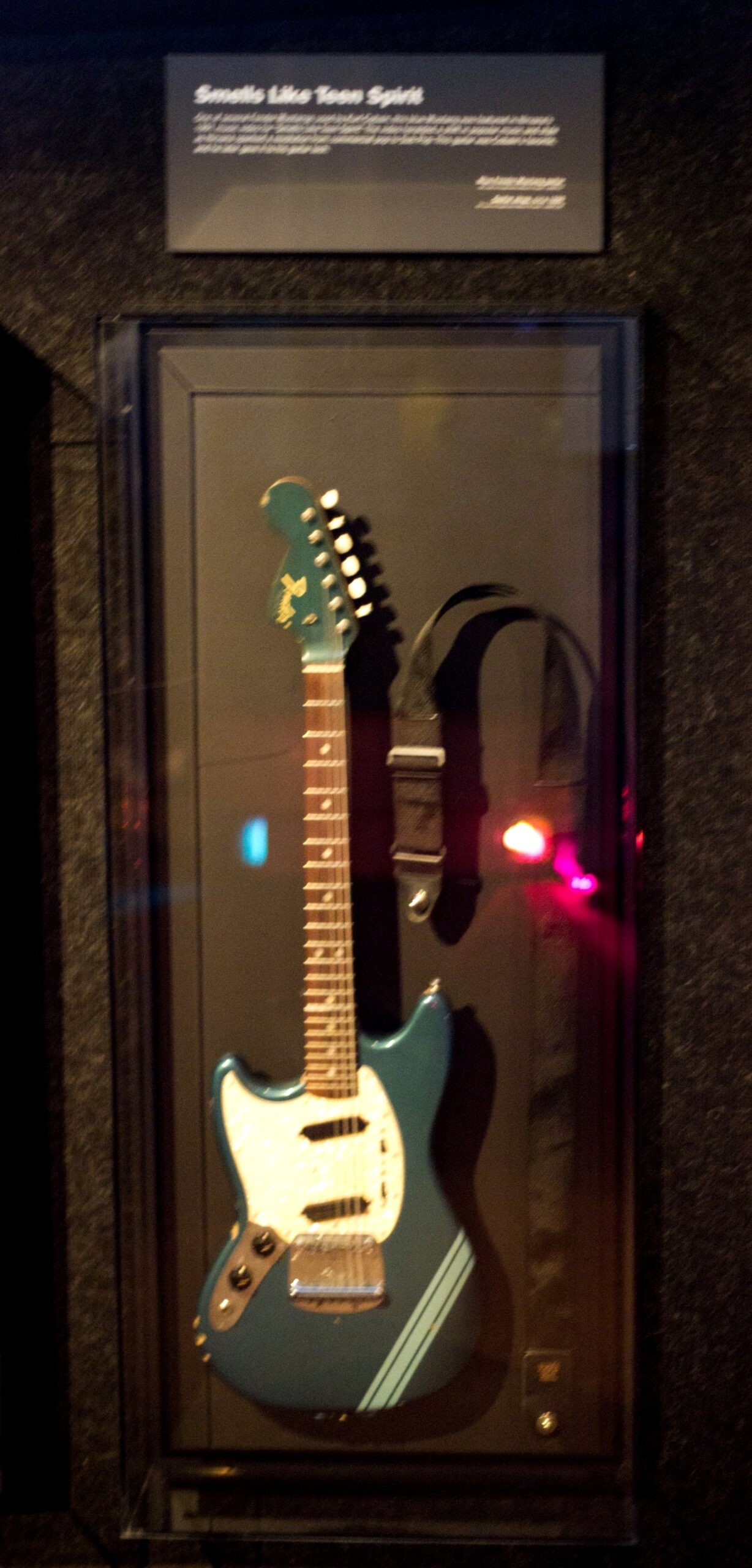
Uploaded by clusternote | License: CC BY 2.0 | Source: Wikimedia | https://commons.wikimedia.org/wiki/File:Kurt_Cobain,_Smells_Like_Teen_Spirit_guitar,_EMP_Museum.jpg
By the early ’90s, arena rock had become polished and heavily stratified. Then came this riff: blunt, dynamic, and almost anti-virtuoso. Kurt Cobain’s guitar part works because it’s built from massive contrast—quiet verses, explosive choruses, and a riff that feels like a sledgehammer hitting a plywood wall.
The production is crucial. Butch Vig’s approach gives the guitars enough thickness to feel huge without burying the transient impact. The riff is also a reminder that distortion alone doesn’t create heaviness. The arrangement creates it. When the drums, bass, and guitars all enter at once, the riff becomes a cultural trigger.
7. Van Halen — “Ain’t Talkin’ ’Bout Love”
Edward Van Halen didn’t just innovate with solo technique; he made riff writing feel elastic. This riff combines attitude with precision, and the attack is what gives it its snap. It’s sharp, syncopated, and built to make the groove feel bigger than the number of notes involved would suggest.
Production-wise, the guitar tone is a study in amp saturation that still preserves pick definition. The part cuts because the signal has bite in the upper mids and enough low-end discipline to stay out of the bass guitar’s way. For producers, that’s a critical reminder: a riff should occupy a clear spectral lane, especially when it’s meant to carry a chorus.
8. The White Stripes — “Seven Nation Army”
Technically, it’s a guitar part made to function like a bass line, and that’s exactly why it became omnipresent. Jack White’s riff is all pulse and identity—an instantly chantable motif built from a minimal melodic shape and a heavily stylized tone.
The production choice here is as important as the writing. The octave-down feel and stripped-down arrangement turn a single guitar figure into a stadium-sized anthem. This is one of the clearest examples of sound design driving memorability: remove excess, exaggerate the core frequency center, and let repetition do the rest.
9. Metallica — “Enter Sandman”

Metallica’s riff is a precision-engineered machine. The chugging motion, dark harmonic center, and palm-muted articulation give it a sense of controlled menace. It doesn’t just sound heavy—it sounds methodical.
In production terms, the riff benefits from exacting rhythm tracking and a guitar tone that balances low-end punch with midrange clarity. Modern metal mixers still chase this balance: enough gain to feel massive, but not so much that the pick attack disappears. “Enter Sandman” is proof that tight editing and disciplined performance are as important as amp tone.
10. The Kinks — “You Really Got Me”
Before high-gain rock became a language, this riff helped invent it. Dave Davies reportedly attacked the speaker cone to get that feral, overdriven sound, and whether you think of it as primitive or revolutionary, it changed the vocabulary of rock guitar.
Its genius is in its rawness. The riff doesn’t need complexity because the texture itself is the event. From a production perspective, this is one of the earliest reminders that distortion can function as arrangement. When a guitar tone is this abrasive and immediate, it becomes the main feature rather than just a layer.
What the Greatest Riffs Have in Common
Across eras and genres, the most durable riffs share a few production truths. First, they’re rhythmically specific. Even if the notes are simple, the timing gives them personality. Second, they have a strong tonal identity—whether that means fuzz, crunch, dry attack, or a bass-like octave treatment. Third, they leave room for the rest of the band. The best riffs don’t need constant reinforcement because their shape is already unmistakable.
There’s also a broader lesson for modern music production: riffs survive when they translate across systems. A great one works through earbuds, club PAs, car speakers, and blown-out guitar amps because its core identity is built from strong intervals, defined transients, and arrangement discipline. You can always add layers later, but the riff has to live on its own first.
Why These Riffs Still Matter in 2026
In an era of plugin-heavy production, guitar riffs remain one of the clearest examples of how sound and composition intersect. Whether you’re recording indie rock, modern metal, alt-pop, or a sample-based hybrid track, the same principles apply: define the core motif, control the spectrum, and let tone do some of the storytelling.
That’s why these riffs endure. They aren’t just famous. They’re engineered to be remembered.
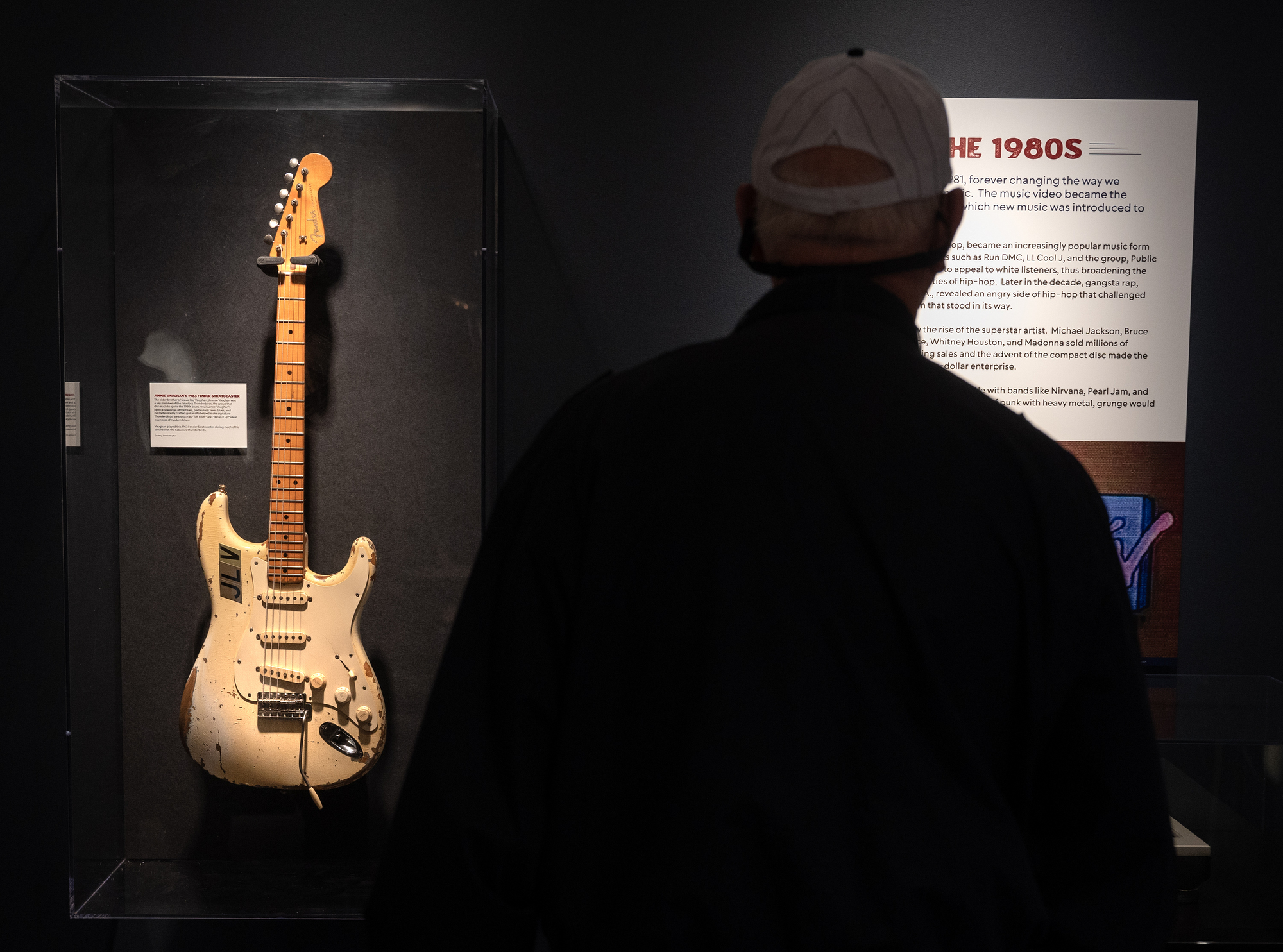
Image: DIG15178-018 Jimmie Vaughan's 1963 Fender Stratocaster – Music America- Iconic Objects from America’s Music History (2024-02-17 12.55.18 by LBJ Library @Flickr 53537193413).jpg | DIG15178-018 | License: Public domain | Source: Wikimedia | https://commons.wikimedia.org/wiki/File:DIG15178-018_Jimmie_Vaughan%27s_1963_Fender_Stratocaster_-_Music_America-_Iconic_Objects_from_America%E2%80%99s_Music_History_(2024-02-17_12.55.18_by_LBJ_Library_@Flickr_53537193413).jpg