The Sound Design of Jay Z’s Empire: The Producers Who Defined His Albums
Jay Z’s catalog is a masterclass in production range: grimy boom-bap, soul-sample opulence, minimalist knock, and glossy radio precision. This breakdown spotlights the producers whose signatures shaped his records—and the techniques that made those tracks hit.

Jay Z’s Catalog Is a Production Masterclass
Jay Z didn’t build one sound; he built a discography that could absorb multiple eras of hip-hop and still feel unified by authority, performance, and taste. The producers behind his albums are not just credited names on the back cover. They are the architects of the environments Jay Z rapped inside: dusty soul loops, stripped-down drum machines, widescreen synth programming, and radio-ready punch. If you want to understand why certain Jay Z records feel timeless, you have to follow the producers.
What makes this catalog especially interesting is the way it documents hip-hop production itself. You can hear the transition from sample-heavy East Coast craftsmanship to more polished, melodic, and synthesized mainstream rap sonics. Jay Z’s albums function like a timeline of production trends, but the best records never sound generic. They sound intentional, with each producer shaping a different version of luxury, menace, introspection, or ambition.
Rick Rubin: Stripping Hip-Hop Down to the Frame
When people talk about raw Jay Z production, Rick Rubin is part of the conversation immediately. Rubin’s strength is minimalism with impact: hard drums, spare arrangements, and a refusal to overdecorate. On 99 Problems from The Black Album, the beat is almost architectural in its simplicity. The guitar riff is looped like a warning siren, the drums are dry and aggressive, and every element leaves space for Jay’s vocal to cut through with surgical clarity.
Rubin’s approach is instructive for producers because it proves that “big” does not always mean dense. The trick is contrast. A beat can feel enormous if the kick and snare are right, if the transient response is sharp, and if the arrangement is disciplined enough to let each hit land. Rubin’s work on Jay Z records is a reminder that good production isn’t always about more layers—it’s about choosing the right ones.
Just Blaze: Soul Chops, Drum Weight, and Arena-Level Emotion
Just Blaze is one of the key producers behind Jay Z’s most anthemic records, and his signature is easy to hear: dramatic sample flips, huge drum programming, and a sense of emotional lift that feels built for stadium speakers. On Song Cry, the production leans on a sample-driven melodic bed that leaves room for Jay’s reflective writing, but it still carries that unmistakable Just Blaze weight—everything feels elevated, even when the subject matter is personal.
Just Blaze often balances chopped samples with clean modern drum punch. That combination matters. A soulful loop can sound nostalgic, but if the drums are weak, the track collapses into atmosphere. His records hit because the drums are not just supporting the sample; they are reinforcing its emotional contour. For producers, that means paying attention to low-end envelope, snare crack, and the way sample transients are carved to avoid masking the kick.
His work with Jay Z helped define a template for early-2000s rap grandeur: sample source material with emotional depth, tightly quantized drums, and arrangement decisions that make the track feel like it is constantly rising. If you’re producing in that lane, the lesson is simple: don’t let the sample do all the work. Build a drum record around it.
Kanye West: Chipmunk Soul, Pitch Shifts, and Humanized Imperfection
Before Kanye West became a pop culture force, he was one of the sharpest producers in Jay Z’s orbit. His early contributions brought a new kind of sample manipulation into the mainstream: pitched-up soul fragments, warm low-end, and an emotional volatility that made the music feel alive. Tracks like Izzo (H.O.V.A.) became defining statements because the sample treatment gave the record instant identity.
Kanye’s method in this era was not just about sampling soul records. It was about recontextualizing them. Pitching a sample up changes the harmonic content, vocal texture, and emotional register. The result is often brighter and more urgent, but it can also feel fragile, which is part of the appeal. In Jay Z’s hands, that fragility becomes swagger. He raps with a coolness that contrasts the sample’s emotional overdrive.
From a production standpoint, Kanye’s Jay Z-era tracks highlight the power of imperfection. Tiny timing offsets, slightly grainy sample artifacts, and the warmth of hardware-style processing all contribute to a feel that is polished but not sterile. If you’re chasing that energy in a DAW, focus on resampling, gentle saturation, and sample edits that preserve character instead of sanding it away.
Timbaland: Syncopation, Negative Space, and Rhythm as Texture
Timbaland brought a very different production language to Jay Z’s albums. His beats rarely behave like standard loop-based rap instrumentals. Instead, they move with a kind of rhythmic elasticity that makes every pocket feel deliberately off-center. Timbaland’s percussion often sounds like it is talking to itself: clicks, snaps, vocal stabs, and syncopated drum hits arranged with almost conversational phrasing.
On Jay Z records, that approach creates motion. Timbaland doesn’t just make beats that sit under the vocal; he makes beats that push and pull against it. That tension gives Jay something to lean into as a performer. It also means the production can feel futuristic without relying on obvious synth spectacle. Timbaland’s genius is in rhythmic design—using spacing, swing, and unusual timbres to create a beat that feels alive.
For producers, the takeaway is to think beyond the standard kick-snare grid. Build grooves from layered percussion, use silence as arrangement material, and design rhythms that feel conversational instead of metronomic. Timbaland-style production is as much about what you leave out as what you program.
The Neptunes: Slick Minimalism and Bright, Rubberized Groove
Pharrell Williams and Chad Hugo, as The Neptunes, introduced another crucial texture into the Jay Z catalog: clean, minimal, and unmistakably modern production. Their sound often relies on tight drum patterns, synthetic percussion, and melodic ideas that are simple on paper but deeply addictive in motion. In the context of Jay Z, that gave the music a sleekness that contrasted with the grit of his more sample-heavy material.
The Neptunes’ beats tend to leave a lot of air around each element. That creates a polished, expensive feel—appropriate for an artist who increasingly used luxury as both subject matter and aesthetic. Their productions also tend to feature unusual tonal choices: brittle synth tones, restrained basslines, and hooks that sound almost like rhythm instruments rather than conventional melodies.
In practical terms, The Neptunes are a lesson in restraint. Don’t overcrowd the arrangement. Let the groove be the hook. If a drum pattern is strong enough, it can carry a record with very few melodic elements. Their work for Jay Z is proof that minimalism can still feel expensive if the sound design is precise.
Swizz Beatz: Brash Energy and Stadium Percussion
Swizz Beatz brought a more aggressive, chant-driven energy to Jay Z’s records. His productions often feature hard, almost militaristic drum programming, big crowd-friendly vocal elements, and a sense of forward motion that feels built for live performance. Swizz understands impact at the level of immediate recognition: the beat should announce itself in seconds.
On Jay Z projects, that gives him a useful role in the tracklist. Where some producers create atmosphere or introspection, Swizz creates lift. His beats are often more skeletal than ornate, but they hit because the emphasis is on momentum and attitude. The drums are designed for impact, not subtlety.
If you’re studying his work, notice how he uses repetition. A simple motif, repeated with confidence and backed by hard drums, can become a signature. In a genre where overcomplication can dull the energy, Swizz’s directness is a production strategy in itself.
Detail, Not Just Names: What These Producers Taught Hip-Hop
The best Jay Z producers list is more than a roll call of famous names. It is a map of production philosophies. Rick Rubin taught subtraction. Just Blaze taught the power of lifted samples and heavy drums. Kanye West showed how pitch-shifted soul could create emotional identity. Timbaland reimagined rhythm as texture. The Neptunes proved that sparse can still be glossy. Swizz Beatz kept the focus on directness and physical impact.
For musicians and producers, the deeper lesson is that these records are not great because they merely feature famous beats. They are great because the production matches the writing persona. Jay Z’s voice is precise, authoritative, and highly controlled. The best beats around him create room for that persona while adding a distinct emotional or rhythmic signature. That is sound design at the album level: not just choosing sounds, but shaping identity through production choices.
Listen closely and the pattern becomes clear. Jay Z’s albums are a study in how producer identity can enhance an artist’s mythology without overpowering it. That balance is rare, and it is exactly why these records still matter to producers today.
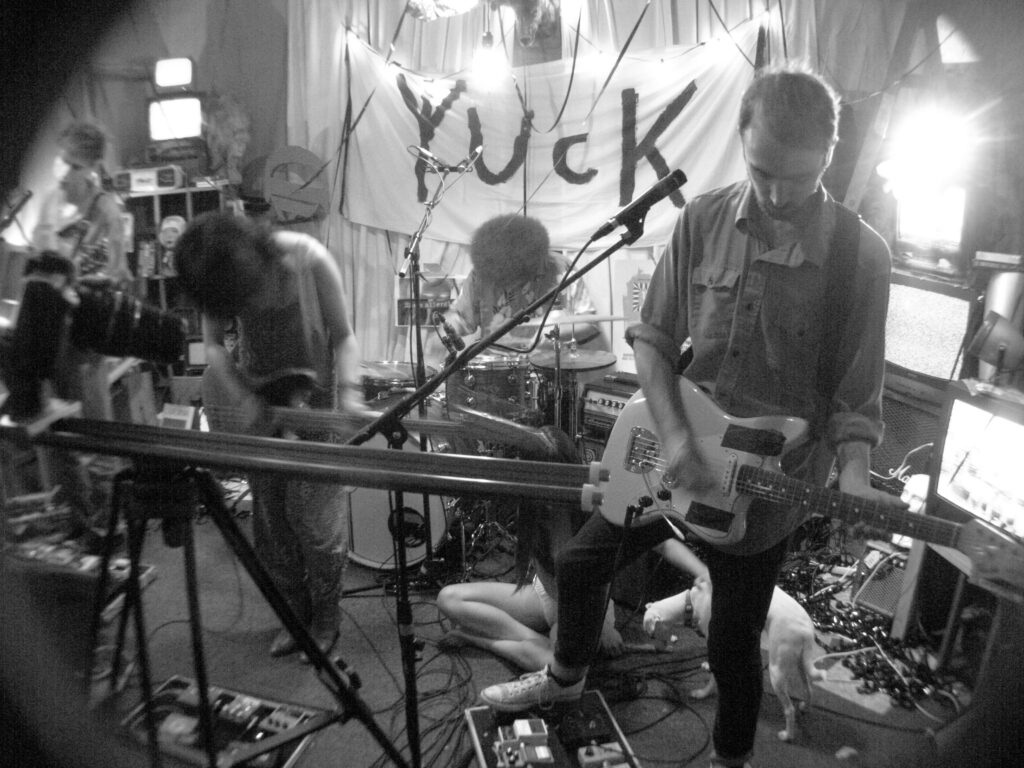
Image: Central BoomBap.png | Own work | License: CC BY-SA 4.0 | Source: Wikimedia | https://commons.wikimedia.org/wiki/File:Central_BoomBap.png