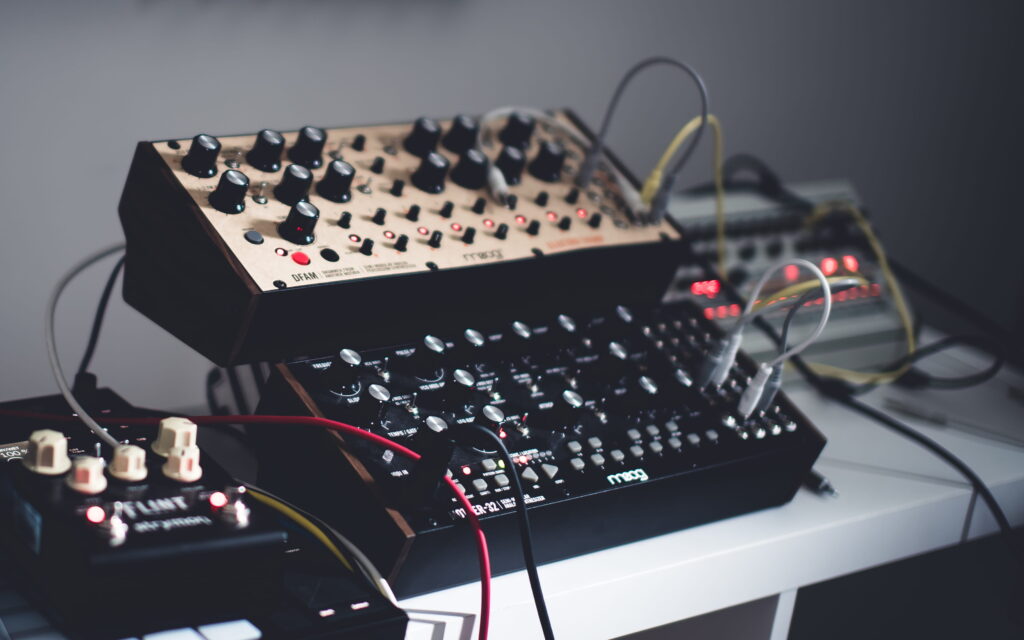
Modular Synths, Without the Mystery: What Eurorack Really Does for a Studio
Modular synths look intimidating, but in a production workflow they excel at building movement, texture, and unpredictable sound design. This guide breaks down where Eurorack fits, what each core module does, and why producers keep returning to it.
What Modular Synths Actually Offer a Producer
Modular synths are not just expensive puzzle boxes for gear obsessives. In a studio context, they do a few things exceptionally well: they generate sounds that feel alive, encourage hands-on experimentation, and turn signal flow into part of the writing process. That matters because modular is less about preset recall and more about building a custom instrument around the exact type of movement, texture, or instability you want in a track.
For producers, that can mean a bassline with constantly shifting harmonics, a percussive loop that never quite repeats the same way twice, or a lead sound that evolves over 32 bars without automation drawn in a DAW. Modular is valuable because it lets you shape sound at the level of voltage, which is a very different mindset from working inside a fixed synth plug-in or hardware preset structure.
Eurorack, in Plain English
Eurorack is the most common modular format today. It is a system of standardized modules mounted in a case and connected with patch cables. Each module does a specific job: some generate audio, some shape it, some control it, and some introduce randomness or sequencing.
The key idea is that unlike a fixed synth, where the signal path is built into the instrument, Eurorack lets you decide the path yourself. You are essentially wiring your own instrument every time you patch it. That is why modular is so appealing for sound design and why it can also be overwhelming at first. The freedom is real, but so is the chance of spending a lot of money to make a very complicated filter.
The Core Building Blocks You Need to Understand
If you strip modular down to essentials, most patches revolve around a few module types. Understanding these will get you much farther than memorizing brand names or chasing the trendiest oscillator.
Oscillators are sound sources. They generate raw waveforms like sine, saw, square, or more complex shapes. In a subtractive patch, the oscillator is your starting point.
Filters remove or emphasize frequencies. This is where a bright oscillator can become a warm pad, a nasal lead, or a throbbing acid-style line.
VCAs control amplitude, but in modular they are much more than “volume knobs.” A VCA is often the final stage before audio output, and it can also be used to control modulation depth. In practice, a VCA is one of the most important modules in the system.
Envelopes create time-based control movement. The classic ADSR shape determines how a note starts, holds, and fades. In modular, envelopes are often used to open filters, shape percussion, or animate other parameters.
LFOs provide repeating modulation. A slow LFO can add tremolo or pitch drift, while a faster one can create vibrato or rhythmic motion.
Sequencers generate note or control patterns. These can be simple step sequencers or more advanced systems that create evolving melodic and rhythmic structures.
Utility modules like mixers, attenuators, attenuverters, mults, logic modules, and clock tools are the unsung heroes. They make the system usable, and they are often what turns a cool sound into a playable instrument.
Why Modular Feels Different From a Normal Synth
The biggest difference is not sound quality in some abstract sense. It is workflow. A fixed synth gives you a constrained set of options, which can be ideal when you want speed and recall. Modular gives you a much larger design space, which can be ideal when you want discovery and micro-control.
That has real production consequences. A modular patch can become the centerpiece of a track because it evolves in a way you would not have programmed inside a standard synth interface. The act of patching also changes your decisions: you may start with a bass idea and end up with a rhythmic texture because the system suggests something more interesting than your original plan.
For many producers, that is the point. Modular is not always the fastest way to finish a song, but it is often the fastest way to find a sound no one else has in the exact same configuration.
Where Modular Fits in a Modern Studio Workflow
The most practical way to think about modular is as a specialty instrument inside a larger production setup. Very few producers rely on modular for every part of a song. Instead, they use it for specific jobs where modular is unusually strong.
One common use is sound source creation. You can record a modular drone, bass hit, or evolving texture into your DAW and treat it like sampled material. Another use is pattern generation, where a sequencer or random voltage source provides melodic ideas that are later edited, layered, or quantized.
Modular also shines as a modulation engine. Even if you are not using modular as the main synth voice, you can use it to drive filters, send CV to effects, or create timing variations that make a loop feel less static. Producers working in techno, ambient, experimental pop, and soundtrack work often use modular this way: not as a replacement for the DAW, but as a layer of controlled unpredictability.
A very common hybrid workflow looks like this: patch a sound in Eurorack, record multiple passes into the DAW, edit the best moments, then process them further with compression, saturation, and arrangement tools. In that setup, modular functions like a performance synth and a sound-design lab, while the DAW handles structure and recall.
The Beginner Mistake: Buying Too Much Voice, Not Enough Control
New users often spend too much money on oscillators and flashy sound modules, then discover they cannot really shape or manage the system. A modular rig without enough VCAs, envelopes, mixers, and utility modules can feel confusing and limited, even if the sound sources are impressive.
A better beginner strategy is to think in terms of complete signal paths. You want a way to create sound, shape it, modulate it, and send it somewhere useful. A small but balanced system is often more inspiring than a larger rack full of expensive specialty modules.
For example, a practical first-case approach might include one oscillator, one filter, at least one envelope, at least one VCA, one or two LFOs, a sequencer or MIDI-to-CV interface, and several utility modules. That kind of setup can make basses, leads, percussion, effects, and experimental textures without immediately becoming a financial black hole.
Patching a Simple First Sound
A straightforward beginner patch is the best way to understand the logic of modular.
Start with an oscillator and send its output into a low-pass filter. Route the filter into a VCA, then send the VCA to your audio output. Use an envelope to control the VCA, and another envelope or LFO to modulate the filter cutoff. Trigger the envelopes with a sequencer or MIDI-to-CV interface.
What happens here is easy to hear: the oscillator provides raw tone, the filter shapes brightness, the VCA controls note length, and modulation creates motion. That one patch already explains why modular remains so addictive. Every stage can be adjusted independently, and every connection is visible.
Once you understand that basic chain, you can start changing one piece at a time. Swap the filter for a wavefolder. Replace the envelope with a random source. Use the sequencer to drive not pitch, but modulation amounts. These small changes are often where modular becomes genuinely creative.
Why Producers Still Care About Hardware Modular in a Plugin World
Software can emulate many modular ideas, and in some cases it is faster, cheaper, and more practical. But hardware modular still has a specific appeal: tactile interaction, immediate physical patching, and the ability to create a system that behaves as an instrument rather than a menu.
There is also a psychological difference. Patching cables makes the signal flow feel concrete. That can change how you compose. You may make bolder decisions because you are reacting to sound in real time rather than browsing options. For electronic musicians, that can be the difference between a loop that sits on the grid and a part that feels performed.
Hardware modular also tends to generate happy accidents that are worth keeping. A clipped envelope, a feedback patch, or a slightly unstable modulation path can become the hook of the record. In an era where so much is editable after the fact, modular gives you a way to commit to a sound with some degree of controlled risk.
The Smartest Way to Start
If you are new to modular, start small and start with a goal. Ask what you want the system to do in actual production. Do you want evolving pads, aggressive basses, random percussion, generative textures, or live performance control? That answer should determine the first modules you buy.
Do not build a rack around hype. Build it around workflow. The best beginner modular setup is the one that helps you make tracks faster, not the one that looks the most impressive in a thumbnail.
Once you understand the basics of oscillators, filters, VCAs, envelopes, sequencers, and utilities, Eurorack stops being mysterious and starts becoming practical. That is when modular begins to earn its place in the studio: not as a novelty, but as a flexible instrument for sound design, composition, and recording ideas that feel unmistakably alive.
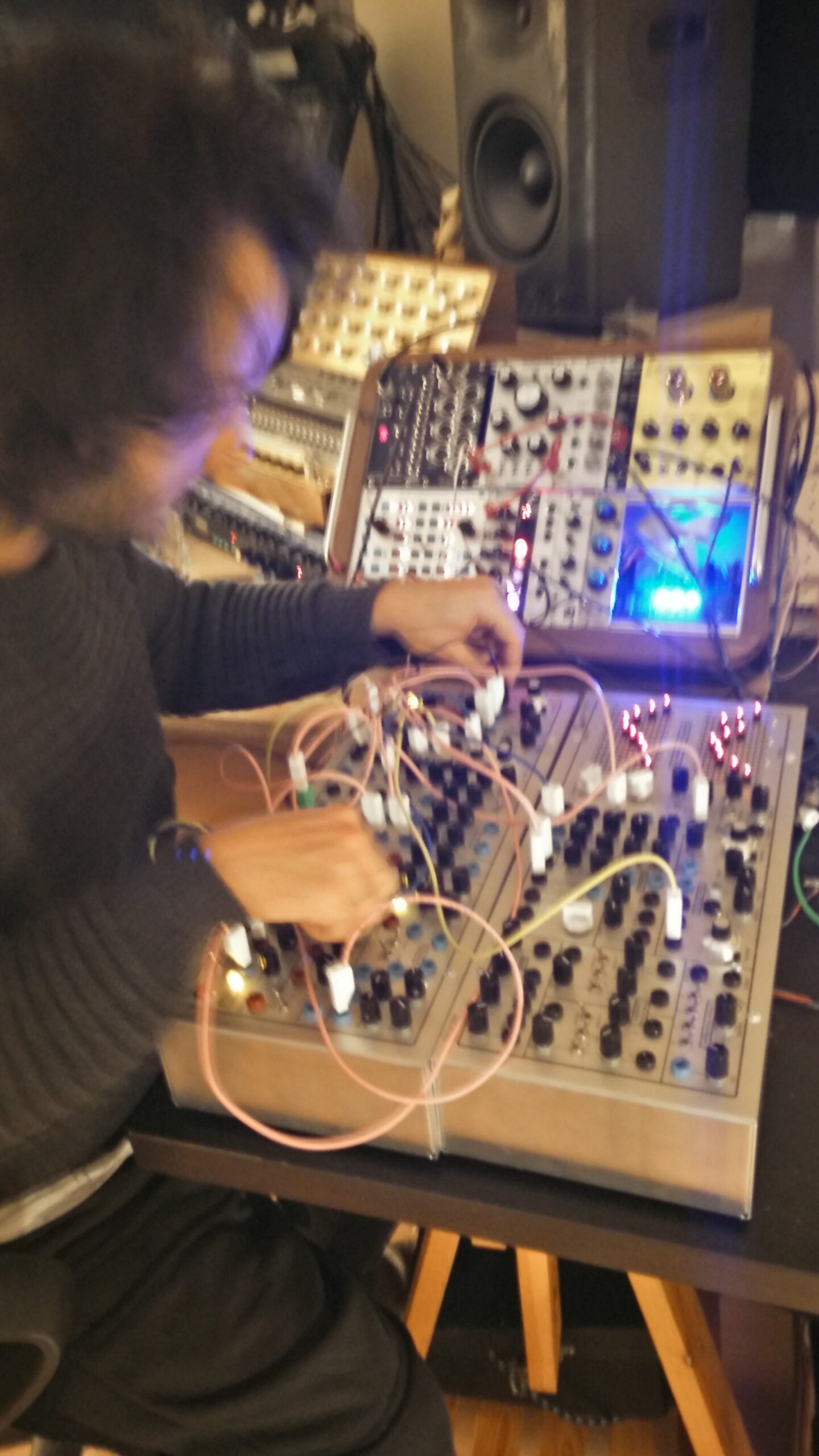
Image: Modular synths with Hems – 2015-03-19 04.44.16 (by Binary Koala).jpg | Modular synths with Hems | License: CC BY-SA 2.0 | Source: Wikimedia | https://commons.wikimedia.org/wiki/File:Modular_synths_with_Hems_-_2015-03-19_04.44.16_(by_Binary_Koala).jpg