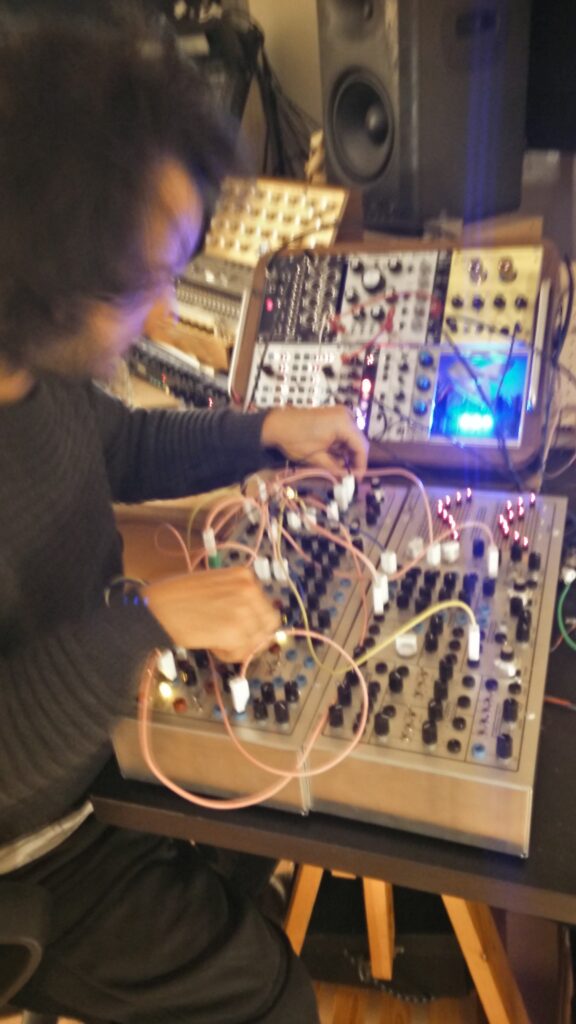
Moog Synthesizers: The Analog Sound That Rewired Modern Music
The Moog didn’t just become a famous synth — it defined the vocabulary of analog bass, lead, and texture for half a century. Here’s what makes the Moog sound distinct, how the original instruments shaped that identity, and why the legacy still matters in modern production.
The Moog sound: more than a logo, more than a legacy
When producers talk about the Moog sound, they are usually pointing to a specific kind of authority: thick low end, round transients, harmonically rich oscillators, and filters that feel almost vocal in the way they open and close. That sound became so widely referenced that it now functions like a genre shorthand. A Moog bass line suggests weight. A Moog lead suggests presence. A Moog sequence suggests movement with muscle.
But the reason Moog became iconic is not simply that it was an early analog synth. Plenty of early synthesizers existed. The Moog family stood out because of how it translated the idea of electronic sound into a playable, musical instrument with a distinctly flattering tone. In other words, Moog did not merely invent a machine; it helped define what synth sound should feel like in a track.
Robert Moog and the architecture of the instrument
The story begins with Robert Moog, an engineer and inventor whose work in the 1960s transformed modular synthesis from a lab curiosity into a performance-ready music tool. Moog’s breakthrough was as much ergonomic as electronic. Instead of treating synthesis as a hidden technical process, he gave musicians a system of voltage-controlled modules they could patch, manipulate, and actually play.
That distinction matters. Early electronic instruments often sounded alien, brittle, or impractical for arranging music. Moog’s designs emphasized a musical balance between control and color. The architecture typically centered on oscillators, a filter, envelope generators, and amplifiers — the classic subtractive synthesis chain — but the way these pieces interacted created a signature response that felt immediate under the fingers.
For producers, this is the first key difference between Moog and many other synths: it is not just about waveform choice. It is about the behavior of the instrument as signal moves through the system.
What makes a Moog sound like a Moog?
Several design choices are responsible for the classic Moog identity:
- Oscillator tone: Moog oscillators are known for their full, stable fundamental and harmonically useful overtones. Even simple waveforms can feel substantial before any processing.
- 24 dB ladder filter: The famous Moog ladder low-pass filter is central to the brand’s sound. It rolls off high frequencies with a smooth, musical curve while adding resonance that can become creamy, squelchy, or aggressive depending on the setting.
- Low-end authority: Moogs are prized for bass because the low frequencies remain solid even when the filter is working hard. That’s one reason Minimoog bass sounds often feel larger than the patch itself.
- Envelope response: The envelope stages can create pronounced attack and decay shapes, which is why Moog plucks, leads, and bass stabs feel so animated.
- Nonlinear character: When pushed, the circuit path adds gentle saturation and thickness. That subtle imperfection is part of the appeal.
In practical terms, the Moog sound sits somewhere between precision and excess. It is controlled enough to play parts cleanly, but rich enough to sound alive even in basic patches.
Minimoog: the instrument that made Moog a studio staple
If the modular systems established Moog as an innovation platform, the Minimoog made the brand indispensable. Released in 1970, the Minimoog compressed modular synthesis into a compact, performance-friendly keyboard format. That move changed everything. Suddenly, the Moog sound was no longer reserved for studios with extensive patch cables and calibration rituals. It could travel, tour, and sit in front of a songwriter.
The Minimoog’s fixed signal path was a major advantage. Players did not have to build every patch from scratch, and that simplicity encouraged experimentation. The result was a synth that behaved like a real instrument rather than a science project. Its interface invited quick adjustments, which helped shape iconic lines in rock, funk, disco, progressive music, electronic music, and eventually hip-hop and pop production.
Compared with other classic synths of the era, the Minimoog felt less clinical and more forceful. Many vintage analogs can sound beautiful, but the Minimoog often sounds like it is already making a statement before you touch the mix.
Moog versus other classic synth philosophies
To understand the Moog legacy clearly, it helps to compare it to other synth traditions. The Roland Juno family, for instance, is often celebrated for warm chorused pads and straightforward mix-ready textures. Prophet-style instruments are associated with broader polyphonic harmonic movement and a polished American poly-synth character. Moog, by contrast, is usually the monophonic heavyweight: focused, commanding, and physically present.
That does not mean Moog is limited. Far from it. But the Moog philosophy tends to prioritize impact per note rather than density per chord. A Moog bass line can occupy an entire section of a record without needing much else. A Moog lead can pierce through dense arrangements because it is voiced to feel immediate, not airy.
This is why many engineers think of Moog as a “recording instrument” as much as a synth. It often arrives in the mix already shaped, already forward, and already emotionally legible.
Why the Moog sound still wins in modern production
Moog’s legacy persists because modern productions still need the same thing the original instruments offered: a low-end source with character and a lead voice that does not collapse under compression or arrangement density. In electronic music, Moog-style patches are a standard for bass because they sit well against kick drums and deliver harmonics that translate on smaller speakers. In pop, they add a tactile analogue edge to otherwise polished productions. In film scoring, they bring an immediate sense of tension, motion, or nostalgia.
What’s especially important is how Moog behaves in a contemporary mix. The sound often works with minimal treatment. A clean Moog bass patch may need only gain staging, light compression, and a touch of EQ to make room for the kick. A lead patch may benefit more from delay and subtle saturation than from heavy processing. Because the source is already strong, producers can spend less time repairing the tone and more time arranging around it.
Moog plugins, emulations, and the realism problem
Modern plugin emulations have made the Moog sound more accessible than ever, but they also expose the real challenge: the name alone does not guarantee the feel. A good emulation has to capture more than the filter curve. It has to reproduce oscillator interaction, envelope response, gain staging behavior, and the subtle way analog stages saturate under load.
Some emulations get the broad tonal picture right but miss the physical push that makes a real Moog feel so playable. Others nail the low-end shape but can sound static at high resonance settings. The best workflow is to compare them in context, not solo. If the plugin delivers a bass line that occupies space without fighting the kick, or a lead that cuts without harshness, it is doing the job even if it does not perfectly mimic every circuit nuance.
For producers, this is the real comparison-minded takeaway: Moog is not valuable because it is vintage. It is valuable because its design solves a production problem elegantly. You can find modern instruments that approximate the sound, but the original logic remains hard to beat.
Practical production takeaways for making Moog-inspired parts
If you want to work with the Moog aesthetic, think in terms of function first:
- For bass: start with a single oscillator or unison pair, keep the filter relatively open, and let the resonance accent the note rather than dominate it.
- For leads: use glide or portamento sparingly to make lines feel expressive without turning them into caricature.
- For sequences: automate cutoff and envelope amount so the pattern evolves instead of looping mechanically.
- For mix placement: leave room around the fundamental; Moog often sounds best when the arrangement respects its low-mid weight.
- For texture: add subtle drive or tape-style saturation instead of excessive distortion, which can flatten the instrument’s natural depth.
The biggest mistake is overprocessing. A Moog patch already has attitude. If you bury it under layers of compression, widening, and aggressive EQ, you often remove the very thing that makes it special.
The lasting legacy of the Moog
The Moog synthesizer changed music because it made synthesis feel playable, expressive, and emotionally useful. Its influence runs from progressive rock and funk to techno, synth-pop, hip-hop, ambient, and contemporary pop production. Even when musicians are not using an actual Moog, they are often working inside a sound world Moog helped establish: analog weight, filter movement, and a strong sense that a synth should behave like an instrument, not just a source of tone.
That may be the most important part of the legacy. Moog is not simply a retro reference or a collector’s badge. It is a benchmark. Every bass plugin that claims analog warmth, every hardware synth that advertises a ladder filter, and every producer who reaches for a thick monophonic line is operating in a field Robert Moog helped shape.
More than fifty years later, the Moog sound still feels current because it solves a timeless production problem: how do you make an electronic part sound undeniably musical, physically present, and emotionally direct? Moog’s answer still holds up.
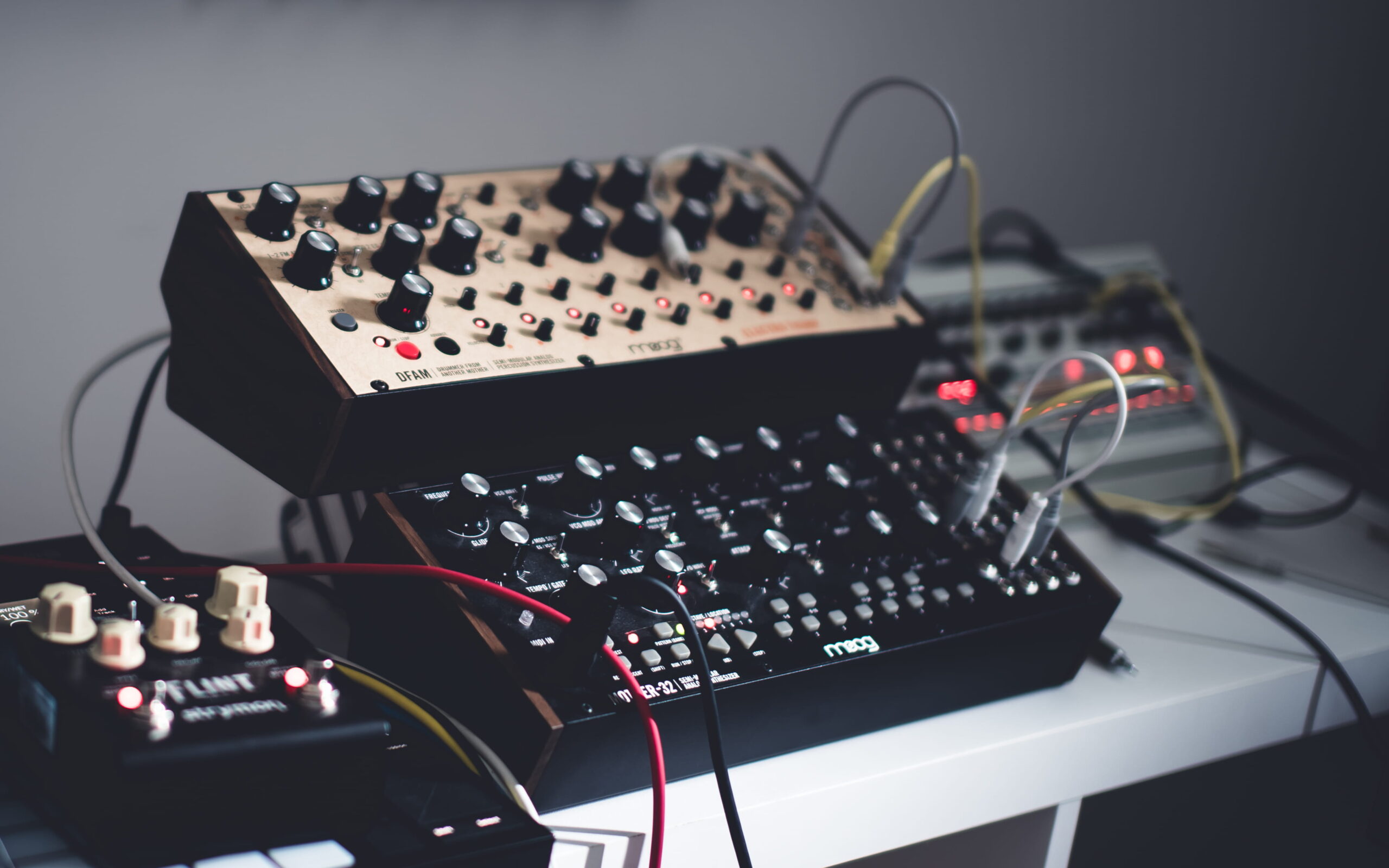
Image: Moog Drummer From Another Mother (DFAM), Mother-32 Semi-Modular Analog Synthesizer, strymon FLINT Tremolo & Reverb (2020-01-20 13.10.00 piqsels.com en).jpg | https://www.piqsels.com/en/public-domain-photo-ijeoc | License: CC0 | Source: Wikimedia | https://commons.wikimedia.org/wiki/File:Moog_Drummer_From_Another_Mother_(DFAM),_Mother-32_Semi-Modular_Analog_Synthesizer,_strymon_FLINT_Tremolo_%26_Reverb_(2020-01-20_13.10.00_piqsels.com_en).jpg