The 10 Indie Rock Albums That Defined the Genre’s Modern Playbook
From lo-fi breakthroughs to studio-polished classics, these 10 indie rock albums show how the genre learned to sound intimate, urgent, and unmistakably its own. For listeners, producers, and musicians, they’re essential reference points for songwriting, arrangement, tone, and attitude.

Why These Indie Rock Albums Still Matter
Indie rock has always been more than a genre tag. It’s a production philosophy, a songwriting mindset, and often a reaction to whatever the mainstream was overproducing at the time. The best indie rock albums don’t just contain great songs; they create their own sonic language. They make room for rough edges, emotional directness, unusual textures, and arrangements that feel personal rather than corporate.
This list is not a strict ranking of “greatest ever.” It’s a practical editorial guide to 10 albums that every serious listener, musician, producer, and engineer should know. Some changed the template for lo-fi recording. Some made jangly guitars commercially viable again. Others pushed indie rock toward chamber-pop, post-punk, or noisy catharsis. Together, they map the genre’s evolution in a way that still feels useful in the studio.
1. The Strokes — Is This It (2001)

File:Nick valensi 2dollarbill.jpg
File:Albert Hammond, Jr. 2013.jpg
File:Nikolai Fraiture.jpg
File:Fabrizio Moretti (The Strokes).jpg | License: CC BY-SA 3.0 | Source: Wikimedia | https://commons.wikimedia.org/wiki/File:The_Strokes.jpg
If indie rock had a reset button for the 2000s, Is This It was it. The Strokes stripped rock back to lean guitar interplay, dry drums, and vocals that sounded half detached, half desperate. The record’s power comes from restraint: no excess layering, no overcooked low end, just immaculate parts locked tightly together.
Production takeaway: The guitars are a masterclass in complementary voicings. Instead of stacking huge distorted walls, the arrangement uses two distinct guitar roles, each with room to breathe. The drum sound is tight and forward, with the snare sitting punchy but not huge. It’s a reminder that “small” can sound massive when the parts are written correctly.
2. Neutral Milk Hotel — In the Aeroplane Over the Sea (1998)
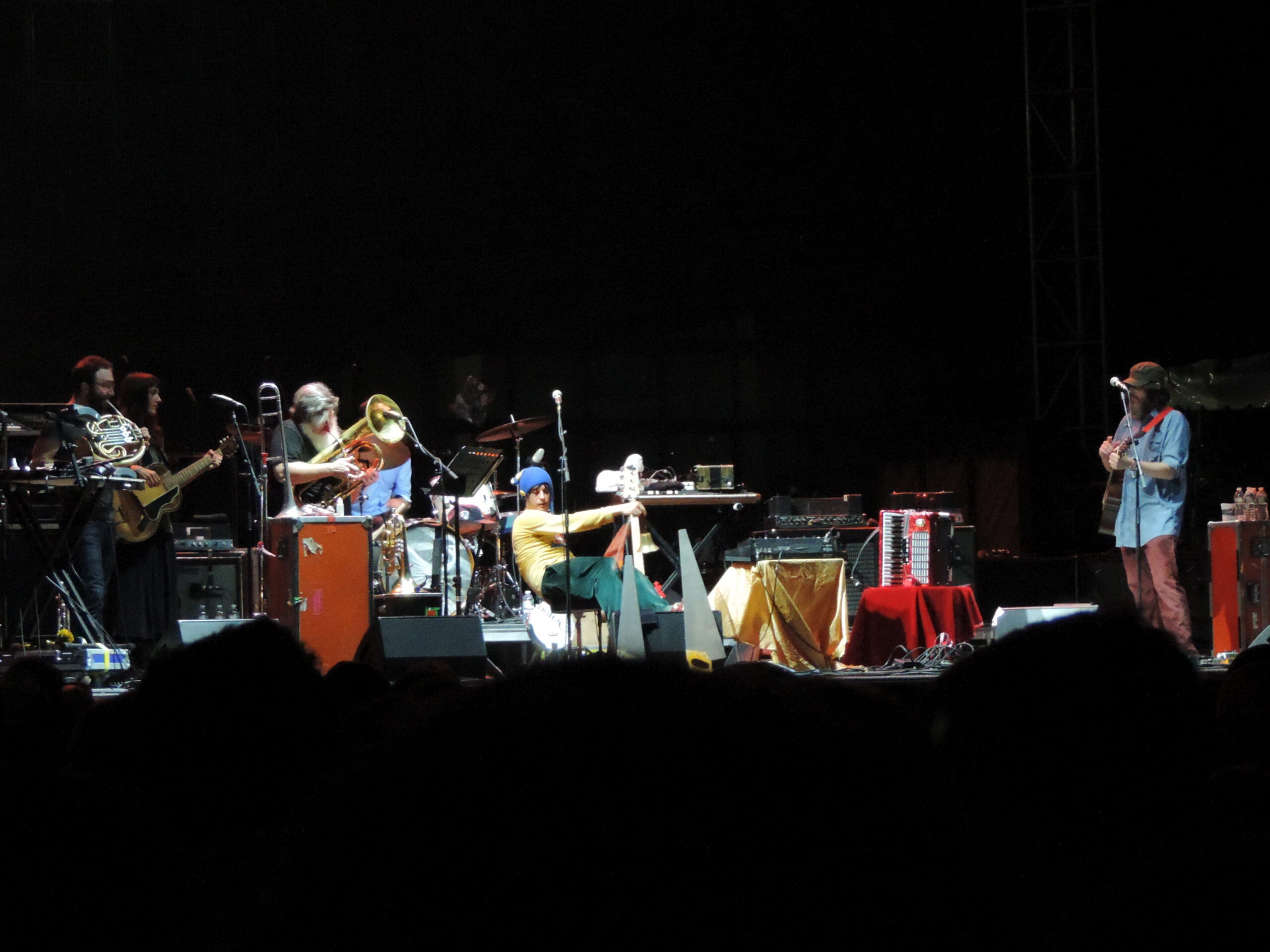
This is one of the most emotionally unfiltered albums in indie rock, and its sonic identity is inseparable from that intensity. The acoustic guitars, distorted horns, tape hiss, and ragged dynamics create a feeling of unstable beauty. It sounds handmade because it is handmade, and that vulnerability is part of the appeal.
Production takeaway: The album shows how imperfect recording can intensify the message. Saturation, room bleed, and rough transitions are not flaws here; they’re emotional cues. For producers, it’s a lesson in preserving performance energy instead of sanding away every edge.
3. Modest Mouse — The Moon & Antarctica (2000)
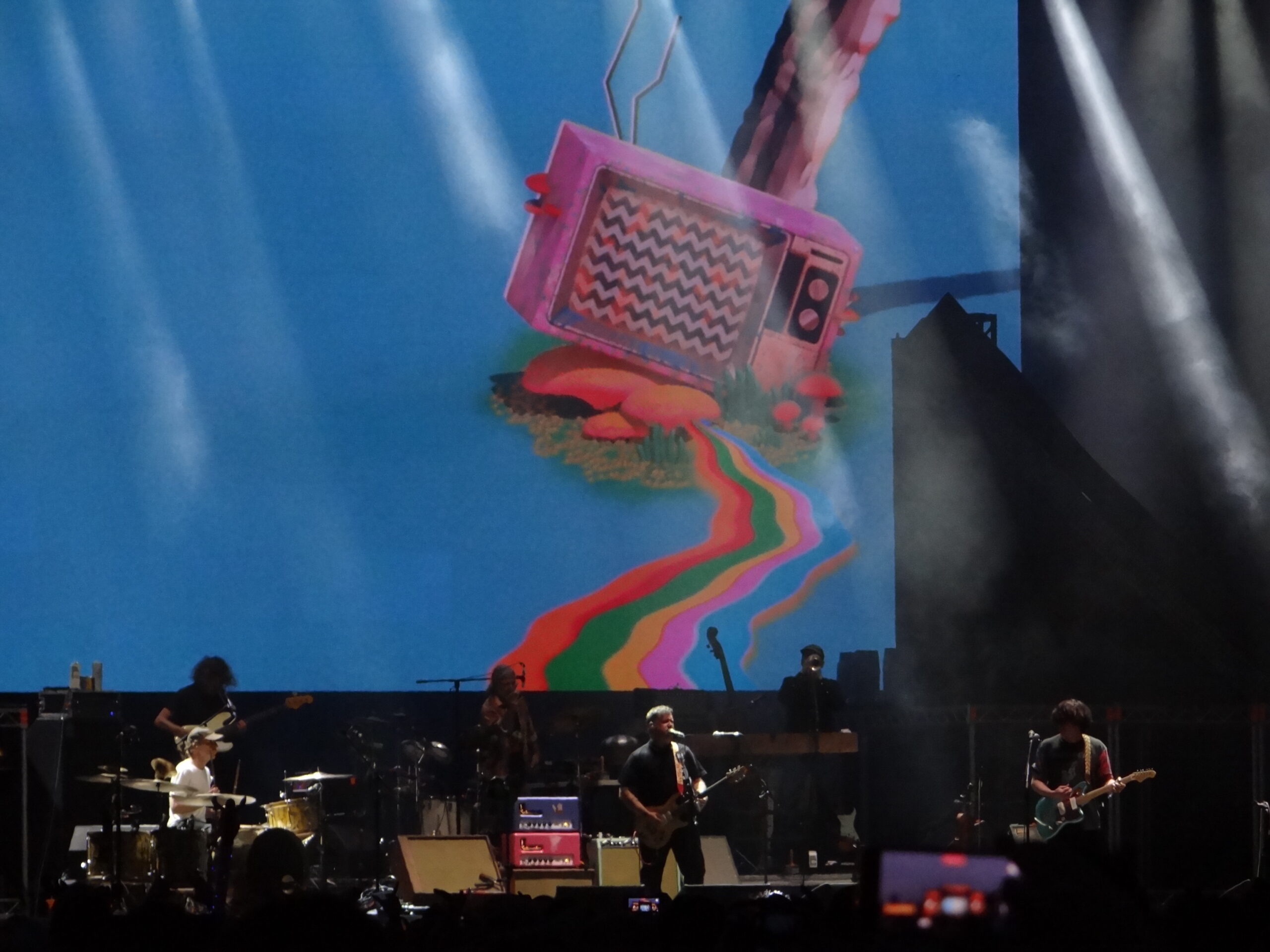
Modest Mouse made a leap from scrappy indie rock to a wide-screen, surreal sonic universe with this record. The songs still carry the band’s jittery, anxious core, but the production opens up dramatically. Reverb, unusual effects, and expansive arrangement choices give the album a vastness that mirrors its lyrical alienation.
Production takeaway: This is a great reference for balancing eccentric songwriting with polished presentation. Notice how the mix never loses the band’s odd energy, even as the sonic palette becomes more expansive. It’s a strong model for indie productions that need atmosphere without losing identity.
4. Arcade Fire — Funeral (2004)
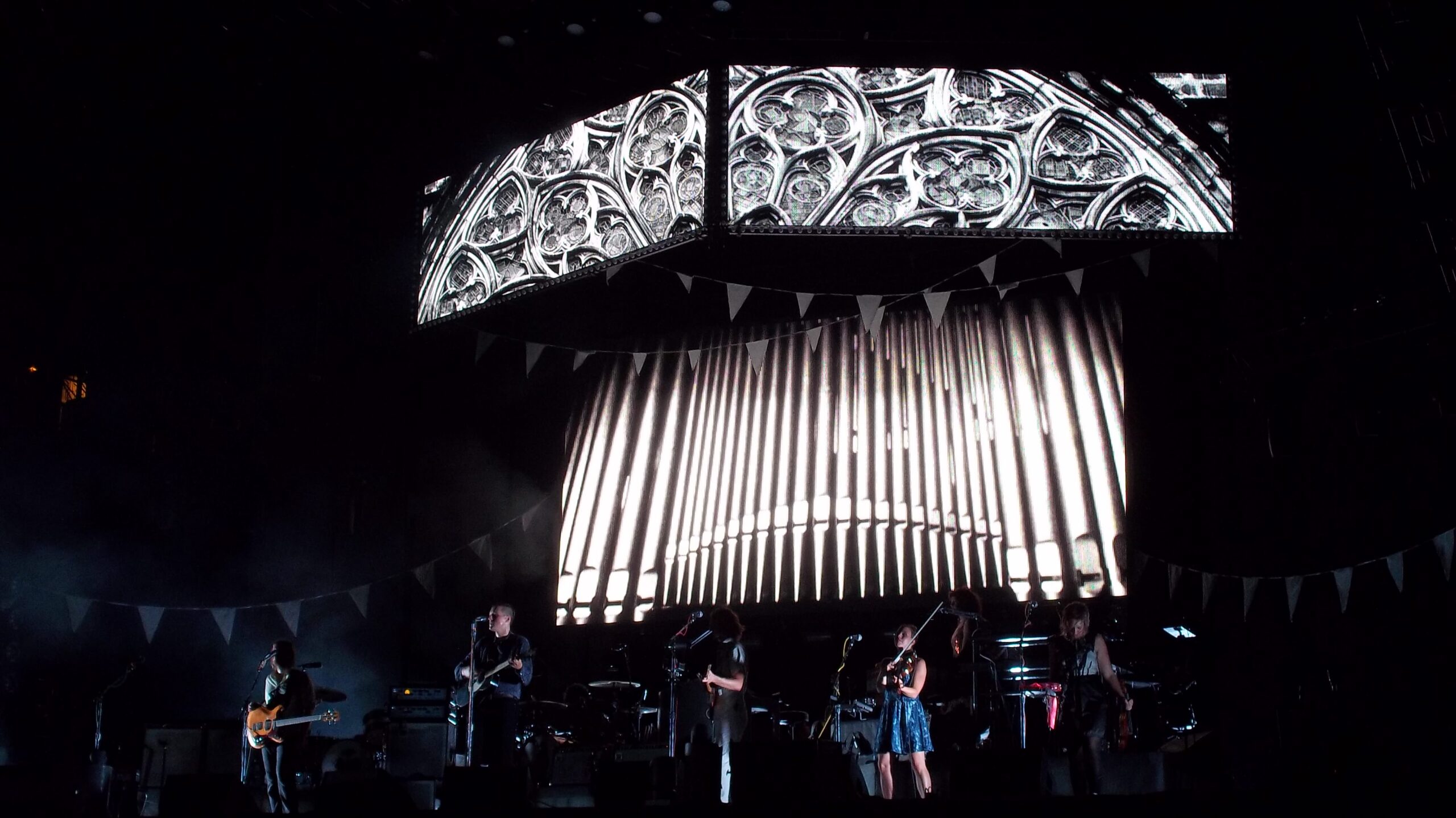
Funeral turned indie rock into something communal and cinematic. The album’s emotional scale comes from layered instrumentation, massed backing vocals, piano, strings, and percussion that feels constantly in motion. Yet for all its grandeur, the record still sounds human and immediate.
Production takeaway: The key lesson is dynamic arrangement. Instead of relying on one massive crescendo, the album uses repeated builds, textural shifts, and vocal stacking to generate emotional lift. If you’re producing dense indie arrangements, this is a blueprint for making every layer earn its place.
5. Interpol — Turn On the Bright Lights (2002)

This album is essential for understanding the intersection between indie rock and post-punk revival. Interpol’s sound is cool, controlled, and almost architectural: interlocking guitars, cavernous bass, clipped drums, and vocals that sit just above the fog. It’s a record of negative space as much as sound.
Production takeaway: The bass and kick relationship is especially instructive. The low end is deep but disciplined, creating tension rather than bloat. Engineers looking for a dark, elegant mix can study how the record uses reverb and delay without letting the atmosphere smear the attack.
6. Pavement — Crooked Rain, Crooked Rain (1994)

Pavement helped define indie rock’s slack, clever, slightly off-center identity, and Crooked Rain, Crooked Rain is one of their most important statements. The songs are hooked, but never overly neat. There’s a loose, conversational quality to the performances that keeps the record feeling alive and unpredictable.
Production takeaway: This album is a useful reminder that charisma can outrank precision. The guitars don’t need to be pristine if the arrangement and feel are strong enough. For producers, it’s an argument for retaining some looseness in indie rock tracking instead of quantizing every bit of life out of it.
7. The National — Boxer (2007)
Boxer refined melancholy into a fully realized indie-rock aesthetic. The drums are patient, the bass lines are melodic and grounded, and the guitars often function as color rather than brute force. Matt Berninger’s baritone sits at the center, making the whole album feel like a late-night confession delivered in a carefully lit room.
Production takeaway: This record excels at restraint and space. The arrangements leave air around the vocal, which lets subtle harmonic movement do the heavy lifting. It’s a strong reference for producers working with emotional material that doesn’t need to be shouted to hit hard.
8. Wilco — Yankee Hotel Foxtrot (2002)
Few albums have done more to expand the vocabulary of indie rock production. Yankee Hotel Foxtrot blends folk, experimental studio manipulation, and noise in a way that feels both adventurous and deeply melodic. It’s as much about texture as song structure.
Production takeaway: The album’s layered approach is instructive for anyone blending organic instrumentation with studio experimentation. Glitches, drones, odd transients, and ambient fragments don’t interrupt the song; they deepen it. If you’re building indie tracks with nontraditional sounds, this is a major reference point.
9. Big Thief — U.F.O.F. (2019)
Big Thief brought a more modern, intimate form of indie rock into the canon. U.F.O.F. is soft around the edges but deeply detailed, with performances that feel close-mic’d and emotionally unguarded. The record trusts nuance: fingerpicked guitars, hushed drums, and vocals that hover between fragility and certainty.
Production takeaway: This album is especially valuable for understanding space as an emotional tool. The mixes often feel wide without being busy, and the production supports the songs rather than announcing itself. It’s a contemporary example of how indie rock can sound cinematic without becoming overproduced.
10. Car Seat Headrest — Teens of Denial (2016)
This album captures the internet-age version of indie rock: self-aware, sprawling, and willing to swing from lo-fi confessionals to huge cathartic hooks. It has the restlessness of a demo culture that matured into full-band ambition. The result is messy in the best way, but also incredibly disciplined in structure.
Production takeaway: Teens of Denial is a great case study in controlled maximalism. The songs often feel like they’re about to spill over, but the arrangements keep them focused. If you’re making indie rock in a home-studio context, this is a strong model for turning raw material into a fully formed album without losing personality.
What These Albums Teach Us About Indie Rock
Across these 10 records, a few patterns emerge. Indie rock rewards specificity over polish. It often sounds strongest when production choices reinforce the emotional core of the writing. And even when the genre becomes bigger, cleaner, or more ambitious, it tends to keep one foot in intimacy.
For musicians, that means arrangement matters as much as tone. For producers, it means the “right” sound is the one that serves the song’s identity. For engineers, it means choosing what not to clean up can be just as important as tightening the mix.
Where to Go Next
If you’re building an indie rock listening list, start with the albums above and pay attention to how each one uses dynamics, guitar layering, drum sound, and vocal treatment. Then compare them against more recent records to hear how the genre’s palette has changed over time. The details are where the genre lives: the dry snare on Is This It, the tape-worn intimacy of Aeroplane Over the Sea, the orchestral lift of Funeral, the textural experiments of Yankee Hotel Foxtrot.
These are not just essential indie rock albums. They’re working references for how to make records that feel alive.
Image: David List 2020.jpg | https://www.flickr.com/photos/lexware-mountainbike-team/50370801062/in/album-72157716188052086/ | License: CC0 | Source: Wikimedia | https://commons.wikimedia.org/wiki/File:David_List_2020.jpg