The 10 Guitar Riffs That Still Define Rock’s Language
From arena-sized hooks to studio-born minimalism, these are the riffs that changed how songs hit the ear—and how guitarists build instant identity. We break down why they work, what makes them iconic, and what players can learn from their construction.
Why riffs matter more than almost anything else in rock
A great riff is more than a memorable lick. It is the song’s opening argument, its identity marker, and often the part that gets remembered long after the lyric fades. In rock, metal, blues-rock, and beyond, riffs do the heavy lifting: they establish groove, tone, attitude, and harmonic direction in a matter of seconds.
The best riffs are deceptively simple. They may rely on only a few notes, but the placement of those notes, the rhythm behind them, the articulation, and the tone all work together like a production blueprint. For guitarists, producers, and engineers, studying these riffs is one of the fastest ways to understand how records create impact.
This list is not just about popularity. It’s about riffs that rewired the instrument’s role in popular music, influenced generations of players, and still hold up when stripped down to raw guitar and drums. Along the way, we’ll also point out practical takeaways for players chasing similar power in their own writing and recording.
1. Led Zeppelin — “Whole Lotta Love”
Few riffs announce themselves with this much swagger. Jimmy Page’s opening figure is built on a blues-derived E minor pentatonic vocabulary, but the real magic is in its rhythmic phrasing. The riff leaves space in a way that makes every hit feel heavier. It’s not busy; it’s massive.
Why it works: The riff uses call-and-response logic, with a chunky low-register figure followed by a quick melodic answer. That contrast creates tension and release before the band even enters fully.
Production takeaway: Record rhythm parts with controlled gain rather than excessive saturation. The definition of the pick attack is part of the riff’s authority. A slightly dry close mic, with minimal room bloom, can preserve the punch.
2. Black Sabbath — “Paranoid”
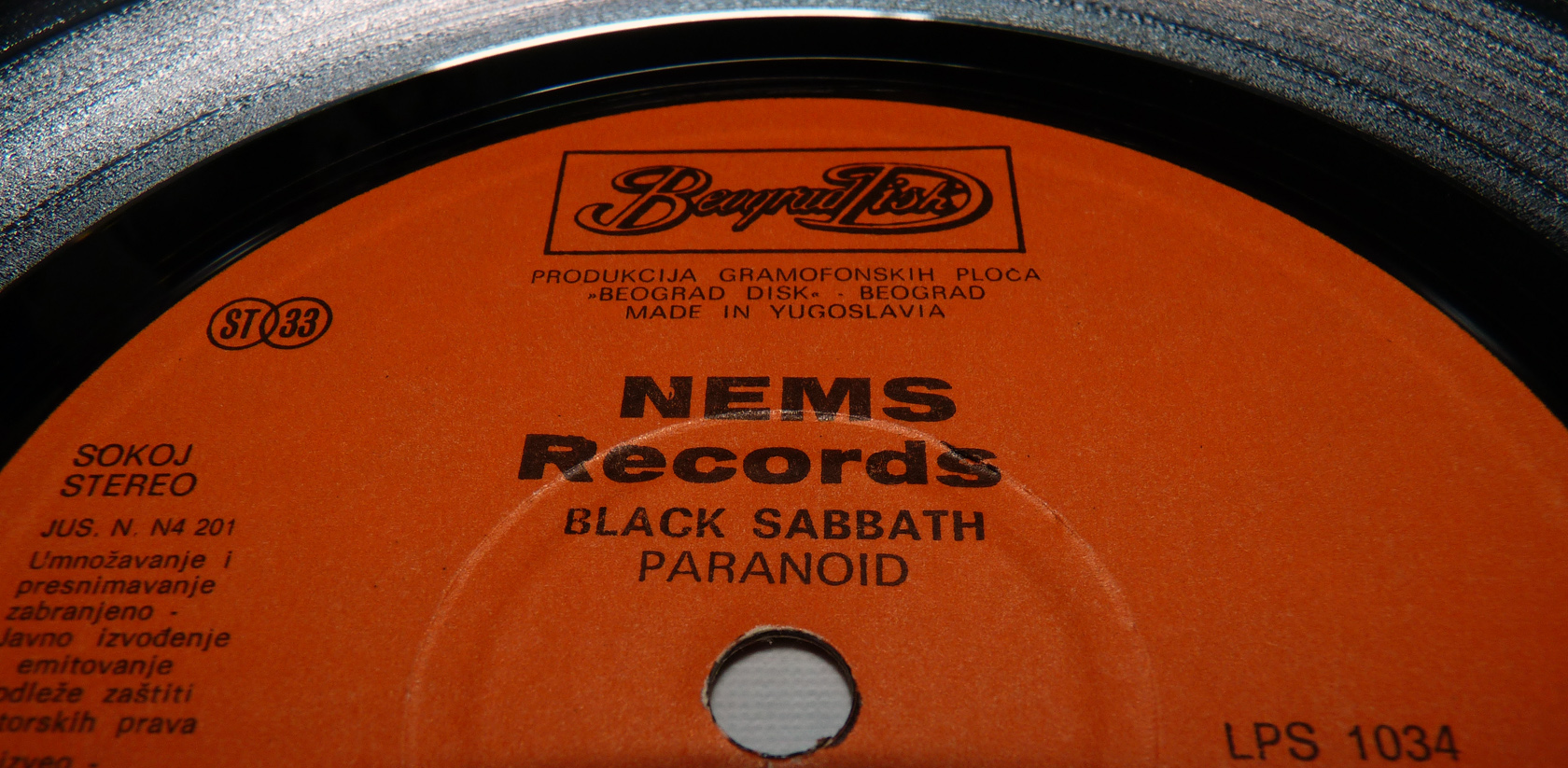
If there is a template for straight-ahead heavy metal riffing, this is it. Tony Iommi’s “Paranoid” riff is a masterclass in urgency. It’s fast, economical, and harmonically bare-bones, which gives it a kind of nervous energy that never lets up.
Why it works: The riff leans on a compact melodic cell repeated with relentless drive. The forward motion is driven as much by rhythm as by pitch.
Production takeaway: Tight double-tracked guitars can make a riff like this feel even more locked in, but the original power comes from articulation. Keep the noise floor under control and avoid over-editing the human push and pull.
3. Deep Purple — “Smoke on the Water”

Possibly the most famous four-note riff ever written, “Smoke on the Water” is the rare rock anthem that functions as both a beginner’s rite of passage and a durable stadium anthem. Ritchie Blackmore’s riff is built on parallel fourths and a blues-rock sense of inevitability.
Why it works: The intervals are simple, but the descending shape makes it feel like a statement. It is instantly recognizable because it is rhythmically clear and melodically sparse.
Production takeaway: Simplicity exposes tone. If your amp sound is weak, a riff like this will tell on you immediately. Focus on midrange clarity and note separation, not just bass and gain.
4. AC/DC — “Back in Black”

Malcolm Young’s riffing is the gold standard for groove-first rock guitar. “Back in Black” is deceptively minimal: a small collection of notes arranged with impeccable pocket. What makes it immortal is the feel. The riff swings without sounding loose, and every chord stab is placed with purpose.
Why it works: The riff uses rhythmic economy. It does not overload the bar with information, which leaves space for the drums to breathe and the vocals to land.
Production takeaway: For riff-driven rock, consider tracking rhythm guitars with less sustain than you think you need. Transient clarity and percussive muting are a huge part of the record’s impact.
5. The Rolling Stones — “(I Can’t Get No) Satisfaction”
Keith Richards’ fuzzed-out signature line is one of the most important hooks in guitar history because it blurred the line between riff and chorus. It is not just accompaniment; it is the song’s central identity. That harmonic riff logic became a blueprint for countless rock and pop records.
Why it works: The riff is compact, repetitive, and built around a tone color that was still novel at the time. Repetition becomes hypnotic rather than monotonous because the contour is so memorable.
Production takeaway: Distortion is not enough—you need a timbre that stands out in the arrangement. Fuzz, octave emphasis, or a pushed amp can make a simple phrase feel larger than life.
6. Van Halen — “Ain’t Talkin’ ’Bout Love”
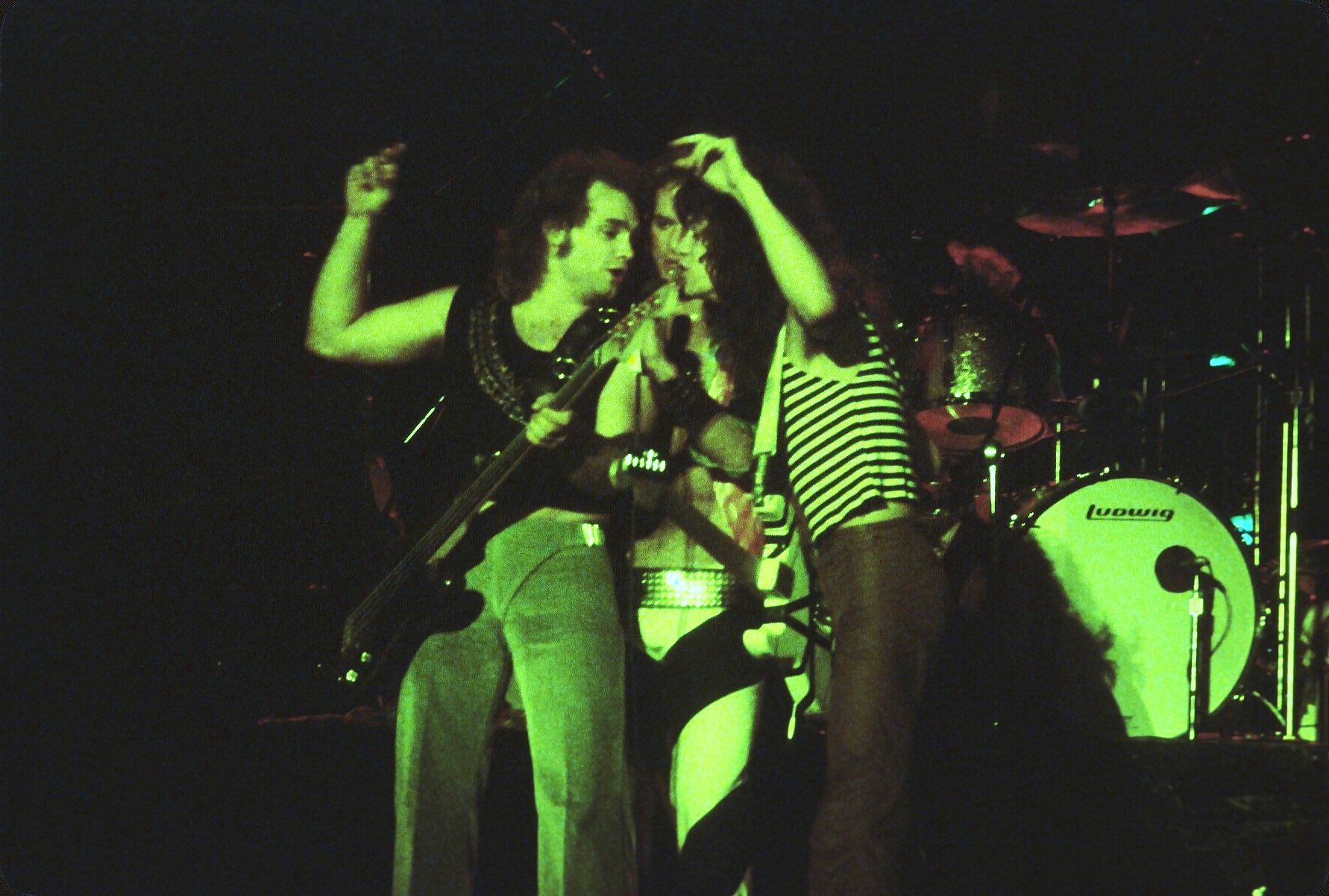
Edward Van Halen brought a new level of firepower to riff writing, and this track is a perfect example of why his approach changed guitar forever. The riff combines biting rhythmic chugs with an aggressive melodic shape, creating the sense that the guitar is both percussion and lead instrument at once.
Why it works: The riff is built from palm-muted attack, wide interval movement, and a tone that makes each note feel like it is jumping out of the amp.
Production takeaway: If you want this kind of impact, start with the hands. Tight muting and consistent pick attack matter more than just dialing up gain. A well-mic’d Marshall-style amp or a convincing model with strong upper-mid presence gets you closer than huge low-end settings.
7. Jimi Hendrix — “Purple Haze”
Hendrix had a unique ability to make the guitar sound like it was speaking in a slightly destabilized language, and “Purple Haze” is one of the clearest examples. The riff’s tritone edge gives it danger, while the fuzz and phrasing make it feel elastic and psychedelic.
Why it works: The riff feels unresolved in a way that keeps the listener leaning forward. The harmony is edgy, and the tone adds a layer of sonic aggression that matches the song’s experimental identity.
Production takeaway: Slight modulation, fuzz saturation, and controlled stereo space can help recreate this sense of motion. Don’t polish the edges too much—some instability is the point.
8. Metallica — “Enter Sandman”
This is one of the defining metal riffs of the 1990s, and it demonstrates how simplicity, when executed with precision, can become enormous. The riff is built on heavy, chug-driven motion and a dark harmonic cycle that feels inevitable from the first bar.
Why it works: The riff balances open-string power with tightly controlled palm muting. That contrast gives it both weight and momentum.
Production takeaway: Metal rhythm guitars live and die by phase coherence, low-end discipline, and double-track tightness. If your tracking is sloppy, the riff loses its wall-of-sound effect immediately.
9. Nirvana — “Smells Like Teen Spirit”
This riff became an era-defining anthem because it was both massive and understated. Kurt Cobain’s chord-based figure thrives on contrast: quiet tension, then explosive release. The actual notes are not virtuosic, but the arrangement and dynamics make them feel seismic.
Why it works: The riff uses power chords in a way that turns simplicity into drama. It is also a lesson in contrast, especially when paired with the song’s dynamics and drum accents.
Production takeaway: A riff does not need complexity to dominate a mix. Track the part so the clean-verse/dirty-chorus transition feels intentional, and let the drums and bass escalate with the guitars.
10. Van Halen — “You Really Got Me”
While not an original composition by Van Halen, this version became a benchmark for how tone and attitude can reinvent a familiar song. The riff itself is built on the kind of direct, punchy power chord motion that made hard rock feel immediate and physical.
Why it works: The riff is unforgettable because it is elemental. In Van Halen’s hands, it becomes a statement about speed, attack, and larger-than-life guitar tone.
Production takeaway: When you want a riff to feel huge, start with arrangement density. A strong bass performance, properly aligned kick drum, and guitars with midrange bite can turn a simple figure into a freight train.
What the greatest riffs have in common
Across genres and decades, the strongest riffs share a few traits. They are rhythmically distinct, harmonically clear, and tonally identifiable within a second or two. They also leave room for the song around them. A riff becomes iconic not just by being flashy, but by being structurally memorable.
From a writing perspective, that means focusing on the relationship between silence and sound, not just note count. From a recording perspective, it means getting the performance, amp choice, mic placement, and arrangement right before reaching for plugins or post-processing.
For producers, riff analysis is really arrangement analysis. Ask: does the guitar own the low mids? Is the drummer reinforcing or obscuring the hook? Is the tone interesting enough to stand alone without bass and vocals? These are the questions that separate a decent part from a record-defining one.
The bottom line
The best guitar riffs endure because they solve multiple problems at once. They hook the listener, define the genre, and give the band a sonic signature. Some are built on brute force, some on groove, some on danger, and some on sheer simplicity. But all of them understand one essential truth: a riff is not just a passage of notes. It is the moment a song becomes unforgettable.
If you are writing riffs today, study these ten not as museum pieces, but as working tools. Notice the rhythm, the spacing, the tone, and the way each one behaves in a mix. That is where the real education begins.
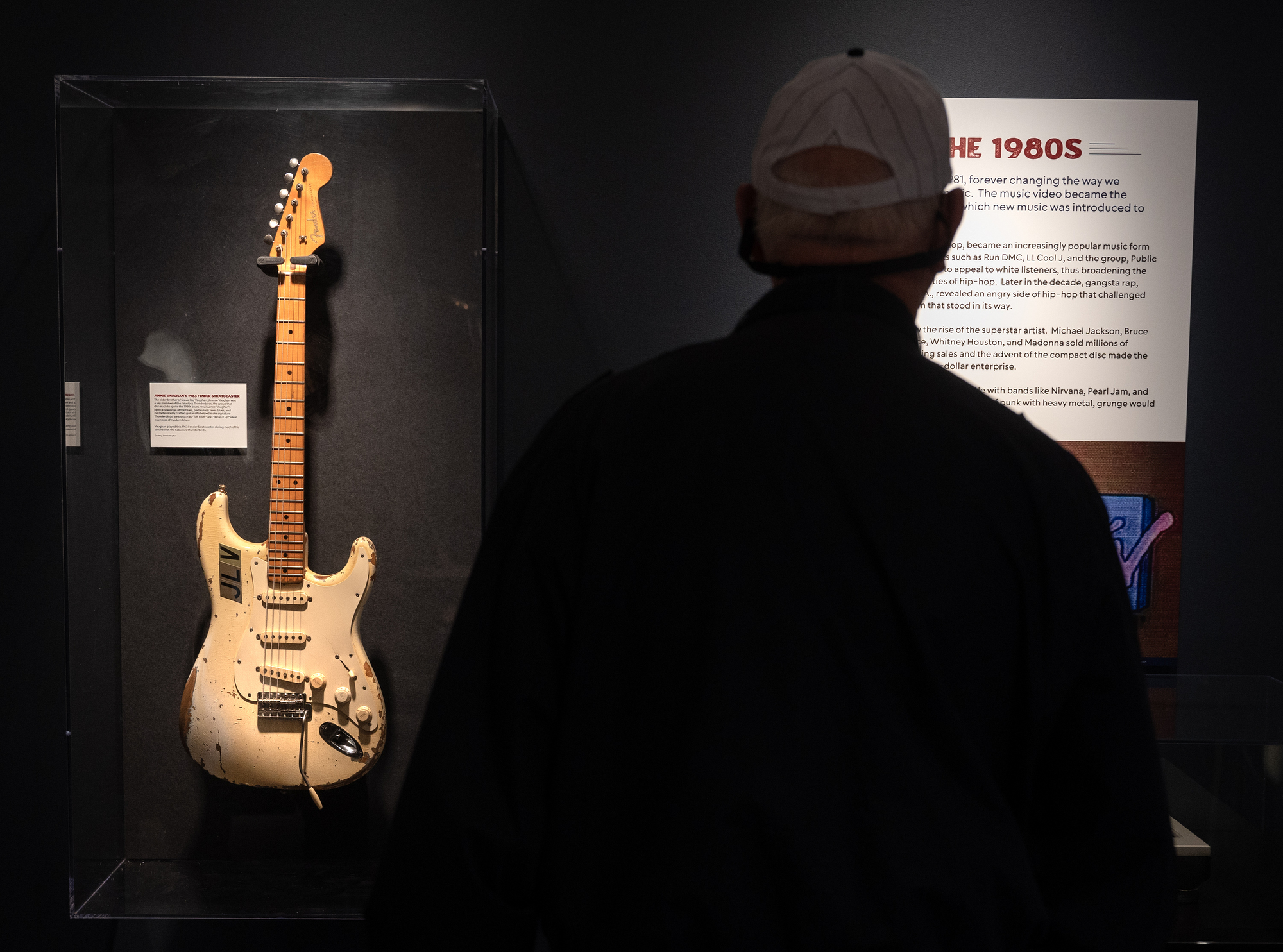
Image: DIG15178-018 Jimmie Vaughan's 1963 Fender Stratocaster – Music America- Iconic Objects from America’s Music History (2024-02-17 12.55.18 by LBJ Library @Flickr 53537193413).jpg | DIG15178-018 | License: Public domain | Source: Wikimedia | https://commons.wikimedia.org/wiki/File:DIG15178-018_Jimmie_Vaughan%27s_1963_Fender_Stratocaster_-_Music_America-_Iconic_Objects_from_America%E2%80%99s_Music_History_(2024-02-17_12.55.18_by_LBJ_Library_@Flickr_53537193413).jpg