The 10 Basslines That Changed Rock: Technique, Tone, and the Riffs Every Player Studies
The greatest rock basslines are not just memorable—they are masterclasses in groove, note choice, articulation, and tone. Here’s a ranked breakdown of 10 iconic lines, plus the production and playing lessons behind each one.
Why Great Rock Basslines Matter More Than Most Lists Admit
A truly great rock bassline does more than hold the low end together. It creates momentum, defines the pocket, and often becomes the hook the song is remembered for. In the best cases, the bass is not supporting the riff—it is the riff. The lines below were chosen not just for fame, but for how effectively they combine rhythm, melody, articulation, and tone into something instantly recognizable.
For players, these are study pieces. For producers and engineers, they are reminders that bass tone lives or dies by arrangement, note length, compression, and how the bass sits against kick drum and guitars. If you want better rock bass sounds, do not start by reaching for a new plugin. Start by understanding why these lines work.
1. The Beatles – “Come Together”

Paul McCartney’s line is deceptively simple: a swampy, syncopated groove built around repetition, space, and phrasing. The magic is in the feel. McCartney leaves room for the vocal and drums, but the line still drives the track with a rubbery, almost loose precision.
Technique takeaway: Focus on note length and rhythmic placement. This is a lesson in restraint—short, controlled notes can hit harder than busy fills.
Tone tip: A mild overdrive or amp-style saturation helps emphasize midrange growl. Keep the low end tight and avoid over-compressing the transient.
2. Led Zeppelin – “Ramble On”

John Paul Jones blends melodic movement with a clean, articulate attack. The bassline is busy without feeling crowded, weaving through the harmony while remaining firmly anchored to the song’s forward motion.
Technique takeaway: This is a study in connecting chord tones smoothly. Practice outlining progressions with minimal hand movement and clean shifts between positions.
Production tip: If you’re recording a bassline like this, capture both DI and amp. Blend them for clarity and character: DI for low-end definition, amp for texture and finger noise.
3. Queen – “Another One Bites the Dust”

John Deacon’s bassline is one of the most efficient hooks in rock history. Built on repetition and impeccable timing, it shows how a narrow note range can still feel massive when the groove is locked.
Technique takeaway: Precision matters more than flash. Work with a metronome and aim for consistent note attack on every repetition.
Tone tip: This line thrives on a punchy, relatively dry tone. Too much sustain blurs the hook; keep compression controlled so the pulse stays crisp.
4. The Rolling Stones – “(I Can’t Get No) Satisfaction”
Even though the famous motif is often associated with guitar, the bass under the track is part of what gives the song its stubborn, driving identity. The arrangement proves that bass doesn’t always need to be flashy to be unforgettable; sometimes its job is to reinforce the insistence of the riff.
Technique takeaway: Learn how to support a motif without stepping on it. In rock, great bass players often use octave placement and rhythmic reinforcement to strengthen a song’s core idea.
Production tip: Let the bass occupy a focused low-mid lane. If the guitars are heavily distorted, use EQ to carve out space around 200–400 Hz so the bass remains audible on smaller speakers.
5. Cream – “Sunshine of Your Love”

Jack Bruce’s bassline is thick, bluesy, and hypnotic. It rides a riff that feels almost primal, with a heavy emphasis on groove and repetition. The line’s power comes from its refusal to over-explain itself.
Technique takeaway: Blues phrasing still matters in rock bass playing. Practice bending your timing slightly behind the beat while keeping the line locked to the drums.
Tone tip: A roundwound string growl paired with tube-style saturation can help recreate the aggressive warmth of this era. Blend in a touch of upper harmonics for note definition.
6. The Who – “My Generation”

John Entwistle’s playing on “My Generation” is a reminder that bass can be both the engine and the solo voice. The line is busy, forceful, and unusually forward in the mix for its time, which helped redefine the role of bass in rock.
Technique takeaway: Speed is only useful if every note has intent. Practice alternating between aggressive attacks and cleaner passages to build dynamic control.
Production tip: Bass-forward mixes need arrangement discipline. If the bass is going to lead, the guitars and keys must leave it room. High-pass competing instruments aggressively where appropriate.
7. Pink Floyd – “Money”
Roger Waters’ bassline works because it is both riff and framework. The uneven time signature gives the line its identity, but the real genius is how the pattern feels natural once it locks in. It’s an excellent example of groove surviving complexity.
Technique takeaway: Count the phrase in larger groups, not just bar-by-bar. This helps internalize unusual meter and prevents the line from sounding stiff.
Production tip: On odd-meter bass parts, transient consistency is crucial. Use compression to keep each phrase level, but don’t flatten the performance into a lifeless block.
8. AC/DC – “Have a Drink on Me”
Malcolm Young may have defined the guitar engine, but the bass in classic AC/DC is a masterclass in supporting a hard-rock machine. The lines are often understated, but their effectiveness lies in timing and absolute clarity.
Technique takeaway: Study how simple lines can still feel huge when the rhythm section plays as one unit. Precision with the kick drum matters more than complexity.
Tone tip: Keep the bass controlled and centered. For this style, less sub-bass chaos and more midrange focus will make the part translate better in dense mixes.
9. Yes – “Roundabout”
Chris Squire’s tone alone makes this bassline legendary: bright, aggressive, and unmistakably present. But the line is also brilliant compositionally, moving with confidence through the harmony and giving the song its muscular, propulsive core.
Technique takeaway: Pick articulation and right-hand consistency are essential here. If you’re chasing this kind of authority, practice with a firm attack and controlled muting.
Production tip: Squire-style bass works because it occupies the upper bass and low-mid space as much as the sub range. Try parallel processing: one clean low-end path, one distorted midrange path.
10. Black Sabbath – “N.I.B.”
Geezer Butler’s bass intro and groove are foundational heavy metal vocabulary. The line combines blues phrasing, menace, and a sense of inevitability that makes the whole track feel like it is descending into something darker and heavier.
Technique takeaway: Space is part of heaviness. Let notes ring, but control their decay so the groove stays defined rather than muddy.
Tone tip: Distortion can be useful here, but the key is preserving pitch clarity. Use drive for edge, not fuzz overload, unless the arrangement can support it.
What These Basslines Teach You About Playing Better Rock Bass
Looking across these 10 lines, a pattern emerges. The most iconic rock basslines are rarely the busiest. They win by combining memorable rhythm, strong note choice, and a tone that serves the song rather than dominating it. In production terms, they also prove that bass sound is a blend of performance, arrangement, and mix decisions—not just gear.
If you want to write better bass parts, start by asking three questions: Does the groove make the song move? Does the note choice support the harmony without clutter? Does the tone cut through enough to be felt on small speakers as well as subs? If the answer is yes, you’re already closer to writing a classic.
Practical Exercises to Steal the Right Lessons
1. Reduce the note count. Take a busy bassline and rewrite it using half as many notes. Keep only the most essential rhythmic accents.
2. Record DI and amp separately. Blend clean low end with dirty midrange to learn how tone changes perception of groove.
3. Practice with drum loops, not just metronomes. Great rock bass is about pocket. Use kick-heavy loops to improve lock and placement.
4. Match articulation to genre. Staccato for punchy rock, legato for rolling classic rock, aggressive pick attack for cutting progressive parts.
5. Use compression as control, not rescue. If the performance is uneven, fix the playing first. Compression should enhance consistency, not erase dynamics.
The Bottom Line
The best rock basslines endure because they are built on fundamentals: groove, tone, and identity. Whether it’s McCartney’s economy, Deacon’s precision, Squire’s attack, or Butler’s heaviness, these players understood that bass can be the emotional center of a song without needing to be the loudest instrument in the room.
For musicians and producers, that is the real lesson. A great bassline is not just heard—it organizes the entire track around itself.
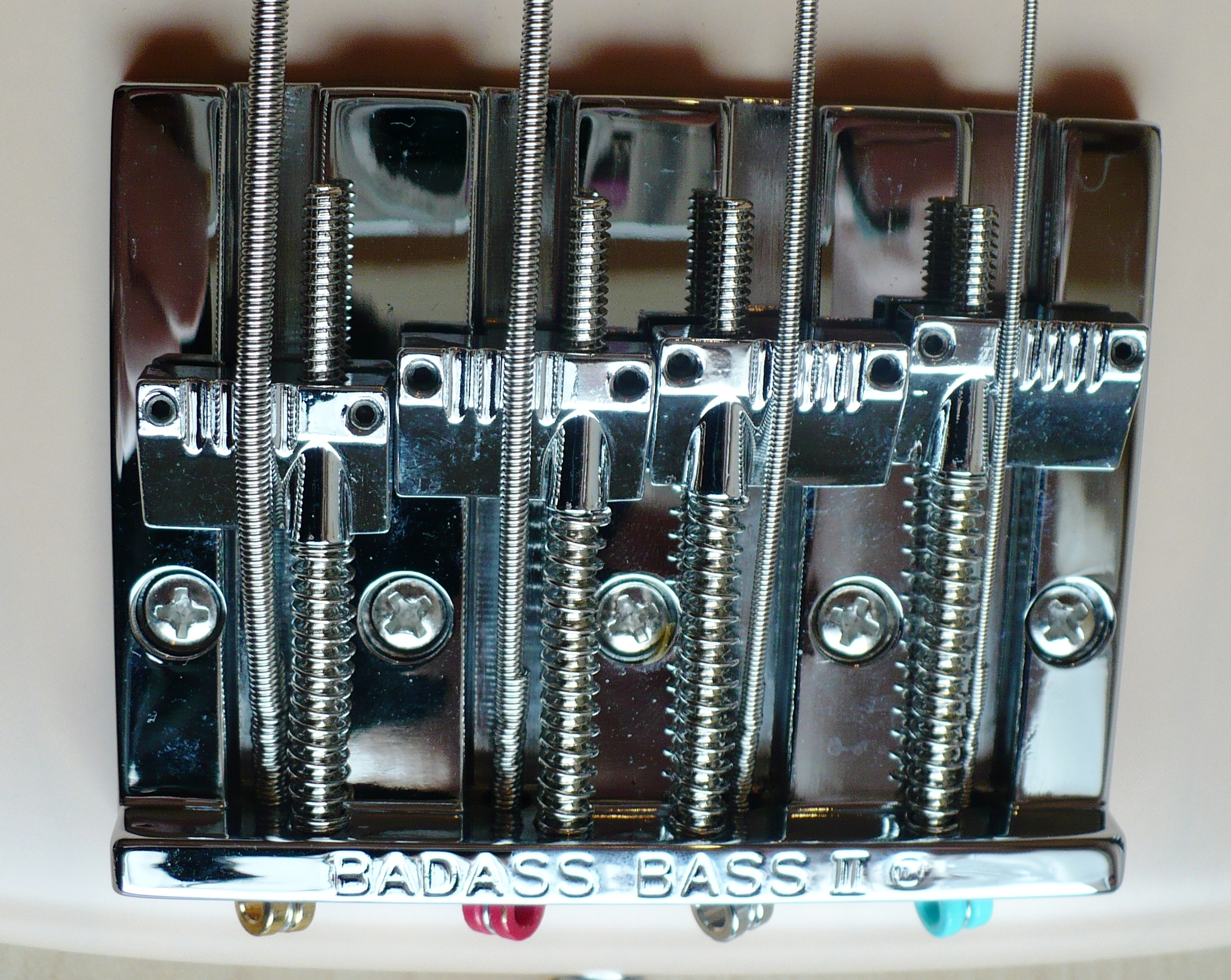
Image: Badass Bass II.jpg | Own work | License: CC BY-SA 3.0 | Source: Wikimedia | https://commons.wikimedia.org/wiki/File:Badass_Bass_II.jpg