Inside The Cure’s Guitar Atmosphere: Chorus, Reverb, and the Art of Negative Space
The Cure’s guitar sound is more than “dark” or “dreamy” — it’s a carefully built atmosphere of modulation, delay, and reverb that turns simple parts into emotional architecture. Here’s a practical breakdown of the effects, tones, and production choices behind the band’s signature width and melancholy.
The Cure’s guitar sound is one of the clearest examples of tone becoming identity. It’s not just a collection of effects pedals or a “moody” aesthetic; it’s a production language built from chorus, delay, reverb, restrained picking, and arrangements that leave space for the guitar to bloom. Robert Smith’s parts often sound simple at the source, but the final result feels huge because every layer is doing specific work. The magic lives in the interaction between the dry performance, the modulation, and the ambient tail.
For producers and guitarists, the important lesson is that The Cure’s tone is not one preset. It changes from era to era, but the core logic stays the same: let the guitar be both harmonic support and atmosphere. That means choosing effects that soften edges without smearing the part, and using arrangement decisions as aggressively as gear decisions.
The core of The Cure sound: width, shimmer, and emotional distance
If you strip away the myth, The Cure’s guitar atmosphere comes down to three ingredients: chorus for width, reverb for depth, and delay for motion. Each effect has a job. Chorus widens the image and gives the guitar a liquid instability. Reverb pushes it back into a larger emotional space. Delay adds rhythmic glue and a sense of suspended time.
What makes this sound distinctive is the balance. The guitar is rarely allowed to be dry and upfront for long. Instead, it sits in a slightly blurred halo, where the attack is still readable but the sustain expands into the room. That’s why even basic chord shapes can feel cinematic in a Cure context. The sound itself is doing narrative work.
Robert Smith also tends to favor parts that are harmonically memorable but rhythmically uncluttered. Open-string voicings, suspended chords, arpeggios, and double-stop figures all work especially well because the effects can fill the gaps without masking the performance. The guitar isn’t constantly busy; it’s given space to resonate.
Chorus: the signature movement behind the shimmer
Chorus is one of the most recognizable pieces of the Cure guitar palette. In practical terms, chorus duplicates the signal, detunes it slightly, and modulates the pitch over time. That creates a subtle thickening effect, but with the right settings it also produces a watery movement that feels emotional rather than flashy.
For Cure-inspired tones, chorus is usually better when it is restrained. Too much depth or too fast a rate turns the sound into obvious ‘80s gloss. The band’s best tones often live in a zone where the modulation is felt more than heard. You notice the width and motion before you notice the effect itself.
Classic analog-style chorus pedals and rack units are a natural fit here because they soften the top end and add a slightly grainy swirl. That character helps the guitar sit in a mix without becoming sterile. If you’re using a modern plugin, aim for modest rate, moderate depth, and avoid excessive stereo spread that makes the sound feel artificial. The goal is movement, not spectacle.
One production trick worth borrowing: place chorus before reverb if you want the modulation to feel like part of the guitar itself, not like an effect floating on top. That ordering tends to create a more cohesive ambience. If the chorus comes after a big reverb, the result can get washed out fast.
Reverb: the architecture of distance
Reverb is where The Cure’s guitar sound becomes a world. It’s the effect that turns a riff into a landscape. But the important detail is that the reverb is not just “big.” It’s controlled. A dense wash can be dramatic, but if every guitar part is swimming in endless tail, the arrangement loses shape. The Cure’s atmosphere works because the reverb preserves enough definition for the part to remain emotionally direct.
Plate and hall-style reverbs are especially useful in this context. Plates can provide a smoother, more immediate sheen, while halls create a longer sense of distance and scale. Shorter decay times can still sound expansive if the pre-delay is set thoughtfully, because pre-delay allows the note attack to speak before the ambience blooms. That small gap is crucial when you want clarity and drama at the same time.
In production terms, the reverb often functions like a framing device. It surrounds the guitar without erasing the rhythm. This is why picking dynamics matter so much. A lightly picked chord will disappear more quickly into the space, while a stronger attack can punch through the ambience and feel almost orchestral. That contrast is a major part of the emotional effect.
If you’re chasing the vibe in a DAW, try this approach: use a high-pass filtered reverb send so the low end doesn’t cloud the mix, then automate send levels rather than leaving the reverb static. The Cure’s atmosphere often feels alive because the space is shaped alongside the arrangement.
Delay: rhythmic glue and ghost movement
Delay is often the third rail in The Cure guitar chain. It can be subtle, but it’s vital to the sense of motion. Rather than functioning like a lead-guitar spotlight, delay often reinforces a pulse underneath the part. Slightly dotted, syncopated, or just long enough to create a soft trail, it gives the music that feeling of emotional continuation after the note has already been played.
Analog-style delay works well because it rounds off the repeats and prevents them from sounding clinically exact. Those darker repeats help the guitar occupy space without fighting the vocal or bass. Tape-style delay can also be useful if you want more wobble and degradation, especially in tracks where the atmosphere should feel a little unstable.
The key is restraint. If the repeats are too loud or too bright, the delay becomes rhythmic clutter. In a Cure-like mix, the repeats often sit just behind the dry signal, almost like a shadow. That shadow enhances the loneliness and tension of the part. It doesn’t announce itself; it lingers.
Playing style matters as much as the pedals
One of the biggest mistakes players make when chasing this tone is focusing only on effects and ignoring performance. The Cure sound depends heavily on part construction. Robert Smith often uses voicings that ring against each other, letting open strings and sustained notes create internal tension. That means the guitar part is partly written for the effect chain.
Arpeggiated figures work because chorus and delay can turn them into a fluid lattice. Simple chord progressions work because reverb can make them feel larger than life. Occasional dissonances or non-diatonic color tones land harder because the ambience gives them room to breathe. The emotional weight comes from contrast: clean attack against smeared decay, consonance against unease.
Palm muting, pick attack, and note duration also shape the final tone. A slightly muted pattern can keep the part articulate under heavy ambience. A fully ringing chord can become a wash of harmonic color. Knowing when to allow sustain and when to control it is a huge part of the sound.
Building a Cure-inspired signal chain
If you want a practical starting point, think in this order: compressor or light overdrive if needed, chorus, delay, reverb, then amp or amp sim depending on the rig. That’s not a strict rule, but it reflects the general logic of the sound: shape the motion first, then place it in space.
A clean amp platform with lots of headroom is usually the safest foundation. Bright enough to preserve detail, but not so sharp that the modulation turns brittle. Single-coil pickups or split-coil options can help, though humbuckers can absolutely work if you manage the top end and avoid excessive gain. The point is not pristine hi-fi clarity; it’s a clean canvas with enough harmonic detail for the effects to interact.
In a plugin setup, look for modulation units that avoid overly glossy stereo widening and reverbs that can be filtered and pre-delayed. Many modern multi-effect suites can get you close quickly, but the best results usually come from dialing back obvious intensity and focusing on blend.
What producers can steal from The Cure
The Cure’s guitar atmosphere is a masterclass in arrangement psychology. The takeaways go beyond guitar pedals. Leave room in the composition. Let a repeating figure accumulate meaning over time. Use effects to extend emotion, not to disguise weak writing. And remember that space is an active element in the track, not empty real estate.
From a mixing perspective, the Cure approach also encourages discipline. If the guitar is already wide and spacious, the rest of the arrangement should support that dimension rather than crowd it. Vocals, bass, and drums often need to be placed with intention so the guitar’s halo remains readable. In other words, the atmosphere has to be mixed as part of the song, not pasted on afterward.
That is the enduring lesson of The Cure’s sound: the effects are not decoration. They are composition, arrangement, and emotion all at once. Chorus creates motion, reverb creates distance, delay creates memory. Put together, they turn the guitar into a place you can live inside.
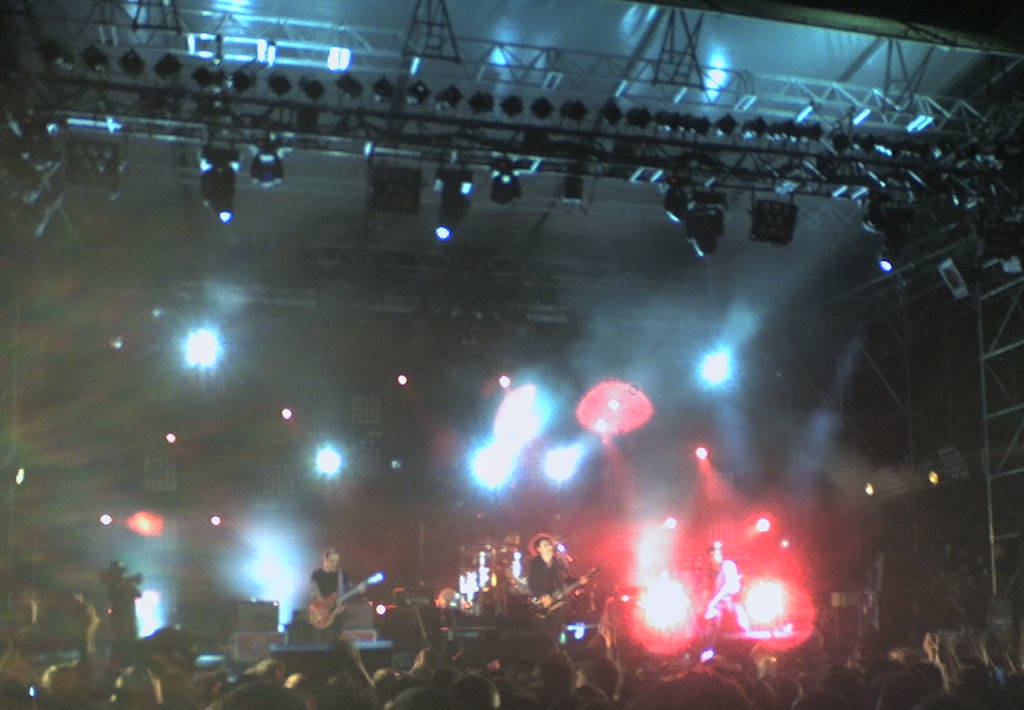
Image: The Cure-Live-2005.jpg | Own work | License: CC BY 2.5 | Source: Wikimedia | https://commons.wikimedia.org/wiki/File:The_Cure-Live-2005.jpg