Inside Jay Z’s Producer Ecosystem: The Hitmakers, Sonic Signatures, and Studio Moves Behind the Albums
Jay Z’s albums are a masterclass in producer curation as much as star performance. From hard-edged loop science to glossy radio architecture, here’s how the key producers shaped the sound—and what producers can learn from the records.
Jay Z’s Albums Were Built Like Producer Showcases
Jay Z’s catalog is often framed through business moves, cultural impact, and lyrical precision, but the records also tell a second story: the evolution of hip hop production across three decades. If you want to understand why his albums hit so hard, you have to look at the producers who supplied the drums, samples, synth lines, hooks, and arrangement logic that made the records feel bigger than rap songs. This is not just a credits exercise. It is a study in sonic identity.
What makes Jay Z’s discography especially useful for producers is how clearly it maps different production philosophies. Some records lean on sample surgery and dusty boom bap. Others chase muscular Southern bounce, glossy R&B crossover polish, or minimalist loop-based tension. The best Jay Z albums are not just stacked with elite names; they are sequenced like a controlled demonstration of what happens when top-tier producers are given a rapper who can inhabit almost any sonic frame.
The Core Names Behind the Sound
There is no single “Jay Z sound” because the albums were built by a rotating cast of heavyweights. But a few producers show up again and again as structural pillars.
DJ Premier brought the gritty, chopped-sample discipline of New York boom bap. His tracks often feel built around a loop that has been aggressively humanized: crackling drums, dusty vinyl texture, short melodic phrases, and a pocket that leaves air for the vocal. Premier’s work with Jay Z is a blueprint for how to make a beat feel minimal without sounding unfinished.
Just Blaze became one of the defining architects of Jay Z’s early-2000s peak. His production is all about scale: dramatic soul samples, hard transient drum programming, big dynamic swells, and arrangements that feel engineered to explode in arenas. If Premier is about the pocket, Just Blaze is about impact.
Kanye West, in his producer era before the full transition to solo superstardom, helped redefine the emotional center of Jay Z’s records. His signature sample pitching, vocal chops, gospel-inflected harmonies, and warm midrange layering created beats that sounded soulful but also slightly unstable in the best way. The tension between richness and grit is a major part of the appeal.
Timbaland contributed a different kind of futurism. His beats often use syncopated drums, clipped synth figures, unusual percussive accents, and off-grid rhythmic motion. For Jay Z, that meant a chance to sound modern without chasing trend pieces. Timbaland’s productions tend to open space in unexpected places, which forces the vocal to become more rhythmic and percussive.
The Neptunes brought sleekness, restraint, and hard-edged pop intelligence. Their beats often rely on very few elements: a sticky synth motif, stripped drums, and a narrow frequency palette that leaves the vocal exposed. That economy can be deceptively difficult to execute, because every sound has to earn its place.
Swizz Beatz added raw stadium energy: chant-ready hooks, aggressive drum programming, bright synth leads, and a kind of mechanical urgency that works especially well in record-label-blockbuster mode. Swizz understands how to write a beat that sounds like a crowd already knows the response.
Listening Cues: What Each Producer Actually Sounds Like
If you are studying these albums from a production angle, don’t just listen for names in the credits. Listen for decision-making.
With DJ Premier, focus on the drum crack versus the sample bed. The drums usually sit dry and centered, with the sample providing atmosphere rather than melodic dominance. You’ll hear a very specific kind of loop repetition: enough variation to keep it alive, not enough to distract from the vocal.
With Just Blaze, listen for lift. His tracks often feel like they are constantly rising, even when the arrangement is sparse. That can come from filtered introductions, layered sample entrances, or drums that hit with huge low-end authority and sharp top-end bite. His songs are built for momentum.
With Kanye West, listen to how he manipulates the source sample. Pitching vocals up or down, slicing phrases into new melodic shapes, and stacking harmonic fragments creates a beat that feels emotionally legible even before the verse starts. The sample is not just looped; it is reinterpreted.
With Timbaland, pay attention to syncopation and negative space. His percussion often “speaks” in between the main pulses. Instead of filling every bar, he creates a rhythmic conversation where the kick, snare, and auxiliary hits each have a distinct role.
With The Neptunes, listen to the silence. Their records often sound expensive because nothing is overused. The kick pattern is simple, the synth hook is memorable, and the low-end arrangement is disciplined. That restraint leaves Jay Z’s voice sitting in a clean, uncluttered lane.
Why These Producers Worked So Well With Jay Z
Jay Z is a rapper who benefits from contrast. His delivery is authoritative, conversational, and rhythmically flexible, which means the beat does not need to be overcrowded to support him. The best producers around him understood that his voice could carry dense lyrical content over a simple loop, but it could also lock into a more complex arrangement if the pocket was right.
That is why the producer lineup matters so much. Premier supplied grit. Just Blaze supplied scale. Kanye supplied emotional sample manipulation. Timbaland supplied rhythmic invention. The Neptunes supplied minimalism and polish. Swizz supplied energy and mass appeal. Together, they created a discography that kept Jay Z from being boxed into one subgenre of rap production.
There is also a business lesson here: curation is a production skill. Jay Z’s albums rarely rely on one sonic lane for too long. They move from hard street records to crossover singles to introspective cuts without sounding like compilations. That sequencing discipline is a big part of why the records feel like events.
Practical Takeaways for Producers
If you’re making hip hop and want to borrow from the Jay Z producer playbook, start with arrangement discipline. Most of the iconic beats in this orbit do not win because they are crowded; they win because every layer has a job.
1. Build around one core idea. Whether it is a sample phrase, a drum pocket, or a synth motif, the beat should have one dominant identity. Avoid stacking too many competing hooks.
2. Treat the vocal as part of the arrangement. These producers leave room for Jay Z’s cadence. That means not overfilling the midrange, not over-layering leads, and being intentional about when elements drop out.
3. Make the drums specific. The snare character, kick envelope, and hi-hat placement matter more than people think. A Premier beat and a Timbaland beat may both be “hip hop,” but the drum grammar is completely different.
4. Use samples like raw material, not wallpaper. The best sample-based Jay Z records are transformed. Chop them, pitch them, filter them, and sequence them so they interact with the verse instead of sitting behind it.
5. Mix for translation. These records work in clubs, cars, and headphones because the low end is controlled and the mids are clear. On the production side, that means checking mono compatibility, managing sample mud, and making sure the vocal has a pocket in the 1–5 kHz range.
The Lasting Impact of the Jay Z Producer Lineup
The reason Jay Z’s producer roster still gets discussed like a hall of fame is that it helped define how a rap album can function as a soundworld. Each producer brought a different discipline into the room, and the albums became a proving ground for hip hop’s major production languages: crate-digging, sample flip science, synth futurism, drum machine precision, and crossover minimalism.
For listeners, that means the catalog is endlessly replayable. For producers, it is a technical archive. Put these records on and focus less on the celebrity of the names and more on the mechanics: how the drum hits are tuned, where the sample enters, how much room the hook gets, and why the beat still feels unfinished in a way that is actually perfect.
That is the real lesson of the Jay Z producers list. The great names matter, but the process matters more. These albums endured because the producers knew when to build, when to strip back, and when to let the rapper be the loudest instrument in the mix.
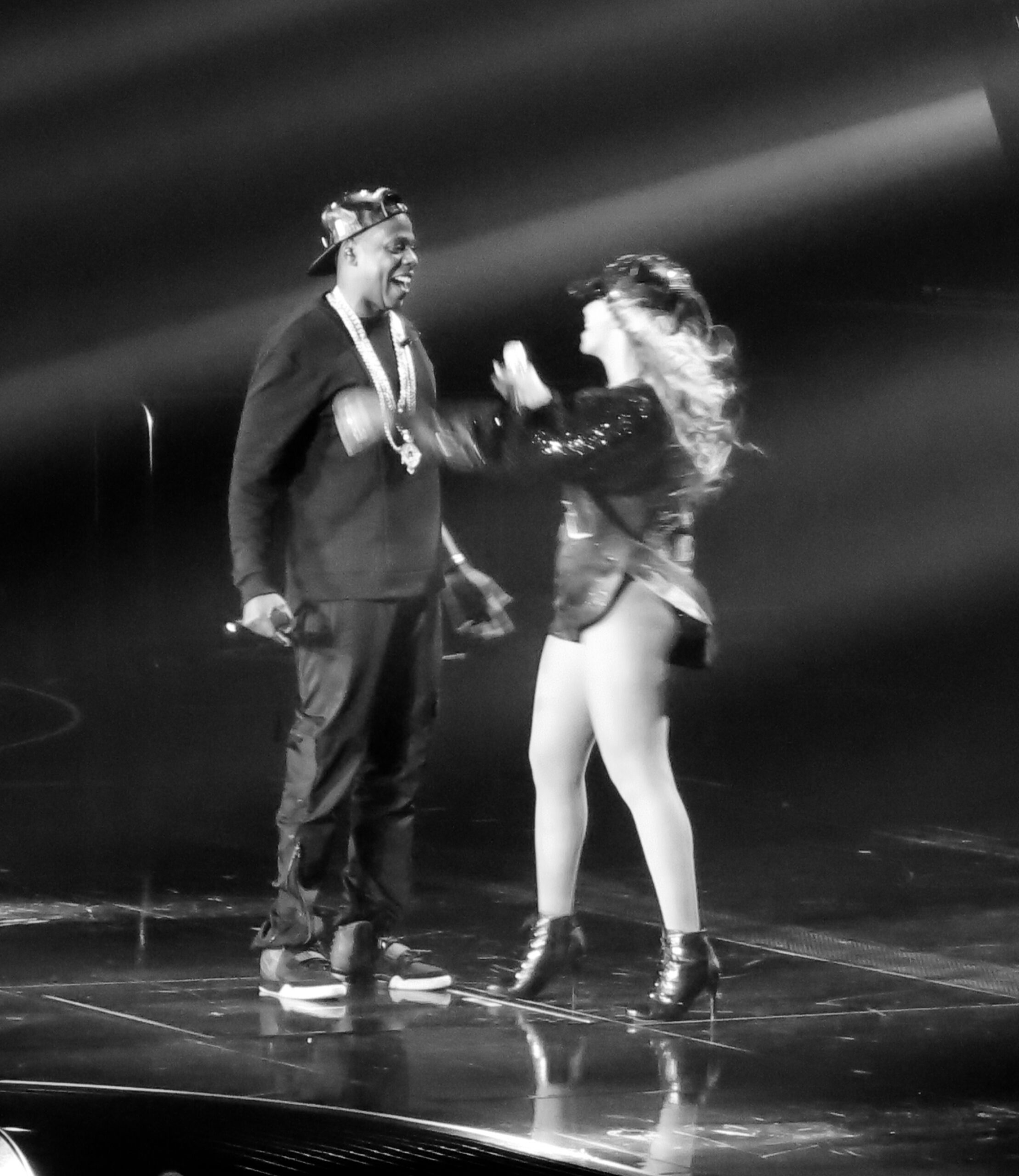
Image: Jay-Z Beyonce.jpg | Flickr: Jay Z Beyonce | License: CC BY 2.0 | Source: Wikimedia | https://commons.wikimedia.org/wiki/File:Jay-Z_Beyonce.jpg