Inside Depeche Mode’s Producer DNA: The Machines, Methods, and Mix Decisions That Defined the Sound
Depeche Mode’s catalog is as much a study in production as it is in songwriting. From Daniel Miller’s early label guidance to Flood, Alan Wilder, and Ben Hillier’s later-era precision, the band’s sound is built on deliberate programming, disciplined arrangement, and a deep understanding of how electronic textures survive a mix.
The real story behind Depeche Mode’s sound
Depeche Mode are often discussed as if their sonic identity came from a single magic ingredient: a bank of analog synths, a dark aesthetic, and a few iconic records. But for producers, engineers, and serious listeners, the more useful truth is this: Depeche Mode’s sound was built by a rotating cast of producer-minded collaborators who understood arrangement, texture, and the physical behavior of electronic instruments in a mix.
What makes the band technically distinctive is not just that they used synthesizers. Plenty of acts did that. It’s that their records were produced with an almost architectural sense of frequency spacing, rhythmic tension, and contrast between mechanical precision and emotional weight. That approach changed over time as different producers brought different priorities to the studio. If you want to understand why Depeche Mode records feel so immediate, massive, and strangely human, the producer credits matter as much as the songs themselves.
Daniel Miller: the early blueprint for discipline
Daniel Miller, founder of Mute Records, is one of the most important forces in the band’s early development. He was not just a label figure; he helped shape the aesthetic and practical framework around the group’s first recordings. On the early albums, that meant encouraging minimalism, directness, and a preference for sound design that could survive repetition.
Listen to early Depeche Mode and you hear a lot of restraint: short sequenced motifs, narrow but punchy drum programming, and synthetic timbres that avoid clutter. The production isn’t trying to sound expensive in the modern sense. It’s trying to sound committed. Every part has to earn its place because the arrangements are intentionally sparse.
Producer takeaway: early Depeche Mode is a masterclass in committing to fewer elements. If you’re building tracks with synths, the lesson is not “add more layers”; it’s “make the existing layers more characterful.” Use subtle pitch instability, filter movement, and carefully chosen transients to keep minimal parts alive.
Flood: the era of scale, pressure, and precision
If one producer is most associated with Depeche Mode’s classic widescreen sound, it’s Flood. His work with the band on albums like Violator and Songs of Faith and Devotion pushed them from great electronic pop act into something harder to categorize: a band making records that felt enormous, physical, and emotionally volatile.
Flood’s production style is often described as atmospheric, but that undersells the amount of control involved. The Depeche Mode records of this era are not washed-out mood pieces. They are tightly managed collisions of drum programming, live percussion, synthetic bass, distorted guitars, and vocal treatments. The mix decisions are surgical. The low end is deep but not bloated. The midrange is crowded in a way that feels intentional. And the vocal is usually placed where it can cut through the density without losing drama.
One of Flood’s key contributions was making the band sound more physical without sacrificing their electronic core. He let programmed parts breathe like performances, then used contrast to make the choruses hit harder. That tension is a hallmark of Depeche Mode’s best records: the machines never erase the emotion, and the emotion never softens the machines.
Listening cue: pay attention to how Depeche Mode’s kick and bass interact on the Flood-era albums. The low end is often built from multiple sources: one element gives the note, another supplies punch, and another adds grit or sub. That layered approach is still one of the best ways to create a bass system that feels both precise and aggressive.
Alan Wilder: producer mindset from inside the band
Alan Wilder is a crucial figure in understanding Depeche Mode’s technical identity because he brought a producer’s ear into the band itself. As a musician, programmer, arranger, and sonic problem-solver, Wilder often shaped the material from the inside, especially during the band’s most sonically adventurous period.
Wilder’s influence can be heard in the meticulous arrangement choices that made Depeche Mode tracks feel larger than their part count would suggest. He understood how to build density without turning everything into noise. That means using sampled hits, manipulated live elements, and recurring motifs that create psychological momentum instead of just stacking chords.
From a production standpoint, Wilder represents one of the most valuable lessons in electronic music: arrangement is a form of mixing. If you decide where a sound enters, how long it stays, and what frequency role it plays, you are already making mix decisions before the faders move. Depeche Mode records from this period often feel so balanced because the arrangement itself has been engineered to leave room.
Producer takeaway: when writing in a DAW, think like Wilder. Mute your favorite part for eight bars if it improves the impact. Replace constant layering with strategically timed returns. Let a sound become special by making it disappear for long enough.
Ben Hillier and the later-era update
By the time Depeche Mode worked with Ben Hillier, the challenge was different. The band was no longer proving that electronic music could be emotionally heavy; they were refining how to sound contemporary without abandoning identity. Hillier’s productions on Playing the Angel and later projects brought a more modern, textural edge, with greater emphasis on hybrid production, processing, and controlled abrasion.
Hillier’s role was less about reinventing the formula and more about updating the workflow. Where earlier Depeche Mode records often relied on the drama of analog sequencing and studio performance, the later work leans into editing, treatment, and layered sonic texture. You hear more overt sound design: clipped transients, treated loops, and vocal processing that sits somewhere between intimacy and abstraction.
This is where Depeche Mode’s production history becomes especially relevant to modern producers. The band never stayed locked inside one gear ecosystem. They adapted. The sonic DNA remained intact, but the tools changed. That adaptability is part of why the catalog still sounds useful in a contemporary production context.
The technical signature: what actually makes a Depeche Mode track sound like Depeche Mode
Strip away the mythology and the sound boils down to a few repeatable producer-facing traits:
- Sequenced motion with human pressure: even the most rigid patterns are arranged to feel emotionally loaded.
- Layered low end: bass is rarely just one simple synth patch; it is often a composite of sub, midrange body, and attack.
- Midrange density: Depeche Mode does not fear a busy midrange. The key is controlling it so the track feels powerful instead of muddy.
- Contrast between dry and expansive sounds: close, intimate vocals against huge reverbs or delays create drama.
- Industrial texture without losing melody: distortion, sampling, and grit are used to support hooks, not obscure them.
That last point is especially important. Depeche Mode are often mistaken for a texture-first band, but their productions work because the melodic writing remains clear. The producers knew when to let the arrangement get dark and when to pull it back so the chorus could land.
Practical production lessons you can steal today
If you are producing in the box, there are several Depeche Mode-inspired methods that translate immediately:
1. Build bass in layers. Use a sine or triangle for sub, a saw or square for midrange presence, and a transient-rich layer for definition. Keep each band of the spectrum accountable.
2. Treat sequencing like percussion. A synth arpeggio should not just state harmony. It should create groove. Adjust note lengths, velocity, and filter envelope until it locks with the drums.
3. Use reverb as a narrative device. Don’t drown the whole mix. Put space around specific moments so they feel larger when they arrive.
4. Automate movement instead of stacking endlessly. Filter sweeps, delay throws, saturation changes, and stereo width shifts can create evolution without crowding the arrangement.
5. Distort with purpose. Depeche Mode’s grit is rarely random. If you add saturation, decide whether it’s for punch, harmonic thickening, or emotional aggression.
Why the producers matter more than the myth
The best way to understand Depeche Mode is not to ask what synth they used on a given album, though that can be useful. It is to ask how the producers organized energy. How did they make programmed parts feel urgent? How did they keep dense arrangements intelligible? How did they make electronic music carry genuine emotional weight without turning soft?
Those questions are what make Depeche Mode endlessly relevant to producers. Their catalog is a production study in control, restraint, and transformation. Daniel Miller helped establish the discipline. Flood expanded the scale. Alan Wilder embedded producer thinking into the band’s internal language. Ben Hillier updated the palette for a newer era.
Different names, different eras, same underlying principle: Depeche Mode’s sound is engineered, not accidental. And that is exactly why it still rewards close listening.
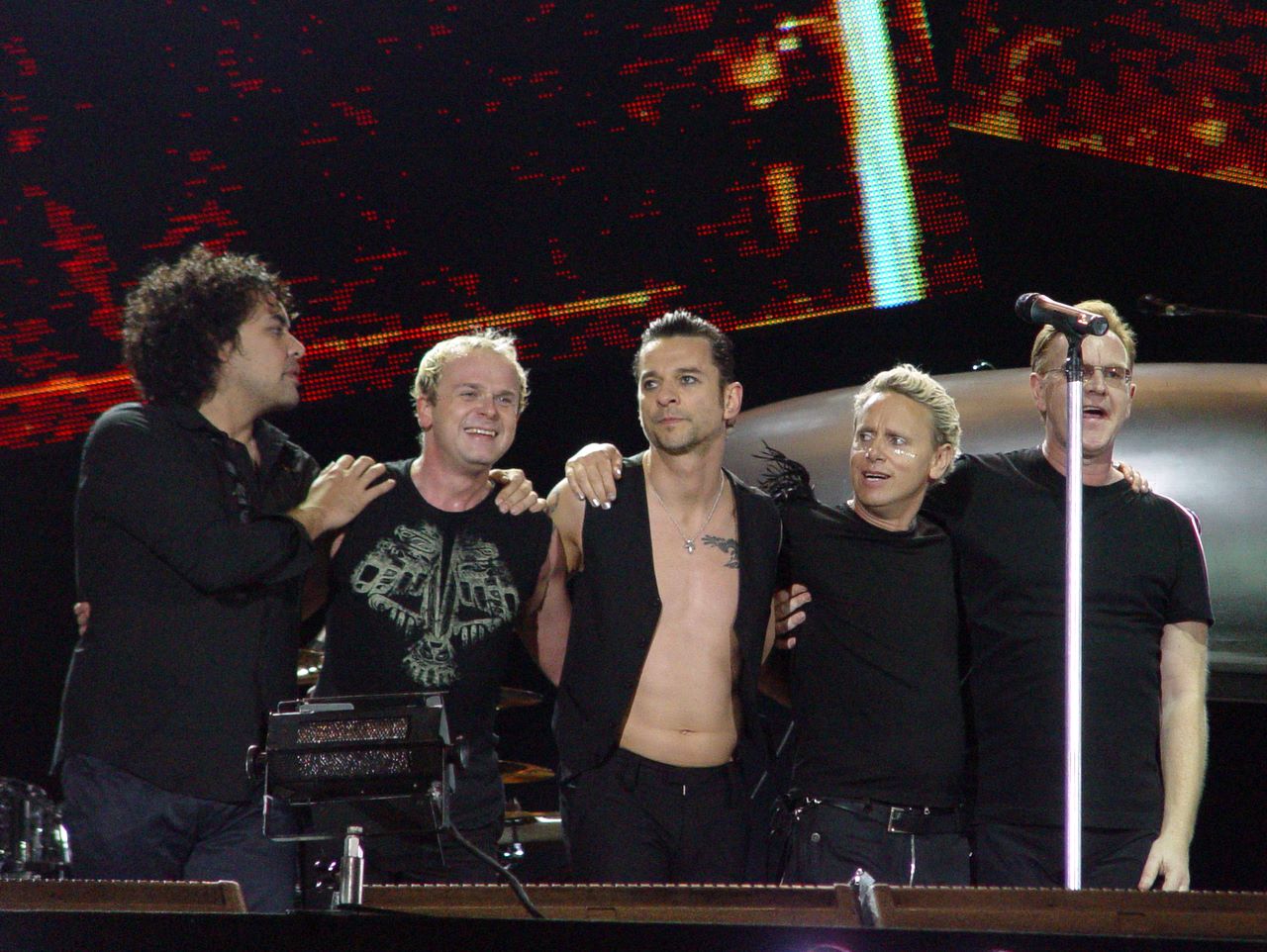
Image: Tierecke dm.jpg | Self-photographed | License: CC BY-SA 2.5 | Source: Wikimedia | https://commons.wikimedia.org/wiki/File:Tierecke_dm.jpg