How The Weeknd Creates His Signature Sound: Synths, Effects, and Modern Darkness
The Weeknd’s sonic identity is built on more than mood — it’s a tightly controlled blend of analog-inspired synths, pristine low-end, spacious effects, and vocal processing that turns nostalgia into something sleek and current. Here’s how the sound works, and how to build it yourself.
The Weeknd’s Sound Is Built on Contrast
The Weeknd’s signature sound works because it lives in tension: glossy but haunted, expensive but intimate, retro but fully contemporary. The production doesn’t just chase “80s vibes.” It uses synthwave-era colors as a framework, then sharpens them with modern pop arrangement, hard-edged drum programming, and vocals that sit unnervingly close to the listener. That balance is what makes tracks like Blinding Lights, Save Your Tears, and Take My Breath feel familiar without sounding dated.
At a technical level, the formula is surprisingly consistent. The instrumentation often centers on bright analog-style synths, wide pads, pulsing basses, gated ambience, and melodic hooks that feel almost cinematic. Then those elements are processed with clean compression, tasteful saturation, delay throws, and carefully automated reverb so the arrangement stays massive without becoming blurry. If you want to understand The Weeknd’s sonic identity, start there: the production is not overloaded, it is controlled.
The Synth Palette: Retro in Tone, Modern in Execution
Much of The Weeknd’s synth identity comes from timbres associated with 1980s pop, synthwave, and cinematic score music. You’ll hear stacked poly synth chords, simple arpeggios, filtered leads, and bass parts that lock tightly to the kick. The trick is that these sounds are rarely left raw. They’re shaped to be brighter, cleaner, and more emotionally specific than a pure nostalgia exercise.
Common synth characteristics in his catalog include:
- Polyphonic pads: warm, wide, and often chorus-drenched for emotional lift
- Arpeggiators: steady, clockwork patterns that drive momentum without crowding the vocal
- Brassy leads: bitey upper mids that cut through dense mixes
- Mono basses: focused, rounded low-end parts that reinforce the groove
- Digital bell or pluck tones: used sparingly for hook detail and sparkle
If you are recreating this sound in a DAW, the most useful approach is to start with classic subtractive synth architecture: saw and square waves, moderate detune, envelope shaping, and filter movement. You do not need the most expensive plugin on the market; you need a synth that can deliver solid oscillators, a responsive filter, and good modulation. Popular choices include Arturia Prophet-style instruments, Roland-inspired emulations, Xfer Serum for more precise sound design, u-he Diva for analog weight, and Native Instruments Massive for modern edge. The exact tool matters less than the tone and the arrangement discipline around it.
Why the Bass Feels So Tight
The Weeknd’s bass is often deceptively simple. Instead of huge, over-processed sub layers, the mixes rely on bass lines that are rhythmically exact and harmonically stable. In many productions, the bass is designed to support the synth harmony while leaving room for the vocal to remain the emotional focal point.
There are a few reasons this works so well. First, the bass is often compressed enough to maintain consistent sustain. Second, the low end is typically mixed with a kick drum that has a firm transient and a controlled tail, preventing frequency masking. Third, the bass tone itself is usually slightly saturated, which helps it read on smaller speakers without needing excessive volume. This is one of the core lessons of the Weeknd sound: presence matters more than raw size.
For producers, a practical starting point is a mono bass patch with minimal glide, a low-pass filter set to keep the top end restrained, and a touch of harmonic distortion. If the track needs more movement, automate filter cutoff subtly rather than stacking more layers. The Weeknd aesthetic depends on clarity, not constant sound design fireworks.
Drums: Punchy, Controlled, and Built for Space
Even when the groove feels lush, the drum programming is rarely chaotic. The Weeknd’s records often use drums that are punchy and precise, with strong kick/snare fundamentals and enough transient definition to support a large vocal and synth arrangement. There is usually a deliberate sense of negative space, which helps the production feel expensive rather than crowded.
Common drum traits include:
- Kicks with firm attack: enough click to cut through synth layers
- Snare/clap stacks: layered for width and impact without sounding overbuilt
- Tight hats and percussion: used to create motion and tension
- Minimal but effective fills: transitions that keep momentum without distracting from the hook
On songs with a stronger synthwave influence, the drums often lean into gated or reverberant character, but they’re still mixed with modern discipline. That means controlling decay times, sidechaining where needed, and making sure the transient is still the loudest part of the hit. A long reverb tail might create mood, but if it smears the groove, it breaks the illusion.
The Effects Chain: Where the Atmosphere Lives
The Weeknd’s aesthetic depends heavily on effects, but not in a vague “lots of reverb” sense. The effects are carefully chosen to create depth, tension, and a slightly cinematic distance. Reverb is used to make elements feel larger than life; delay is used to create emotional tail-off and rhythmic echo; chorus and ensemble effects add width and period-correct shimmer; saturation glues everything together and introduces a subtle vintage haze.
Some of the most important processing moves in this style include:
- Plate or hall reverb on vocals and synths: for scale and emotional space
- Slapback and tempo-synced delays: for depth without washing out the mix
- Chorus on pads and keys: to widen the stereo field and evoke 80s hardware
- Subtle tape saturation: to soften transients and add harmonic density
- Automation on sends: to make specific words or phrases bloom at key moments
That last point is essential. A lot of the drama in The Weeknd’s records comes from automation rather than static processing. A delay throw on the end of a vocal line, a reverb swell before a chorus, or a filter opening on a synth pre-hook can do more for emotional impact than adding another instrument. This is one of the most practical takeaways for producers: use effects as arrangement tools, not just polish.
The Vocal Sound: Intimate, Layered, and Treated Like a Lead Instrument
Abel Tesfaye’s vocals are the centerpiece of the entire aesthetic, and the production around them is built to preserve intimacy while adding sheen. His voice is often mixed forward, with enough presence in the upper mids to feel immediate, but not so dry that it loses atmosphere. The vocal chain typically balances clarity, width, and emotional dimension.
A modern Weeknd-style vocal treatment often includes:
- Careful pitch correction: not necessarily robotic, but controlled and precise
- Serial compression: to keep dynamics even while retaining energy
- De-essing: essential because bright top-end and sibilance can stack fast
- Delays and reverbs on sends: rather than inserting heavy ambience directly on the track
- Double tracking and harmonies: used to widen hooks and heighten emotional impact
What makes the vocal sound distinctive is the contrast between intimacy and distance. The main vocal often feels close enough to hear breath and texture, but the ambience around it suggests a much larger space. That tension is part of the emotional signature. In practice, that means keeping the dry vocal articulate while carefully placing the wet signal behind it in the stereo image.
Production Plugins and Tools That Fit the Aesthetic
If you’re building this sound in the box, the right plugin categories matter more than specific brand names. For synths, look for Prophet, Juno, CS-80, and analog-inspired subtractive emulations. For effects, prioritize characterful reverbs, delay units with modulation, chorus plugins, and saturation tools that don’t destroy transients.
Some useful plugin types for this style include:
- Analog synth emulations: Arturia V Collection, u-he Diva, Softube Model 84
- Modern wavetable synths: Serum, Vital, Phase Plant for precise control
- Reverbs: Valhalla VintageVerb, FabFilter Pro-R, Lexicon-style emulations
- Delays: EchoBoy, H-Delay, Valhalla Delay
- Saturation: Decapitator, Satin, RC-20 for texture and glue
- Chorus and modulation: Juno-style chorus emulations or multi-voice ensemble effects
The point is not to load every retro plugin you own. It’s to choose tools that support the emotional architecture of the arrangement. The Weeknd sound is polished, but it is not sterile; it has texture, movement, and just enough imperfection to feel human.
How to Build a Weeknd-Inspired Track
If you want to work in this lane, think in layers. Start with a strong chord progression that can carry a mood on its own. Add a bass line that locks to the kick and stays disciplined. Build a lead or arpeggiated hook that repeats with slight variation, then place the vocal in front of everything else. Once the core arrangement is stable, use effects to create movement rather than adding more parts.
A good production checklist looks like this:
- Write a hooky chord progression with strong minor-key tension
- Choose one main synth color and one supporting texture
- Program a kick, snare, and hat pattern with room to breathe
- Design a bass sound that is mono, focused, and harmonically clear
- Use reverb and delay sends for depth, not constant wash
- Automate filter, ambience, and vocal effects to mark transitions
- Keep the mix bright enough for pop clarity, but dark enough for atmosphere
That final balance is the real secret. The Weeknd’s signature sound is not just “synthwave.” It is a carefully engineered emotional system where every element supports tension, seduction, and release. The synths bring memory, the effects bring scale, and the vocal turns all of it into something personal. If you can control those three pieces, you’re already most of the way there.
The Takeaway
The Weeknd’s sound is a masterclass in restraint. The records feel huge because the production knows exactly where to stop. Synths are chosen for color, not complexity. Effects are used for depth, not clutter. Vocals are processed for presence, not anonymity. That discipline is what separates a trend-chasing retro beat from a fully formed sonic identity.
For producers, the lesson is clear: don’t just copy the palette. Copy the priorities. Build around a memorable vocal, a controlled low end, and synth textures that evoke the past without being trapped in it. That’s how The Weeknd turns nostalgia into a modern mainstream language.
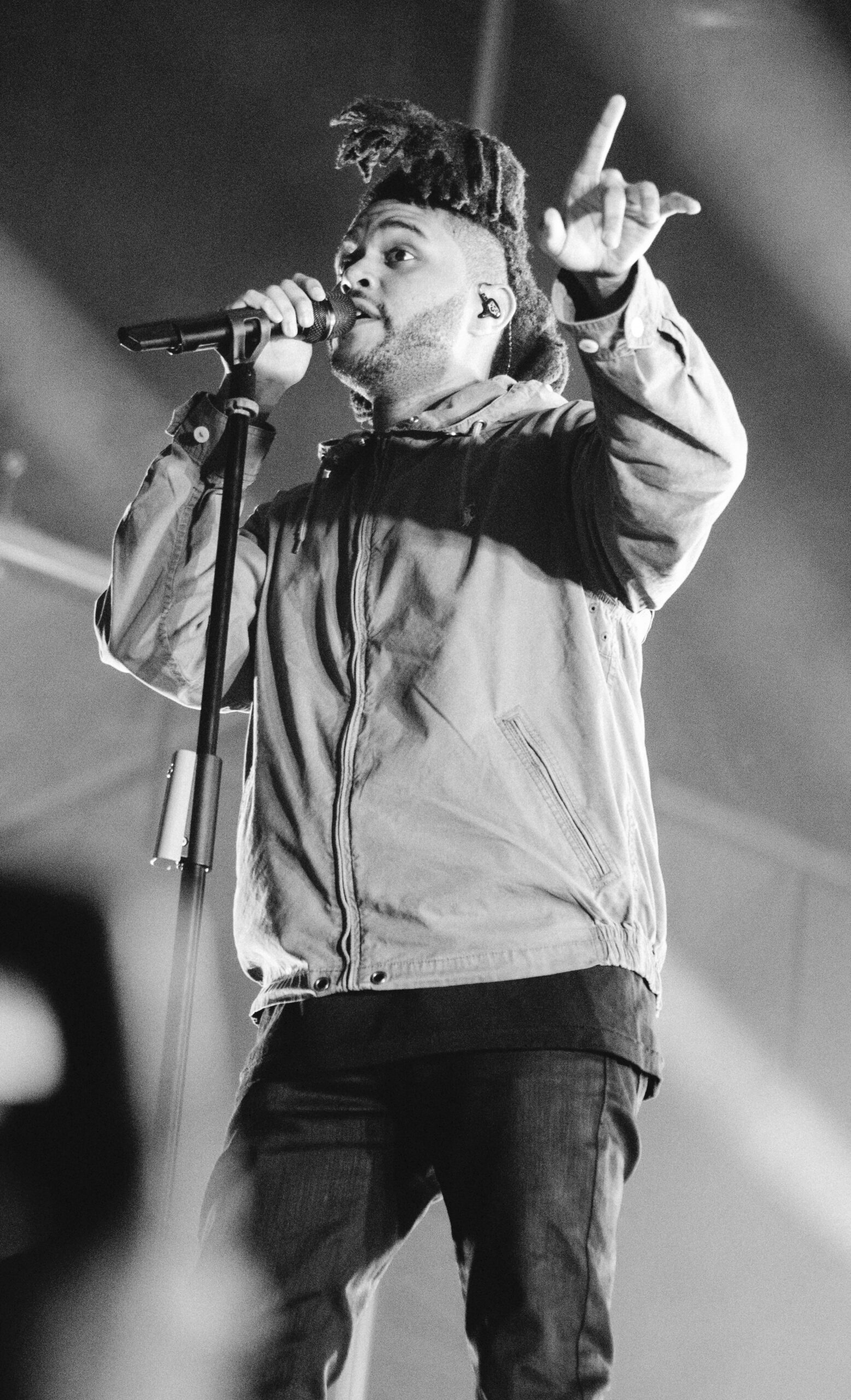
Image: The Weeknd Bumbershoot 2015.jpg | https://www.flickr.com/photos/kaylajohnsonphotography/21543332162/ | License: CC BY 2.0 | Source: Wikimedia | https://commons.wikimedia.org/wiki/File:The_Weeknd_Bumbershoot_2015.jpg