Best Distortion Pedals for Rock and Metal: The Boxes That Actually Shape a Mix
Distortion pedals are more than gain boosters — they define attack, midrange, noise floor, and how a guitar sits against drums and bass. Here’s how the best rock and metal pedals really sound, what they do in a recording chain, and which ones producers reach for when they need a tone to cut.
Why distortion pedals still matter in rock and metal
Distortion pedals are often treated like simple gain boxes, but in rock and metal they do a much bigger job than just making a guitar louder and uglier. A good distortion pedal changes the way a riff attacks, where it sits in the midrange, how much note definition survives under high gain, and whether the part reads as punchy or smeared once it hits a dense mix. That is why producers still care about them. A pedal is not just a flavor choice — it is a recording decision.
In practical terms, distortion pedals are useful when you want a guitar sound that already contains the character you need before it reaches the amp or interface. They can tighten palm mutes, emphasize harmonics, add rasp to power chords, or create a more aggressive front end for an already overdriven amp. In metal especially, the best pedals often work less like a standalone tone machine and more like a precision tool for shaping attack and contour.
There is also a reason classic pedals keep showing up on records long after new boutique boxes arrive every season. The best designs are predictable in the right way. They are easy to dial, easy to recall, and easy to place in a track. That matters in sessions where the goal is not endless tweaking but a sound that survives multiple guitars, bass, cymbals, and vocal layers.
What a distortion pedal actually changes in the signal
Before comparing specific pedals, it helps to understand what distortion is doing under the hood. Distortion pedals clip the guitar signal more aggressively than overdrive pedals, flattening waveform peaks and creating added harmonics. That clipping can be soft, hard, symmetrical, asymmetrical, silicon-based, op-amp based, or built around a variety of modern circuit designs. The result is not just saturation; it is texture.
The most important tonal variables are gain structure, EQ voicing, compression, and noise. High gain tends to increase sustain but reduce dynamic range. EQ voicing determines whether the pedal sounds scooped, mid-forward, bright, or dark. Compression affects pick response — too much and the riff loses articulation; too little and the sound can feel stiff or thin. Noise becomes a real issue once you start stacking gain stages, especially with humbuckers and high-output pickups.
For producers, this is where the pedal becomes part of arrangement thinking. A mid-heavy distortion can help a single guitar feel huge without relying on excessive volume. A tighter, brighter pedal can keep fast alternate-picked parts intelligible. A darker pedal may sound huge in isolation but disappear in a full band context unless paired with complementary EQ.
The pedals that keep showing up for rock and metal
There is no single best distortion pedal for every player, but a few models have earned their reputation because they solve real tonal problems. These are the boxes most worth knowing if you are building a pedalboard, tracking guitars, or just trying to understand why certain tones work on records.
ProCo RAT: the benchmark for raw, mix-friendly aggression
The ProCo RAT is one of the most important distortion pedals ever made because it can move between gritty overdrive, chewy distortion, and near-fuzz chaos without losing identity. Its signature sound is mid-forward, slightly nasal in a useful way, and very good at making a guitar speak in a mix. The Filter control is especially important: unlike a standard treble knob, it shapes the top end in a way that can go from sharp and biting to dark and thick quickly.
For rock, the RAT excels at crunchy rhythm parts and single-note lines that need attitude. For metal, it is often used as a boost or tone-shaping preamp into a high-gain amp rather than as the only gain source. That said, plenty of heavier records have used RAT-style textures for ugly, gnarly, low-tuned parts where pristine articulation is not the goal. It is not the most polished pedal on the list, but that is part of its power.
Boss DS-1: the classic that sounds better when you treat it right
The Boss DS-1 is one of the most recognizable distortion pedals in rock history, and it remains relevant because it delivers a hard-edged, immediate attack with a strong upper-mid bite. On its own, the DS-1 can sound thin or fizzy if the tone control is pushed too far, but in the right setup it brings a useful cut that helps guitars slice through dense arrangements.
Producers often appreciate the DS-1 because it records with a very distinct signature. That can be a strength when you want a guitar part to feel intentionally abrasive and unsentimental. It is especially effective for punk-leaning rock, classic hard rock, and metal rhythm tracks when paired with an amp that already has body. Used in front of a pushed tube amp, it can add focused aggression without turning the entire tone into a blanket of fuzz.
MXR Fullbore Metal: built for modern high-gain precision
If the goal is tighter modern metal, the MXR Fullbore Metal is one of the most obviously engineered tools in this category. It has a pronounced low-end gate feel, aggressive gain, and enough EQ flexibility to carve the sound toward modern tightness rather than vintage texture. The pedal’s built-in 3-band EQ and scoop control make it particularly useful for players who need to adapt quickly to different amps or recording chains.
What makes it useful in production is that it can front-load a very specific low-end and pick attack profile. That means less cleanup later with EQ and less fighting against flubby palm mutes. It is not the most organic-sounding option, but for djent-adjacent riffs, down-tuned metal, and highly percussive rhythm work, it does a job that many classic pedals simply cannot.
Bogner Uberschall-style and boutique high-gain pedals: amp-like saturation with tighter control
High-gain boutique pedals that emulate amp-style distortion often appeal to players who want a more controlled, modern sound than a vintage box can provide. These pedals usually offer fuller low end, more extended gain range, and a more amp-like response under the fingers. They are useful when recording direct or when you want a second distortion source that behaves like a channel switch on a head rather than a colored stompbox.
In a mix, these pedals can sound larger and more finished than classic distortion units, but they are not always as distinctive. That makes them excellent for professionals who need repeatable results. If the song needs a wide stereo wall of guitars, the boutique high-gain approach often makes editing and re-amping easier because the tone arrives with less corrective work required.
Fuzz-distortion hybrids: for heavier rock that wants personality
Some rock and metal productions benefit from a distortion pedal that leans slightly into fuzz territory. These pedals tend to have more harmonic chaos, more sustain, and a looser envelope. They are not usually the choice for ultra-tight palm-muted metal, but they can be excellent for doom, stoner rock, sludge, and heavier alternative styles where texture matters as much as precision.
The production advantage is obvious: fuzzier distortion often fills more space, which can make a trio sound enormous. The downside is that it can conflict with bass and kick drum unless the arrangement is designed around that thickness. In other words, these pedals can sound huge, but they need discipline.
How producers use distortion pedals differently from guitar players
Guitarists often judge a distortion pedal by how inspiring it feels under the fingers. Producers judge it by how quickly it solves a recording problem. That difference matters.
In a studio context, a distortion pedal may be used for one of four reasons: to tighten a riff before the amp, to add upper-mid aggression for translation, to create a texture that sits behind cleaner guitars, or to generate a specific lo-fi or crushed character that would be difficult to fake with plug-ins alone. A pedal that sounds merely “good” in a bedroom can become essential once it is placed against kick, snare, cymbals, and bass.
One common workflow is using a distortion pedal as a front-end tone shaper before a high-gain amp sim or real amp. This is especially effective when the pedal’s EQ is used strategically. For example, a pedal with a strong mid push can help a rhythm part survive heavy compression. A pedal with a sharper top end can be paired with a darker amp setting for balance. In some cases, running a distortion pedal into a clean amp and capturing the signal with a close mic plus room mic can create a surprisingly mix-ready sound with minimal post-processing.
What to listen for when choosing a pedal

This image was released by the United States Army with the ID 190711-A-RU667-0077 (next).
This tag does not indicate the copyright status of the attached work. A normal copyright tag is still required. See Commons:Licensing.
العربية ∙ বাংলা ∙
Bahaso Jambi ∙
Deutsch ∙ Deutsch (Sie-Form) ∙ English ∙ español ∙ euskara ∙ فارسی ∙ français ∙ italiano ∙ 日本語 ∙ 한국어 ∙ македонски ∙ മലയാളം ∙ Plattdüütsch ∙ Nederlands ∙ polski ∙ پښتو ∙ português ∙ русский ∙ slovenščina ∙ svenska ∙ Türkçe ∙ українська ∙ 简体中文 ∙ 繁體中文 ∙ +/− | License: Public domain | Source: Wikimedia | https://commons.wikimedia.org/wiki/File:New_faculty_members_listen_to_the_speaker_to_understand_what_their_job_entails_(5633205).jpg
If you are shopping for a distortion pedal for rock or metal, do not focus only on how much gain it has. Listen for these traits instead:
- Pick attack: Does the pedal keep the transient crisp or soften it too much?
- Midrange behavior: Can the guitar still speak in a full mix?
- Low-end control: Are palm mutes tight or floppy?
- Noise floor: How much hiss appears when gain is maxed?
- EQ usefulness: Can you shape the pedal for different amps and tunings?
- Stacking behavior: Does it work well with boosts, compressors, or another gain stage?
The best pedal for a player is often the one that gives the most useful problems, not the most dramatic saturation. If a pedal sounds huge soloed but loses definition in a mix, it is probably less effective than a more restrained box with better mids and tighter transient response.
Final take: the right distortion pedal is a production tool
The best distortion pedals for rock and metal are the ones that make recording easier, not just louder. The RAT remains a masterclass in raw, mixable character. The DS-1 is still a trusted source of cutting aggression. The MXR Fullbore Metal handles modern precision with ruthless efficiency. Boutique high-gain pedals offer refined control, while fuzz-leaning hybrids bring personality and scale.
For musicians and producers, the real question is not which pedal is the most famous — it is which one gives the track the right kind of bite, compression, and harmonic weight. That is why distortion pedals still matter. They are not just effects. They are the first stage of arrangement.
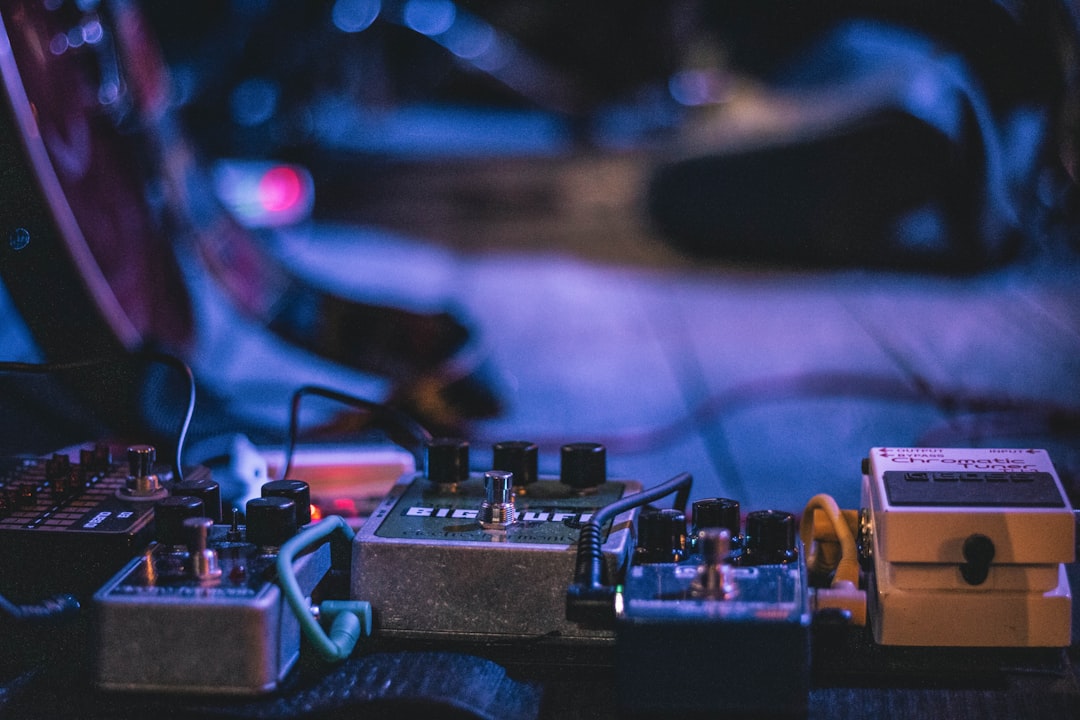
Image: multi-colored guitar distortion and guitar pedals | Ryan Warburton | License: Unsplash License | Source: Unsplash | https://unsplash.com/photos/multi-colored-guitar-distortion-and-guitar-pedals-dwKfVvNP_Oo