How Hans Zimmer Builds Cinematic Soundscapes: Synth Layering, Texture, and Tension
Hans Zimmer’s scores don’t just accompany a scene—they reshape it. Here’s how he stacks synths, orchestral elements, drones, and processed sound design into cinematic worlds that feel bigger than the screen.
Hans Zimmer has spent decades proving that film music does not have to behave politely. His scores are often described as massive, but that word only gets you halfway there. What makes a Zimmer cue feel so overwhelming is not volume alone—it is architecture. He builds soundscapes by stacking simple ideas into dense, emotionally charged systems: synths, live players, percussion, distorted textures, low-frequency pressure, and processing that turns familiar instruments into something borderless.
For producers, the real lesson is not “use more layers.” It is how Zimmer uses layering to create narrative. Every part of the arrangement earns its place by adding either weight, motion, texture, or harmonic tension. That’s why a Zimmer score can feel both colossal and precise at the same time.
The Zimmer Philosophy: Sound as Environment
Zimmer’s best-known scores rarely sound like isolated cues sitting on top of a film. They sound like environments the audience enters. That distinction matters. In traditional orchestration, you might think in terms of melody, harmony, accompaniment, and orchestral color. Zimmer often thinks in terms of terrain: what is the floor made of, what is the air pressure, what is the weather doing, and where is the emotional horizon?
This is why his music often begins with texture before theme. A low synth drone, a clock-like pulse, a rumbling bass bed, or a processed guitar note may establish the world long before the melody arrives. In Interstellar, for example, the organ and synth elements don’t merely state a theme; they suggest scale, faith, and existential distance. In Dune, the sound design feels sandy, dry, and ancient, with synthetic and acoustic elements fused into something that seems to belong to a different planet entirely.
Zimmer’s orchestral writing is frequently hybridized, but the point is not novelty for its own sake. It is to make the score feel physically present. You can almost feel the air move when the cue hits.
Synth Layering: The Core of the Zimmer Stack
At the center of Zimmer’s sound is layering discipline. He often starts with a foundational low-end element, then adds complementary layers that each occupy a different job in the mix. A single pad might handle the harmonic bed, while another synth adds overtone movement, a third provides attack, and a processed acoustic layer reinforces density.
This is not about duplicating the same sound ten times. It is about splitting responsibilities. One layer may be pure sub energy. Another may have midrange growl. Another may be filtered noise or a bowed string sample stretched into a tone bed. Each element is intentionally limited, which keeps the stack from turning to mud.
A practical Zimmer-style stack might look like this:
- Sub layer: sine wave or very clean analog low end for foundation.
- Body layer: detuned saw or hybrid pad carrying the harmonic core.
- Motion layer: filtered synth with slow LFO movement or evolving wavetable position.
- Edge layer: distorted texture, noise, or granular sample for aggression and realism.
- Acoustic layer: cello, brass swell, piano harmonic, or percussion transient for human scale.
That combination is what makes Zimmer’s cues feel enormous without relying entirely on chord progression. The listener hears width, depth, and force as separate dimensions.
Why His Mixes Feel So Huge: Frequency Slotting and Dynamics
Zimmer-style density works because the arrangement is aggressively managed. There is a misconception that cinematic music is just “big sounds everywhere,” but the truth is closer to strategic crowd control. If every part occupies the same frequency range, the result is not power—it is congestion.
Zimmer’s world-class sounding cues typically use a few important mix principles:
- Frequency slotting: bass, low mids, presence, and air are assigned deliberately so each layer can be heard.
- Transient hierarchy: one element leads the attack, another supports, and others stay soft to avoid smear.
- Dynamic shaping: automation and sidechain-style movement create emotional lift without constantly changing the harmony.
- Reverb as depth, not wash: the space is often large, but it is controlled so the front of the cue stays intelligible.
This is one reason Zimmer’s music can feel like it is continuously rising. He often uses long crescendos, repeated figures, and incremental additions rather than constant harmonic churn. The arrangement becomes a pressure system. Even when the chord stays put, the cue feels like it is moving because the orchestration and mix are evolving underneath.
The Hybrid Orchestra: Acoustic Meets Synthetic
Zimmer is one of the most important architects of the modern hybrid score. He helped normalize the idea that a film score could sound like an orchestra that had been routed through a modular lab, a distorted guitar rig, and a thunderstorm. The magic is in the blend.
In many Zimmer cues, acoustic instruments do not sit on top of synths as decoration. Instead, they are processed and integrated until the boundary disappears. Strings may be doubled with synth pads. Horns may be reinforced by low brass samples or distorted tonal layers. Piano may be used as a percussive engine. Even choirs can be treated less as sacred melody carriers and more as texture generators.
The result is emotionally complex. Acoustic sounds provide familiarity, but synthetic processing expands them into something mythic. This is why a simple cello motif in a Zimmer cue can feel like a statement of destiny rather than a lyric phrase.
For producers, this hybrid approach is a reminder that “real” and “virtual” are not competing categories. They are tools for scale. Try doubling a live string line with a soft analog pad, then lightly saturate both buses together. The goal is not to make the instruments identical. The goal is to create one emotional object.
Rhythm as Momentum: Pulses, Ostinatos, and Engine Rooms
Zimmer often uses rhythm as propulsion rather than groove in the traditional sense. His pulses and ostinatos are less about danceability and more about inevitability. Repeated patterns create forward motion, while layered percussion adds mass and urgency.
He frequently builds rhythmic sections from multiple timed elements: low toms, processed taikos, programmed hits, metallic details, and synth arpeggios. Each layer occupies a different rhythmic role. Some parts provide the downbeat, others fill subdivisions, and others create occasional punctuation. The cumulative effect is an engine room of motion.
What makes this effective is restraint. The pattern may be simple, but the sound design is not. A recurring note figure can feel intense when the timbre evolves over time. Automation on filters, distortion, delay feedback, or ensemble layering keeps the rhythm alive.
Producers trying to emulate this should resist the urge to overcomplicate the MIDI. Start with a simple pulse. Then ask: what can change about the tone, space, or layering every four or eight bars? That is often more cinematic than writing a busier part.
Sound Design as Storytelling
Zimmer’s biggest strength may be that he treats sound design as narrative language. A reversed swell, an industrial scrape, a distorted brass hit, or a ghostly vocal chop is never just ear candy. It usually signals transition, threat, scale, or emotional rupture.
In practical terms, that means the palette is chosen to reinforce the film’s world. The Dark Knight uses aggressive electronic textures and string effects that feel unstable and urban. Inception leans into brass stabs, deep pulses, and stretched temporal effects that mirror the film’s relationship with time. Dune pushes into alien resonance, where the timbre itself becomes world-building.
This is a useful production lesson: sound selection is arrangement. If you swap a clean pad for a granular one, you are not just changing texture—you are changing meaning. Zimmer understands that timbre can imply scale, danger, age, or spirituality before a melody ever resolves.
Practical Takeaways for Producers
If you want to borrow from Zimmer without turning your track into a generic trailer cue, focus on process rather than imitation.
- Build in layers with clear jobs. Assign each sound a purpose: sub, body, motion, edge, or transient.
- Use repetition intelligently. Let small changes in orchestration and automation carry the drama.
- Blend synthetic and acoustic sources. Doubling live instruments with pads or textures can create instant cinematic size.
- Automate atmosphere. Filter cutoff, reverb send, distortion, and stereo width are emotional tools, not just mix adjustments.
- Leave space for the big moment. Zimmer’s impact often comes from contrast. If everything is maximal all the time, nothing feels inevitable.
If you are working in a DAW, a good Zimmer-inspired exercise is to start with a single chord and build five distinct versions of it across the spectrum. Keep one layer clean and low, one slightly detuned, one noisy, one percussive, and one highly processed. Then automate them in and out over a 16-bar phrase until the cue feels like it is breathing. That exercise gets to the heart of his method: emotional scale through disciplined layering.
Why Zimmer’s Sound Still Dominates Modern Scoring
Zimmer’s influence persists because he helped redefine what cinematic music can be in the digital era. He showed that synths are not a compromise to orchestral writing; they are a parallel path to emotional scale. He also proved that film music can be both hook-driven and textural, both experimental and accessible.
For today’s producers, his work is a masterclass in controlled excess. The surface may sound overwhelming, but the system underneath is carefully designed. That is the real takeaway: cinematic soundscapes are not made by piling up random grandeur. They are built by arranging weight, space, and motion with intent.
Zimmer’s music makes you feel like the room has expanded. That is not an accident. It is production as architecture.
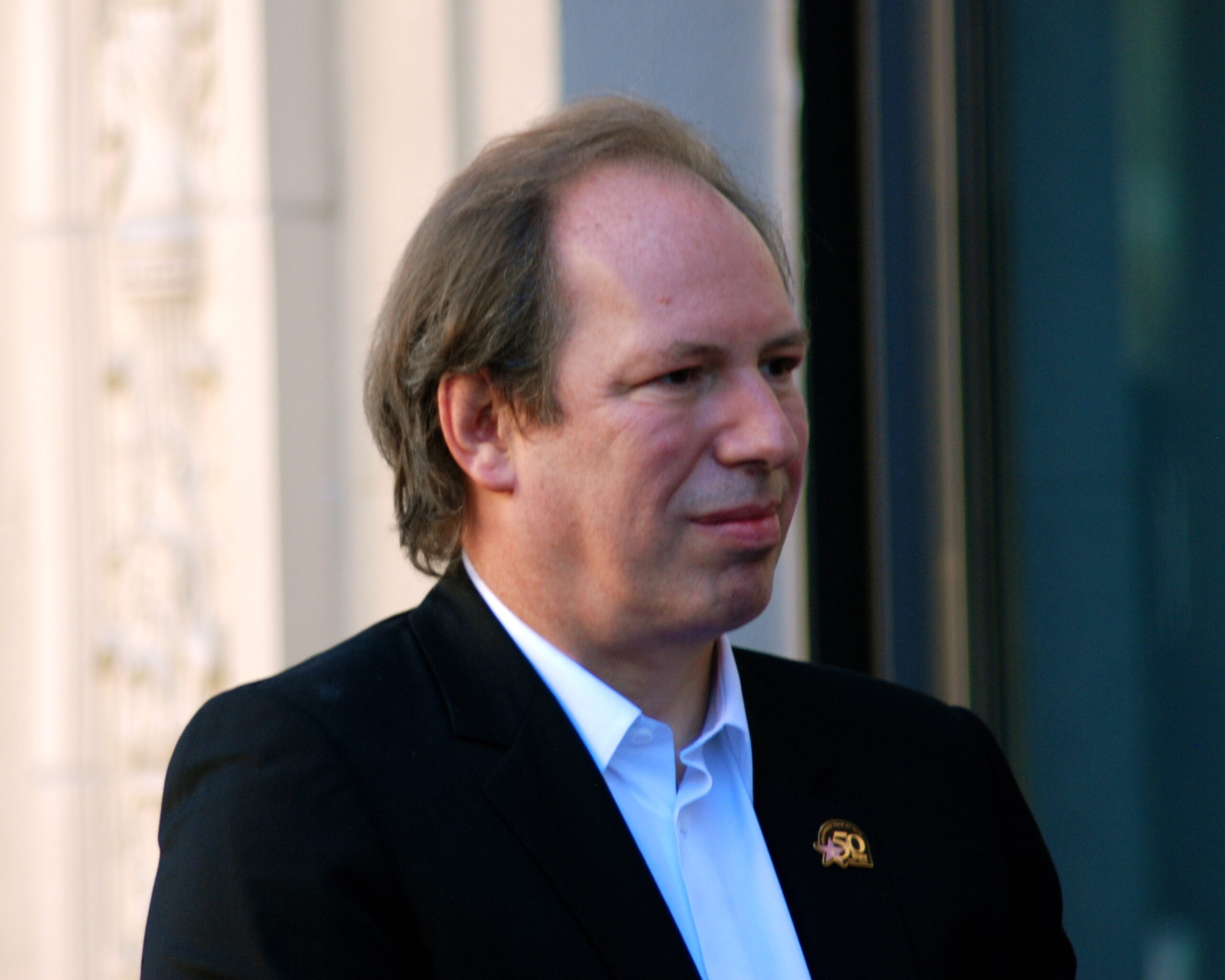
Image: File:Hans Zimmer 2010 (1).jpg | Hans | License: CC BY 2.0 | Source: Wikimedia | https://commons.wikimedia.org/wiki/File:Hans_Zimmer_2010_(1).jpg