The 10 Basslines That Redefined Rock’s Low End
From arena-sized hooks to note-perfect pocket playing, these are the basslines that changed how rock records move. Here’s what makes each one essential—and what producers can steal from them today.
Why basslines matter more than most rock listeners realize
In rock, the bass is often treated like infrastructure: essential when it’s missing, unnoticed when it’s doing its job. But the best basslines in rock history do far more than support harmony. They define the groove, sharpen the song’s identity, and in some cases carry the entire record’s personality on their low end alone.
This list isn’t just a greatest-hits parade. It’s an editorial guide to bass writing that changed how rock feels. Some of these lines are melodic. Some are brutally simple. Some are lessons in space, distortion, or rhythmic discipline. All of them are useful templates for players, producers, and engineers trying to understand why certain low-end parts become immortal while others disappear into the mix.
1. The Beatles — “Come Together”

Paul McCartney’s bass part is one of the most recognizable in rock history because it does something deceptively hard: it sounds laid-back while being absurdly intentional. The line is built around syncopation, small melodic jumps, and a pocket that sits just behind the beat without feeling lazy. It leaves room for the vocal phrasing and guitar texture while still anchoring the entire track.
Why it works: the part uses repetition with variation. That’s a production lesson as much as a writing one. Rather than crowding the arrangement, the bass line gives the song a signature contour.
Takeaway: if your verse feels static, try writing a bass line that implies movement without stepping on the vocal. A few well-placed passing tones can do more than constant note density.
2. Queen — “Another One Bites the Dust”

John Deacon’s line is a masterclass in economy. It’s funk-inspired, instantly memorable, and so disciplined that the groove becomes the hook. The notes are simple; the execution is everything. That clipped attack, repetitive pulse, and near-metronomic steadiness turned a rock song into a crossover monster.
Why it works: the bass is the arrangement. Guitar and drums support it, but the track is built around that low-end loop and its relentless confidence.
Takeaway: if you want a bass part to feel bigger than it is, focus on note length and articulation. Short notes with consistent dynamics can hit harder than flashy runs.
3. Fleetwood Mac — “The Chain”

John McVie’s bass enters with authority and then locks into a line that feels like a mechanical engine under emotional chaos. By the time the song reaches its explosive finale, the bass has become a central dramatic device, not just a foundation. This is one of the greatest examples of bass as narrative tension.
Why it works: the song’s structure gives the line space to evolve from support role to climactic force. When the full band hits, the low end feels earned.
Takeaway: think in sections. A bass line that evolves across a song can create more impact than a single “great” riff repeated unchanged.
4. Led Zeppelin — “Ramble On”

John Paul Jones was a musician’s musician, and this line proves why. It’s melodic without being busy, movement-oriented without becoming cluttered, and perfectly aware of the vocal space around it. The line gives the song a forward glide that makes the arrangement feel alive from the inside out.
Why it works: the bass acts almost like a second guitar voice, but with better restraint. It outlines harmony while creating motion through rhythmic phrasing.
Takeaway: melodic bass writing works best when it respects register. Stay out of the vocal’s way and use midrange articulation to keep the part audible on smaller speakers.
5. Pink Floyd — “Money”

Roger Waters’ bassline is a technical and compositional standout because it’s built around asymmetry. The 7/4 groove is memorable not because it’s complicated, but because it feels so natural once established. The line’s phrasing gives the song its swagger and keeps the meter from sounding academic.
Why it works: the riff creates a repeatable hook out of an unusual time signature. That’s the trick: complexity translated into feel.
Takeaway: odd meters become accessible when the riff is rhythmically obvious. If the listener can clap the shape, the time signature stops feeling like a gimmick.
6. Cream — “Sunshine of Your Love”

Jack Bruce’s line is one of rock’s foundational riffs, a slow-burn figure that turns repetition into menace. The riff is heavy, blues-based, and harmonically plain in the best possible way. Its power comes from how little it changes and how much attitude it carries.
Why it works: the bass and guitar lock into a hypnotic figure that creates enormous weight without speed. The space between notes matters as much as the notes themselves.
Takeaway: distortion, sustain, and phrasing can make a simple line feel larger than life. Don’t overcomplicate a riff that already has gravity.
7. The Jimi Hendrix Experience — “Crosstown Traffic”
While often remembered for its guitar work, the low-end movement here is essential to the song’s bite. The bassline helps drive the song’s choppy, urban pulse, reinforcing the rhythmic friction that makes the track feel restless and kinetic.
Why it works: the bass doesn’t smooth the edges—it emphasizes them. That tension gives the song its street-level swagger.
Takeaway: not every bassline should be round and warm. Sometimes a more percussive, slightly aggressive tone helps the track’s attitude read clearly.
8. Rush — “YYZ”
Geddy Lee’s bass work in Rush is a reminder that virtuosity only matters when it still grooves. “YYZ” is a technically intricate instrumental, but the bass part is disciplined enough to keep the whole thing grounded. The line threads the needle between precision and propulsion.
Why it works: it’s rhythmically complex without losing its punch. The bass remains intelligible even as the arrangement stacks complexity on top of it.
Takeaway: in dense arrangements, note choice matters less than clarity. Strong articulation and clean separation will keep busy parts from turning into mud.
9. The Who — “My Generation”
John Entwistle’s playing was revolutionary because it treated bass as a lead instrument long before that was fashionable. In “My Generation,” the bass doesn’t just support the song—it injects confrontation, movement, and a kind of controlled chaos that suits the era’s youthquake energy.
Why it works: the bass part is assertive, melodic, and mixed with enough presence to feel like a statement. It refuses to stay in the background.
Takeaway: if your mix can handle it, bring the bass forward. A more present bass can transform a track from competent to unforgettable.
10. Ramones — “Blitzkrieg Bop”
Dee Dee Ramone’s bassline is punk in its purest form: direct, propulsive, and built for impact rather than ornament. It’s a perfect example of how a simple line can become legendary when it matches the song’s energy exactly. The bass doesn’t decorate the track. It is the track’s momentum.
Why it works: repetition, aggression, and a no-nonsense rhythmic profile. The line is so functional that it becomes iconic.
Takeaway: a great bassline doesn’t need complexity to matter. If the groove and attitude are right, three notes can beat thirty.
What modern players and producers can learn from these lines
Across these songs, a few patterns keep showing up. The strongest basslines usually do at least one of four things: define the hook, establish a feel, create contrast, or elevate the harmonic movement without overcrowding it. That’s why these parts still matter in modern production—whether you’re tracking with a Fender Precision, a picked Rickenbacker, a DI into an amp sim, or layering bass synth underneath a live instrument.
For producers, the real lesson is arrangement discipline. If the bassline is the hook, leave room for it. If the song needs tension, don’t over-polish the attack. If the part is melodic, make sure the vocal and guitar aren’t competing for the same range. A lot of classic rock bass greatness comes from choices that are as much about subtraction as performance.
For players, the takeaway is equally clear: the most memorable basslines are rarely the busiest. They are the ones with shape, intention, and a strong relationship to the drum groove. Great bass playing is not about filling every gap. It’s about deciding which gaps matter.
Final word
The best basslines in rock history endure because they’re more than bass parts—they’re compositional fingerprints. They help define the identity of songs we know by heart, and they still offer practical lessons in tone, timing, phrasing, and arrangement. Whether you’re writing your own parts or studying the legends, these lines are worth revisiting with fresh ears.
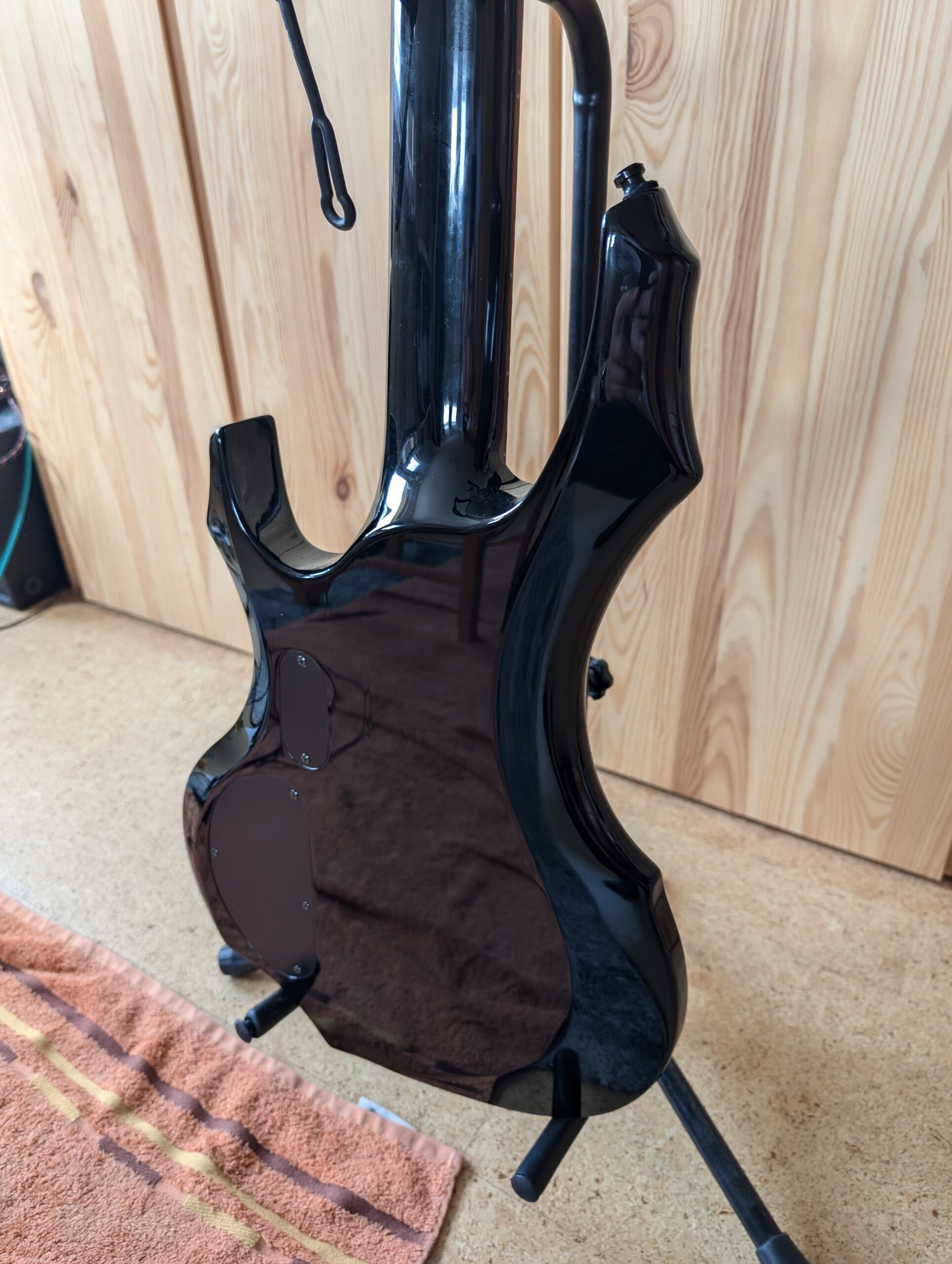
Image: 0-ESP Ltd F 255 electric bass guitar body 07.jpg | Own work | License: CC BY-SA 4.0 | Source: Wikimedia | https://commons.wikimedia.org/wiki/File:0-ESP_Ltd_F_255_electric_bass_guitar_body_07.jpg