Melodies That Actually Work: A Beginner’s Guide to Writing Hooks That Stick
Beginner melody writing gets much easier when you stop chasing complexity and start making deliberate note choices. This guide breaks down the practical tools, comparisons, and workflows that help new producers write stronger hooks fast.
Why melody feels harder than it should
For a lot of beginners, melody writing is the moment a track stops feeling technical and starts feeling personal. You can build a drum pattern, program a bassline, and even lay down a chord progression, but the melody is where listeners decide whether the idea feels memorable or forgettable. That pressure is exactly why so many new producers overcomplicate it.
The biggest mistake is assuming a good melody must be long, flashy, or packed with notes. In reality, the melodies that stick are usually built from simple, repeatable shapes that are easy to recognize after one or two listens. Think of melody writing less like improvising a lead solo and more like designing a signature. The goal is identity, not information overload.
Simple beats busy: the first big comparison to understand
If you compare beginner melodies that work with beginner melodies that don’t, the difference is usually restraint. The weaker examples often try to say too much at once: too many notes, too many jumps, too many rhythmic ideas. The stronger ones usually do one of three things well: they repeat a motif, they move in a clear contour, or they create tension and release in a predictable way.
This is why minimal melodies can feel more professional than busy ones. A short three- or four-note idea repeated with slight variation often sounds more confident than a line that wanders across the keyboard. In genres like pop, house, hip-hop, techno, and even cinematic electronic music, repetition is not a flaw. It is the mechanism that makes the hook land.
Start with the chord progression, not the keyboard
For beginners, one of the most practical ways to write a melody is to build it on top of a chord progression first. Chords give you a harmonic map, which means you immediately know which notes will feel stable and which notes will create movement. If you are writing over an C major progression, for example, notes like C, E, and G will feel grounded, while D or F can create color and pull.
This is a major contrast to starting with random notes on a piano roll. That method can work, but it often produces wandering ideas because there is no harmonic anchor. When the melody follows the chords, even loosely, it sounds intentional faster. A good beginner workflow is simple: loop a progression, find the chord tones, then add passing notes only after the core phrase already works.
Use chord tones as your home base
Chord tones are the safest and most reliable notes in a melody. If your chord is Am, the notes A, C, and E are your foundation. If your melody lands on one of these notes at the end of a phrase, it will usually sound resolved. That is why strong melodies often feel like they “arrive” on the right note.
For beginners, this makes melody writing much less mysterious. You do not need to use every note in the scale equally. Instead, build your phrase around chord tones, then use non-chord tones to add motion. Non-chord tones are the spice, not the meal. They work best when they lead somewhere obvious.
Scale choice matters less than note behavior
Many beginners get stuck thinking the right scale will automatically create a great melody. Scales are useful, but they are not the whole story. Two melodies can use the exact same scale and feel completely different depending on rhythm, contour, repetition, and phrasing. In other words, the scale gives you permission; the note behavior gives you character.
If you are writing in a minor key, for example, you may get more emotional pull from a melody that leans into a few strong notes than from one that uses the full scale. The same applies in major keys. A melody can feel bright, dark, tense, or nostalgic without changing scales at all. What changes is how the notes move and where they resolve.
Rhythm is half the melody
Beginners often focus only on pitch, but rhythm is what makes a melody memorable. A simple pitch pattern can sound completely different depending on whether the notes are spaced evenly, syncopated, rushed, or left hanging. In many cases, the rhythm is what listeners actually remember first.
Try this comparison: one melody plays every quarter note with no variation, while another uses the same notes but delays the first note, adds a short pickup, and leaves a rest before the last note. The second version will almost always feel more human and more hook-like. That is because silence and spacing create expectation. Without rhythmic contrast, even a good note sequence can sound flat.
Build motifs, then vary them slightly
A motif is a short melodic idea that can be repeated and developed. This is one of the easiest and most powerful tools for beginners because it gives you structure. Instead of inventing a completely new phrase every bar, you create a small idea and then change one or two elements: maybe the ending note, maybe the rhythm, maybe the octave.
That “same, but different” strategy is one of the clearest distinctions between amateur and polished writing. If every bar introduces a new idea, the listener has nothing to latch onto. If the motif repeats too literally, it can feel rigid. The sweet spot is repetition with variation. That balance is what makes a melody feel composed instead of random.
Use contour to make the line easy to follow
Contour is the shape of the melody: does it rise, fall, leap, or stay mostly level? Beginners who write successful melodies often keep contour simple. A line that rises into its highest point and then falls back down is easy for the ear to process. It gives the melody a built-in story arc.
Big leaps can be effective, but they are easiest to use when they are rare and deliberate. A melody that jumps all over the place can feel unstable in a bad way. A melody that mostly moves stepwise, with one larger leap as a highlight, often sounds much more musical. If you are unsure whether your melody works, look at the shape on the piano roll. If the contour looks chaotic, the melody probably sounds chaotic too.
Sing it before you program it
One of the fastest ways to improve melody writing is to sing or hum your idea before entering it into MIDI. This forces you to test whether the line is actually memorable without visual help. If you cannot sing the phrase back after a few repetitions, it may be too complicated or too generic.
This approach is especially useful because it shifts melody writing away from keyboard mechanics and back toward human phrasing. A line that feels natural to sing often translates well to synths, leads, plucks, and vocal chops. Even if you are not a singer, humming gives you a built-in filter for shape, breath, and phrasing.
Compare these two beginner workflows
Workflow A: start with a scale, place random notes, adjust until it sounds okay.
Workflow B: build a chord loop, pick chord tones, create a short motif, repeat it with variation, then refine the rhythm.
Workflow B usually wins because it reduces guesswork. It gives you a reference point, a harmonic center, and a repeatable method. That does not mean you should never experiment freely. It means that when you are learning, structure gets you to better results faster than pure trial and error.
Production choices can make a weak melody sound strong
Good sound design cannot save a bad melody, but it can help a solid one feel finished. A pluck with a short envelope can make a melody feel tighter. A pad underneath can give it emotional context. A subtle delay can turn a plain phrase into something spacious and rhythmic. The key is not to mask the melody, but to support its role in the arrangement.
This is where beginners should think like producers, not just writers. If the lead sound is too thick, the melody can lose definition. If the tone is too dry, it may feel exposed. A useful middle ground is to start with a simple sound, get the notes right, then use processing to reinforce the shape. Reverb, delay, and stereo width should enhance the phrase, not hide it.
A practical melody-writing checklist
- Start with a chord progression or tonal center.
- Use chord tones as the strongest notes.
- Keep the first version short, usually one or two bars.
- Repeat a motif instead of inventing a new idea every bar.
- Add one small variation at a time.
- Pay attention to rhythm as much as pitch.
- Prefer simple contour over constant jumping.
- Sing or hum the melody to test its memorability.
- Use arrangement and sound design to support the line, not rescue it.
The real goal: create something recognizable
For beginners, melody creation is not about writing the most complex line possible. It is about learning how to make a short sequence of notes feel distinct, repeatable, and emotionally clear. The best melodies often succeed because they are easy to remember, easy to sing, and easy to place inside a track.
Once you stop treating melody like a test of theory knowledge, it becomes much more practical. Use chords as a guide, trust repetition, respect rhythm, and keep the shape clear. If you can write a melody that a listener remembers after one pass, you are already doing the job better than many producers who know more theory but make weaker hooks. That is the real benchmark for beginner melody writing: not complexity, but clarity.
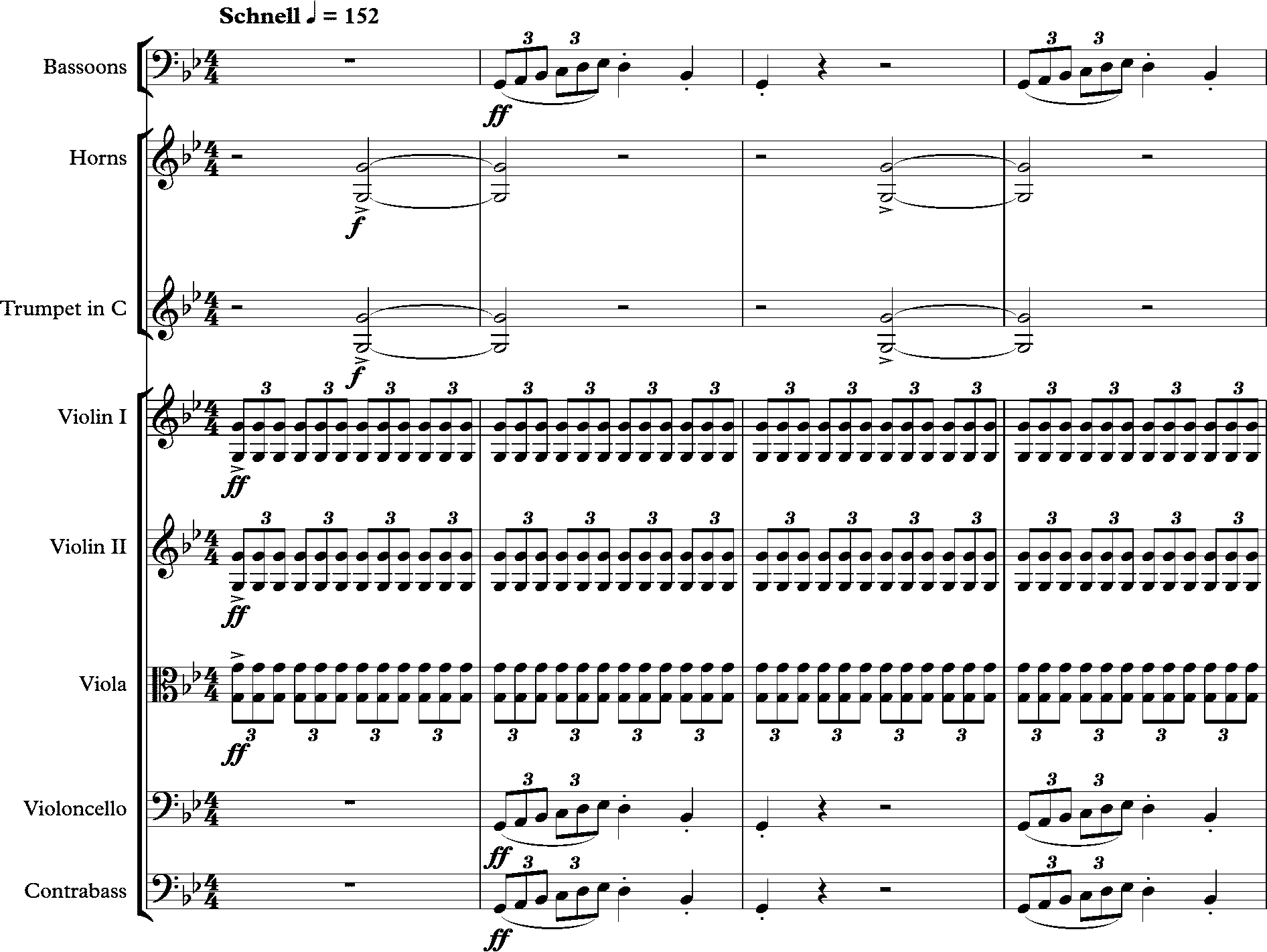
Image: Erl King – arrangement by Liszt opening bars 02.png | Erlkonig | License: Public domain | Source: Wikimedia | https://commons.wikimedia.org/wiki/File:Erl_King_-_arrangement_by_Liszt_opening_bars_02.png