The 10 Synth-Pop Albums That Defined the 80s Studio Sound
From drum machine punch to glossy pads and hook-first arrangements, these 10 synth-pop albums show exactly why producers still study the 1980s. Each one is a lesson in arrangement, sound design, and mix decisions that made keyboards behave like a full band.
Why 80s Synth-Pop Still Matters in the Studio
Synth-pop in the 1980s wasn’t just a genre trend; it was a workflow revolution. Producers were figuring out how to build radio-ready records around sequencers, drum machines, early digital synths, and a much smaller palette than modern sessions allow. The best albums from the era didn’t win because they had the most gear. They worked because the gear was used with discipline: clear parts, strong contrast, and arrangements that made every programmed element feel intentional.
For producers today, these albums are still useful reference points. They show how to make a small number of synthetic voices sound large, how to keep programmed drums from feeling rigid, and how to carve space for vocals without burying the hook. If you’re building synth-pop in the box or tracking hardware, this is the kind of catalog that teaches you where the tool fits in the production chain.
1. Depeche Mode — Speak & Spell (1981)
Speak & Spell is the early-80s blueprint for pop made from machines. The album is still striking because it treats synths as both harmony and rhythm. You hear bright, percussive sequences, bass lines that behave like drum parts, and hooks that are compact enough to survive the era’s limited recording bandwidth.
Studio takeaway: The key lesson here is separation. Instead of stacking endless layers, the arrangements leave room for each synth patch to own a register. If you’re programming a modern track, try building the song around just three roles: rhythmic synth, bass synth, and one lead hook. Everything else should support those three decisions.
2. The Human League — Dare (1981)

Dare is one of the clearest examples of synth-pop becoming truly commercial without losing its edge. The record’s strength comes from contrast: cold electronic drums against warm vocal melodicism, mechanized textures against incredibly human phrasing. It’s a masterclass in using synths to frame a pop performance rather than replacing it.
Studio takeaway: This album is all about arrangement balance. The vocal sits forward because the instrumental parts are deliberately designed to stay out of its way. In your own productions, think about “negative arrangement” as much as sound design. Remove one element every time the chorus gets crowded, and the record will often feel bigger.
3. New Order — Power, Corruption & Lies (1983)
This is the album where synth-pop starts sounding like a club system and a guitar band at the same time. The production is famously spacious, with sequenced bass and drum programming locked into a hypnotic grid while melodies drift in and out rather than hitting all at once. That tension is a huge part of why the album still feels modern.
Studio takeaway: New Order’s approach shows how groove can come from repetition, not constant change. If your track feels busy, strip it down until the loop itself carries the interest. A well-designed eight-bar loop with subtle automation often works harder than a heavily edited arrangement.
4. Tears for Fears — The Hurting (1983)

The Hurting proves that synth-pop can be emotionally severe without losing pop appeal. The record uses synth textures as atmosphere, but the songwriting stays focused and direct. There’s a constant push-pull between icy electronic timbres and the vulnerability of the vocal lines.
Studio takeaway: Use pads and sustained synths to widen the emotional field, but don’t let them flatten the dynamics. This album works because the arrangement breathes. If you want more drama in a chorus, try automating pad brightness or filter opening instead of adding more parts.
5. Yazoo — Upstairs at Eric’s (1982)

Few synth-pop albums sound as naked and focused as Upstairs at Eric’s. The production is minimal, but it never feels thin. Every sound has a clear job, and the record benefits from that kind of forced restraint. The bass synths are potent, the drum programming is blunt, and the overall mix leaves massive amounts of psychological space.
Studio takeaway: This is a lesson in low-part-count production. A lot of modern arrangements fail because every section adds new layers instead of new information. Try writing with only one bass sound, one drum kit, one harmonic texture, and one lead motif. If the song still works, you’ve got a strong record.
6. Eurythmics — Sweet Dreams (Are Made of This) (1983)

This album is a production clinic in controlled synthetic drama. The title track alone is a textbook example of how a simple programmed pattern, a memorable bass figure, and a dominant vocal can create a track that feels larger than its actual component count. The record’s sonic identity is not about luxury; it’s about precision.
Studio takeaway: The mix is memorable because the arrangement is committed. There’s very little confusion about what each part is doing. If you’re producing with analog-modelled plugins, this album is a reminder that saturation and color only matter after the parts are strong. Don’t use tone to rescue a weak arrangement.
7. Pet Shop Boys — Please (1986)
Please is where synth-pop starts sounding elegant rather than experimental. The album’s appeal is built on clean sequencing, dry rhythmic discipline, and songwriting that understands the dance floor without surrendering to it. It’s an album that makes sparseness feel sophisticated.
Studio takeaway: For producers, this record is about the power of polish in context. You don’t need maximal layering to sound expensive. Careful EQ, precise transient control, and well-timed reverb throws can make a small arrangement feel upscale and finished.
8. A-ha — Hunting High and Low (1985)
A-ha’s debut brings a more expansive, cinematic edge to synth-pop. The arrangements lean on dramatic synth textures and sweeping melodic lifts, but the real production skill is in the way the record scales from intimate verses to massive choruses without sounding artificially inflated.
Studio takeaway: This album is a good model for chorus architecture. Instead of simply adding more instruments, it uses register, density, and harmonic movement to create lift. In your own sessions, try reserving your highest synth voicings and widest stereo effects for the chorus so the section change is felt before it is heard.
9. Orchestral Manoeuvres in the Dark — Architecture & Morality (1981)
If you want to understand how early synth-pop borrowed from art-rock and still felt accessible, this is the record to study. The production is full of unusual textures, but the band never loses sight of song structure. The album proves that synth-pop can be adventurous without becoming abstract.
Studio takeaway: OMD’s strength is textural variety inside a stable framework. That’s useful if you work in the box and want tracks to evolve without sounding like a playlist of unrelated sounds. Keep the drum foundation stable, then change the character of the synth parts across sections with envelope and filter automation.
10. Bronski Beat — The Age of Consent (1984)
The Age of Consent is one of the strongest examples of synth-pop used as both emotional statement and dance record. The album’s high-energy pulse comes from firm bass sequencing and sharp percussive programming, but the vocal delivery gives the material urgency and identity. It’s proof that synth-pop doesn’t need to be detached to be synthetic.
Studio takeaway: The production shows how rhythmic synth parts can drive a record when the vocal is left emotionally exposed. If your song feels too machine-like, try reducing the complexity of the instrumental and letting the vocal performance carry the intensity. Emotion often reads better against a strict grid than over a crowded arrangement.
What Producers Can Learn From the Best 80s Synth-Pop Albums
These records endure because they solved problems that every modern producer still faces. How do you make repeated sections feel alive? How do you keep electronic sounds from becoming sterile? How do you make a small palette feel complete?
The answer across all ten albums is usually the same: clear roles, strong arrangement discipline, and an understanding that synth-pop works best when every sound earns its place. Whether you’re using hardware like a Juno, Prophet, or DX7-inspired plugin, or building entirely inside a DAW, the principle holds up. Great synth-pop is not about filling space. It’s about designing space so the hook lands harder.
If you’re using these albums as production references, listen for more than tone. Study where the drums enter, how often the bass changes, when the chorus widens, and what gets removed before each big payoff. That’s the real studio lesson of 80s synth-pop: the gear made the sound, but the workflow made the record.
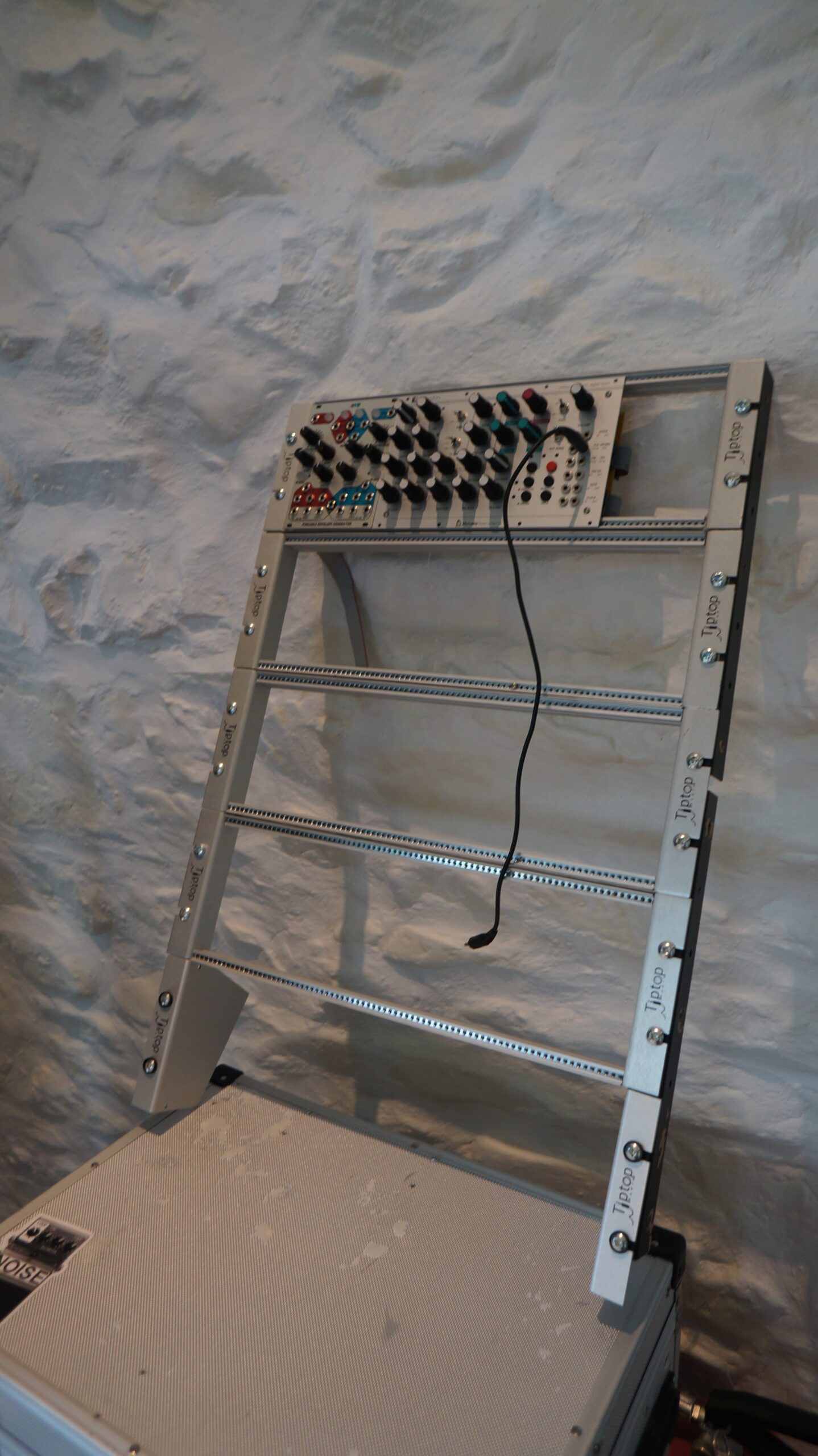
Image: C-g.'s modular synthesizer – Synth rack taking shape (2014-10-31 12.05.22 by c-g.).jpg | Synth rack taking shape | License: CC BY 2.0 | Source: Wikimedia | https://commons.wikimedia.org/wiki/File:C-g.%27s_modular_synthesizer_-_Synth_rack_taking_shape_(2014-10-31_12.05.22_by_c-g.).jpg