The 10 Guitar Riffs That Changed Rock Forever
From instant-identity hooks to arena-level stompers, these are the riffs that became the DNA of rock guitar. We break down what makes them hit, why they endure, and what producers and players can steal from them.
Why riffs matter more than solos in the real world
A great guitar riff does something a solo usually doesn’t: it defines the song before the vocals even arrive. Riffs are architectural. They give a track its spine, its momentum, its instantly recognizable silhouette. In the best cases, a riff is not just a memorable part of the arrangement; it is the arrangement.
This list is not just a popularity contest. These are the riffs that changed how songs were built, how guitars were recorded, and how listeners learned to identify a track in under three seconds. Some are deceptively simple. Some are technically underrated. All of them are durable enough to survive decades of radio, streaming, cover bands, and guitar stores pretending a beginner can learn them in ten minutes.
For players and producers, the lesson is simple: the best riffs are not always the fastest or flashiest. They are the ones with a strong rhythmic identity, a clear tonal center, and enough space to breathe inside a mix.
1. Led Zeppelin — “Whole Lotta Love”
Jimmy Page’s opening riff is a masterclass in controlled swagger. The line is built from a heavy blues vocabulary, but the phrasing is what makes it immortal: the loose, slightly behind-the-beat feel gives it a dangerous swing. It sounds like it is barely being held together, which is exactly why it feels alive.
Why it works: the riff has room between notes. The rests are as important as the attacks, and the tone is gritty without being overcooked.
Production takeaway: if you are tracking a riff like this, don’t quantize the life out of it. Let the groove breathe. A slightly loose performance can sound heavier than a perfectly grid-locked one.
2. Black Sabbath — “Iron Man”

Riffs do not get much more monolithic than this. Tony Iommi’s line is built from slow-moving power and a sense of grim inevitability. The chromatic movement and deliberate pacing turn a simple idea into something enormous. This is the sound of heavy metal before the genre had fully defined itself.
Why it works: the riff uses space and repetition to create tension. The phrasing is simple, but the tonal weight is huge.
Production takeaway: heaviness is often about note length and sustain, not just gain. A more focused low end and careful midrange balance can make a riff feel bigger than adding more distortion.
3. Deep Purple — “Smoke on the Water”

Yes, it is the riff every beginner learns. That does not make it less iconic. Ritchie Blackmore’s four-note motif is one of the clearest examples of how a riff can become cultural shorthand. It is instantly identifiable because it is rhythmically bold, harmonically simple, and melodically memorable.
Why it works: the melodic contour is easy to sing and easy to remember, which is a huge part of riff longevity.
Production takeaway: simplicity is not a weakness if the rhythm and articulation are strong. A riff can be built from very few notes and still dominate the entire track.
4. Van Halen — “Ain’t Talkin’ ’Bout Love”
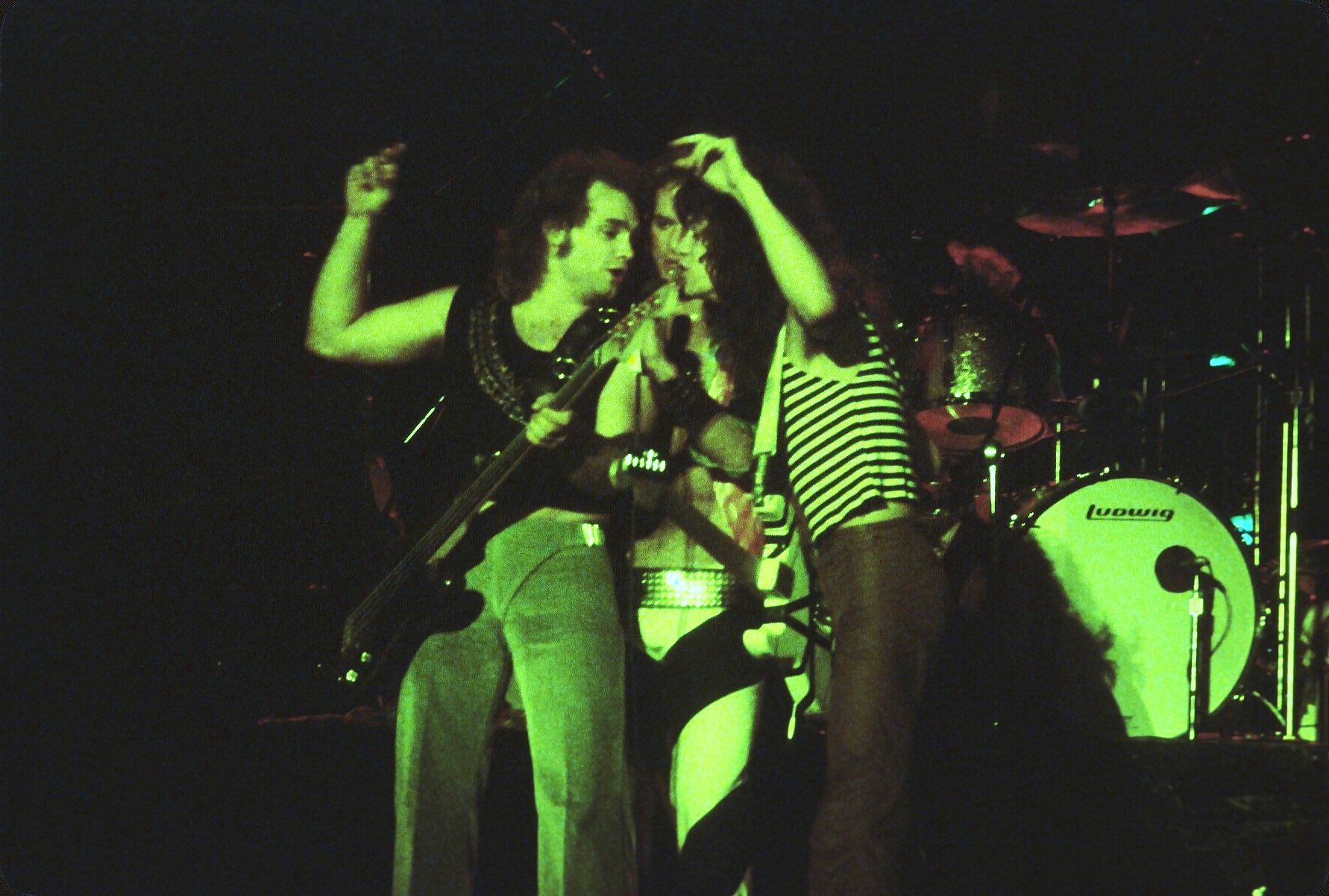
Eddie Van Halen’s riff is one of the cleanest examples of attitude translated into guitar language. The staccato pulse, the open-string bite, and the aggressive right-hand feel make the riff leap out of the speakers. It is lean, punchy, and built for maximum impact.
Why it works: the riff relies on rhythmic precision and articulation more than note density. Every attack is intentional.
Production takeaway: record the picking hand as much as the fretting hand. The attack transient is a huge part of why this kind of riff feels exciting in a mix.
5. AC/DC — “Back in Black”

Malcolm Young’s riff is a clinic in economy. There is no wasted motion, no unnecessary flash, and no attempt to impress you with complexity. Instead, it locks into a groove so perfectly that the song feels inevitable. This is the kind of riff that proves precision can be more powerful than speed.
Why it works: the riff is deeply groove-oriented and built on tight, repeatable accents.
Production takeaway: a great rock riff should leave room for the drums to push and pull against it. The groove often comes from the relationship between kick, snare, and guitar—not the guitar alone.
6. Metallica — “Enter Sandman”

One of the most famous metal riffs of the modern era, “Enter Sandman” thrives on tension through repetition. The main figure is simple, but the syncopation and dark interval choices give it a menacing edge. It is also a great example of how a riff can be designed to sound massive on radio, in headphones, and on a festival PA.
Why it works: the riff is easy to recognize but still has enough rhythmic movement to avoid feeling static.
Production takeaway: high-gain riffs need tight low-end control. Double-tracking, disciplined muting, and a clean bass/guitar relationship are essential if you want the riff to hit hard without turning to mud.
7. Nirvana — “Smells Like Teen Spirit”
This riff changed the scale of alternative rock. Kurt Cobain’s chordal approach is not about technical showmanship; it is about contrast, dynamics, and a massive sense of release. The verse-to-chorus tension is crucial, but the riff itself is the engine that drives the whole song.
Why it works: the riff is simple enough to feel immediate, but the dynamic shifts make it feel larger than its harmonic material.
Production takeaway: a riff becomes bigger when the arrangement knows when to pull back. The quiet-loud structure is a production tool, not just a songwriting trick.
8. Jimi Hendrix — “Purple Haze”
Hendrix’s riff is all psychedelic voltage: tritone tension, fuzz, and a sense that the guitar is bending the laws of harmony. It is one of the most important examples of riff-as-sonic-event. The note choice is memorable, but the tone and articulation are what turn it into a landmark.
Why it works: the riff combines dissonance with a strong melodic hook, creating a sound that is both strange and unforgettable.
Production takeaway: tone is composition. The right distortion, fuzz texture, and amp interaction can make a riff feel more distinctive than adding more notes ever could.
9. Rage Against the Machine — “Killing in the Name”
Tom Morello’s riff is built on repetition, rhythm, and raw impact. It is less about harmonic movement and more about a massive, confrontational pulse. The riff succeeds because it sounds like a machine being pushed into rebellion, which is exactly the band’s sonic identity.
Why it works: the groove is brutally direct, and the rhythmic repetition becomes hypnotic.
Production takeaway: for modern rock production, arrangement clarity matters. When a riff is this central, the rest of the mix needs to leave it space. Carve frequencies, simplify layers, and let the riff own the midrange.
10. The Rolling Stones — “(I Can’t Get No) Satisfaction”
Keith Richards’ fuzzed-out guitar figure is one of the purest examples of a riff that sounds like an attitude before it sounds like a song. The riff is concise, sharp, and built around a lick that feels both casual and unavoidable. It helped define the language of rock guitar as something that could be rude, catchy, and minimal all at once.
Why it works: the riff is built around a memorable contour and a tone that instantly signals rebellion.
Production takeaway: limitations can be creative fuel. The famous fuzz texture is part of the hook, which is a reminder that the sound of a riff can matter as much as the notes themselves.
What the greatest riffs have in common
Across genres and eras, the best riffs tend to share a few traits. They are rhythmically clear. They have a strong tonal identity. They leave enough space for the drums and bass to breathe. And most importantly, they create a physical response—head nodding, air guitar, a sudden urge to turn the volume up.
From a production standpoint, great riffs are usually supported by disciplined arrangement choices. Double-tracked guitars help widen the image, but only if the performances are tight. Bass should either reinforce the riff’s root movement or deliberately contrast it. Drum accents need to reinforce the riff’s phrasing rather than flatten it into a loop. And when the tone is part of the hook, capture it early instead of trying to “fix” it later with plugins.
For players, the practical lesson is even more useful: study not just the notes, but the spacing, articulation, and accent pattern. The difference between a good riff and an immortal one is often a matter of touch.
The bottom line
The greatest guitar riffs of all time are not just famous because people heard them a lot. They are famous because they solved a problem every songwriter and producer faces: how to make a guitar part feel immediate, durable, and unforgettable. These riffs do that with economy, tone, and timing.
If you are writing riffs of your own, start here. Not to copy them, but to understand why they worked in the first place. The best riffs do not just fill space. They define it.
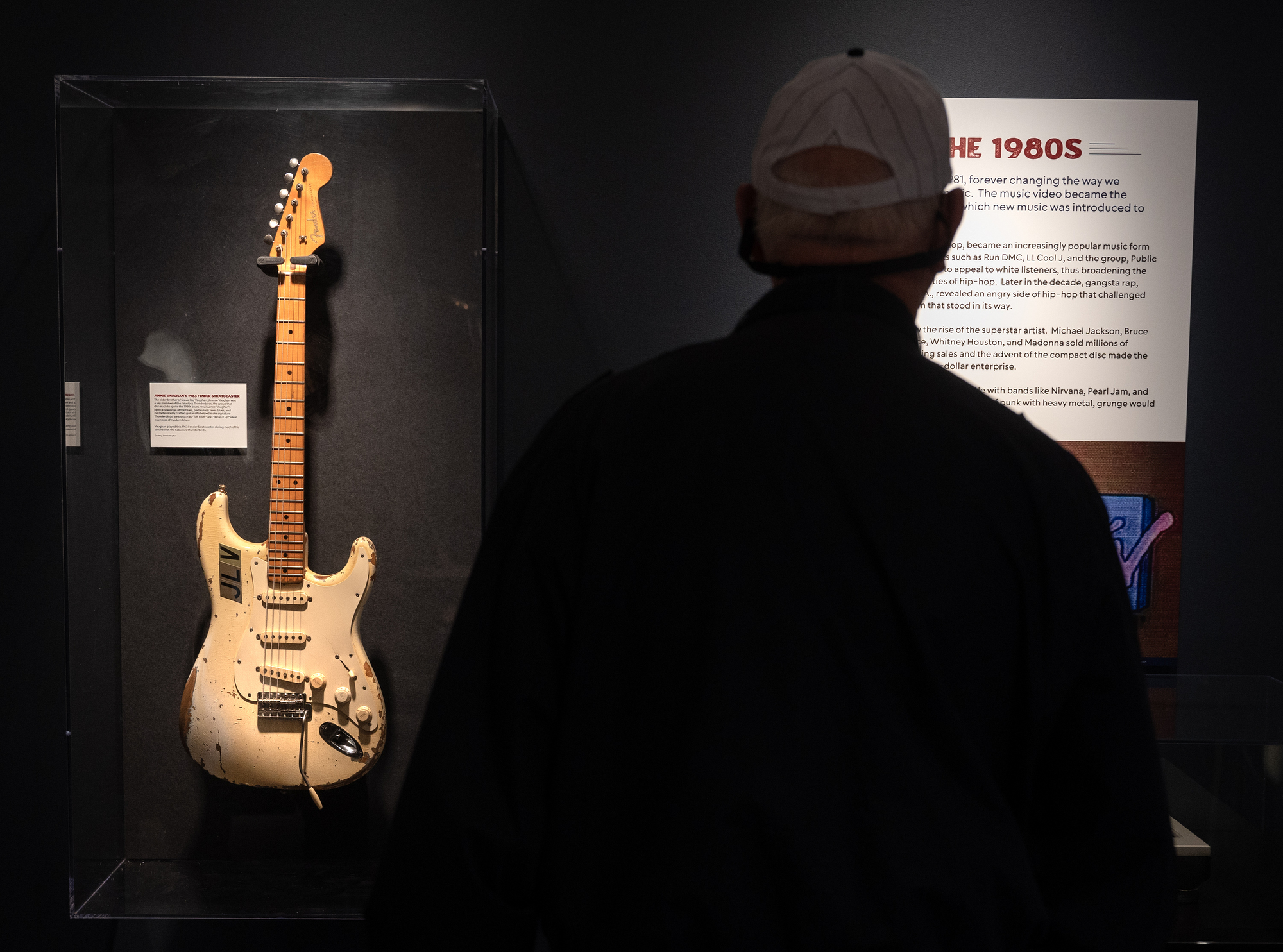
Image: DIG15178-018 Jimmie Vaughan's 1963 Fender Stratocaster – Music America- Iconic Objects from America’s Music History (2024-02-17 12.55.18 by LBJ Library @Flickr 53537193413).jpg | DIG15178-018 | License: Public domain | Source: Wikimedia | https://commons.wikimedia.org/wiki/File:DIG15178-018_Jimmie_Vaughan%27s_1963_Fender_Stratocaster_-_Music_America-_Iconic_Objects_from_America%E2%80%99s_Music_History_(2024-02-17_12.55.18_by_LBJ_Library_@Flickr_53537193413).jpg