10 Rock Basslines That Redefined the Low End
These aren’t just famous riffs — they’re masterclasses in pocket, tone, articulation, and arrangement. We break down the technique behind 10 rock basslines that still shape how producers and bass players think about the low end.
Great rock basslines do more than support a song — they define its identity. The best ones are instantly recognizable, physically satisfying, and deceptively difficult to play cleanly. They lock with the drums, leave space for the vocal, and use rhythm, note choice, and tone to turn the bass from foundation into hook.
This list focuses on basslines that changed the way players think about the instrument. Not every entry is a flashy solo workout; in fact, many of the most important rock basslines are great because of restraint, articulation, and arrangement awareness. For players, engineers, and producers, each one offers something practical: how to create motion without clutter, how to shape tone so it reads on small speakers, and how to make a bass part memorable without stepping on the song.
1. The Beatles — “Come Together”

Paul McCartney’s line is a clinic in economy and groove. It feels slippery and melodic, but it never loses the pocket. The signature sound comes from a short, percussive attack and a line that leaves plenty of negative space around the snare and vocal.
Technique takeaway: Think of the bass as a rhythmic phrase, not just a note list. Mute aggressively with both hands and keep the notes short enough that the groove breathes. If you’re recording, a slightly compressed DI with some amp grit helps preserve the front edge of each note.
2. Queen — “Another One Bites the Dust”

John Deacon’s bassline is one of the cleanest examples of a bass part functioning as the entire song’s engine. Built around repetition, it relies on timing, consistency, and microscopic dynamic control. The line is simple on paper, but it only works when every note lands with authority.
Technique takeaway: This is a reminder that repetition is not boring when the articulation is right. Lock the subdivision hard, especially the space between notes. In production, keep the bass centered and let the kick drum sit just behind the bass transient so the groove feels large but not muddy.
3. Rush — “YYZ”

Geddy Lee’s bass work in “YYZ” is a masterclass in precision and complexity. The part moves with prog-rock agility, but it remains deeply musical because it’s tightly integrated with the rhythmic identity of the arrangement. Every phrase feels intentional, even at high speed.
Technique takeaway: If you’re learning lines like this, isolate the accents first. The notes matter, but the accent pattern is what makes the riff feel alive. For recording, use a bright, articulate tone with enough upper-mid presence to preserve note definition when guitars and cymbals get dense.
4. Cream — “Sunshine of Your Love”

Jack Bruce’s riff is a stone-cold classic because it sits in the sweet spot between blues phrasing and heavy-rock menace. The line is simple, but the feel is everything: it has swagger, patience, and just enough harmonic ambiguity to keep the ear hooked.
Technique takeaway: Don’t rush iconic riff bass. This kind of groove needs the note lengths and rests to be as deliberate as the pitches. A round, slightly overdriven tone can help the riff read as bigger than the raw signal alone.
5. The Who — “My Generation”

John Entwistle turned the bass into a lead voice long before that became a common rock move. On “My Generation,” the line is aggressive, busy, and harmonically assertive, yet it still drives the song’s rebellious energy rather than distracting from it.
Technique takeaway: This is a great example of how bass can add attitude through articulation. Use harder attack, pick or fingerstyle with purpose, and a tone that emphasizes midrange growl. In a mix, mids are not the enemy — they are often the reason the riff feels alive.
6. The Rolling Stones — “(I Can’t Get No) Satisfaction”
While the fuzz guitar is the headline, the low-end support is essential to the song’s relentless forward motion. The bass function here is deceptively simple: it reinforces the riff’s urgency and keeps the arrangement grounded while the top-end carries the hook.
Technique takeaway: A strong bass part doesn’t always need to be busy. Focus on note placement and consistency with the kick. If you’re producing a track inspired by this approach, prioritize a bass tone with clear fundamentals and controlled low end so the riff can stay firm without ballooning.
7. Pink Floyd — “Money”
Roger Waters’ bassline is famous not just for its 7/4 signature, but for how naturally it flows inside an odd meter. The pattern feels approachable because it’s built around a repeatable phrase with strong rhythmic anchors. That’s why it remains one of the first progressive-rock basslines many players tackle.
Technique takeaway: For odd-time grooves, group the notes in a way that feels singable. Don’t count everything as isolated subdivisions; think in larger rhythmic shapes. From a production standpoint, a punchy bass with controlled sustain helps the meter feel clear instead of lumpy.
8. Red Hot Chili Peppers — “Higher Ground”
Flea’s take on “Higher Ground” is a high-energy showcase of syncopation, slap articulation, and relentless momentum. It’s one of those basslines that sounds almost like percussion and melody at the same time, which is exactly why it cuts through so hard in a full mix.
Technique takeaway: Precision matters more than force. The notes should pop, not explode. If you’re chasing this style in the studio, capture a clean DI and blend in amp character only as needed. Too much low-end bloom can blur the attack that makes slap parts exciting.
9. Metallica — “For Whom the Bell Tolls”
Cliff Burton’s bass intro is one of metal’s most iconic low-end statements. It uses distortion, sustain, and harmonic tension to create a foreboding atmosphere before the full band crashes in. The line is less about complexity than about mass and texture.
Technique takeaway: Distortion on bass works best when the low end stays intact. Split the signal if you can: keep one path clean for sub weight and let another carry grit and harmonics. That approach preserves impact while making the bass audible on smaller playback systems.
10. The Kinks — “All Day and All of the Night”
This is one of rock’s great early bass foundations: direct, catchy, and built to push the song forward without overcomplication. The line reflects the era’s raw power, where a strong rhythmic idea mattered more than elaborate ornamentation.
Technique takeaway: Simplicity wins when the groove is strong. Focus on tight unison with the drums and a tone that speaks immediately. For modern productions, this kind of part benefits from clean editing, careful note lengths, and a little harmonic enhancement to help it translate across systems.
What These Basslines Teach You About Playing and Production
Across all 10 tracks, the common thread is not complexity — it’s intention. The memorable basslines are the ones that understand their role in the arrangement. Some are melodic hooks, some are rhythmic engines, and some are pure atmosphere. But every one of them works because the player makes deliberate choices about timing, articulation, and note length.
For bass players, the practical lesson is to practice with the drums, not just alongside them. Internalize where the kick lands. Experiment with palm muting, left-hand damping, and different attack styles until the groove feels as much like percussion as pitch.
For producers and engineers, these songs are a reminder that bass tone is arrangement-dependent. A warm vintage line may need midrange presence to cut through guitars. A distorted part may need parallel clean low end. A fast line may need controlled compression, while a sparse riff may thrive with more sustain and weight. The right bass sound is the one that serves the part, not the preset that looks impressive on its own.
How to Build Better Rock Bass Tones in the Studio
If you want rock basslines to hit like the classics, start with the source. Fresh strings, stable intonation, and a player who understands dynamics do more than any plugin chain can. From there, a practical signal path usually beats a complicated one:
- DI first: Capture a clean, full-range performance.
- Amp or sim second: Add character, midrange, and grind.
- Compression: Use it to even out performance, not crush the transient.
- EQ: Clear space around 200–400 Hz if the mix feels cloudy, and add presence around 700 Hz–1.5 kHz if the bass needs definition.
- Parallel processing: Blend grit or saturation underneath the clean tone for audibility.
The best rock bass sounds are usually not huge in isolation — they are clear, focused, and perfectly balanced against drums and guitars. That’s why these 10 basslines still matter: they’re not just memorable riffs, they’re templates for how to make the low end carry a song.
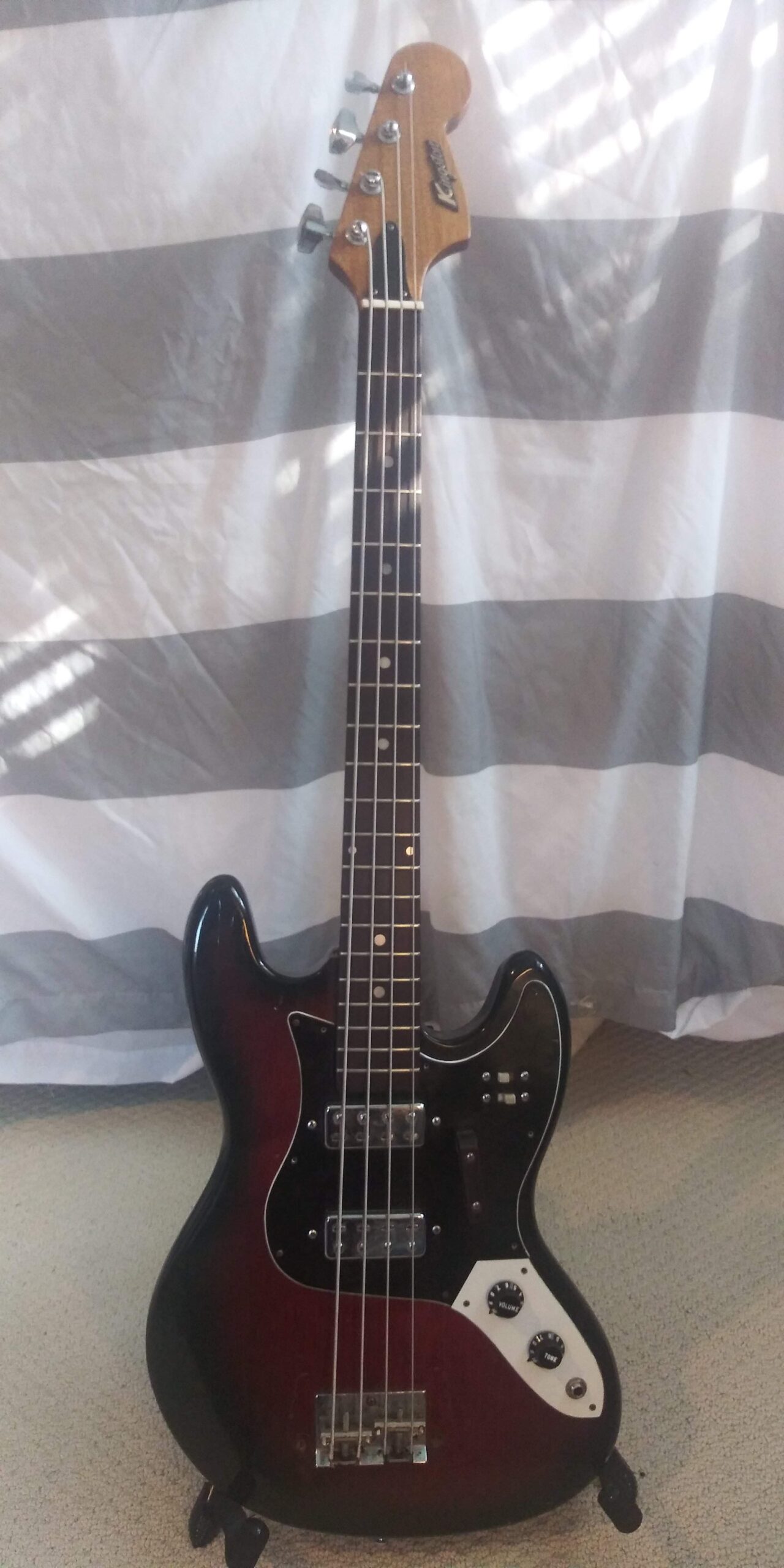
Image: Kingston Bass Guitar.jpg | Own work | License: CC BY-SA 4.0 | Source: Wikimedia | https://commons.wikimedia.org/wiki/File:Kingston_Bass_Guitar.jpg